
Free Roaring Tiger Mandala Coloring Pages for Adults (Free Printables)
Curated by Coloring Therapy
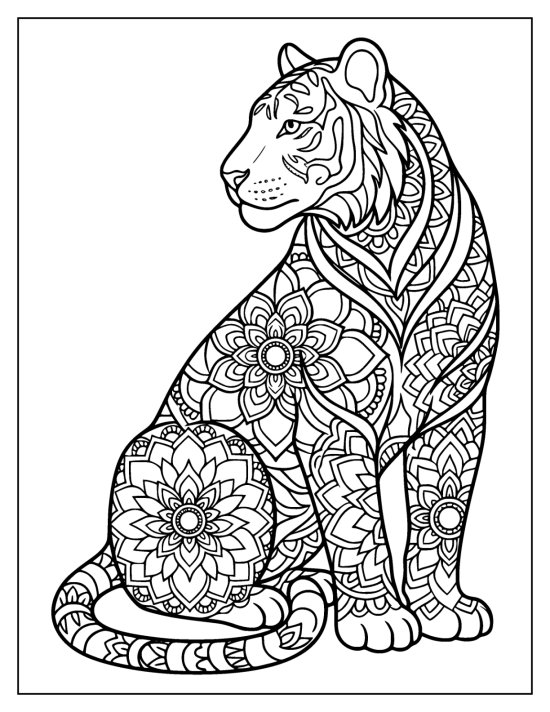
These roaring tiger mandala coloring pages hand you a whole range of big cats to color, each drawn as a clean silhouette and packed with real mandala work. You get tigers with jaws open mid roar, long profile tigers standing square or moving in a low prowl, calmer tigers sitting tall or lying in a sphinx pose, and a couple of pages where two tigers meet head to head. The rounded ears, the long tail, and a readable face are always there, so every page reads as a tiger first and a pattern second.
There are 31 pages, and they slide from roomy and forgiving to slow and intricate. Some tigers carry two or three large blossom mandalas across the chest and haunch with plenty of open white, while others fill the shoulders, legs, and tail edge to edge with layered petals and dotted bands. That range means you can grab a quick page on a weeknight or settle in with a dense one on a long Sunday, all from the same book.
Every page prints clean on standard letter paper at home, and the bold outer outline keeps your colors contained even when you work fast. Here is a quick tour of what's inside and a few ideas for getting the most out of it.
When you finish this one, our free mandala pages have plenty more.
Browse every page in the book
Click any tiger mandala coloring page below to preview, print or download.
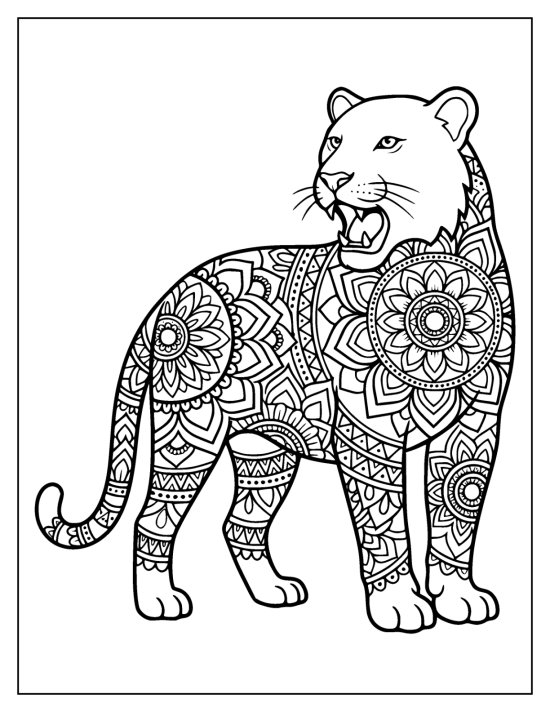
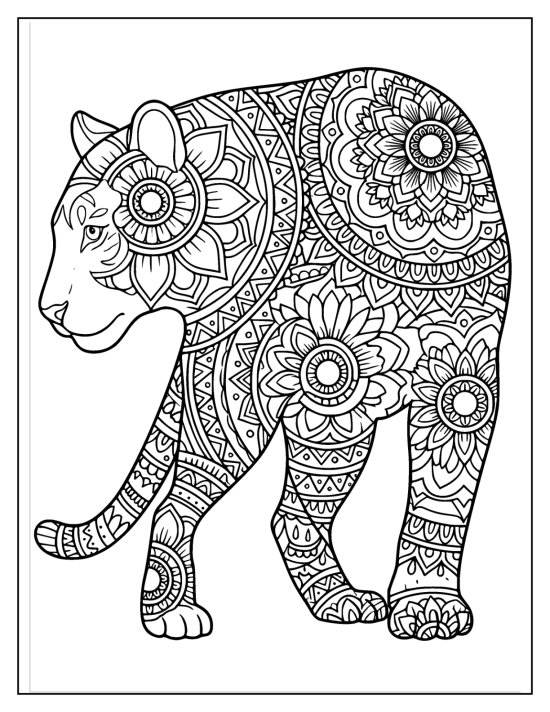
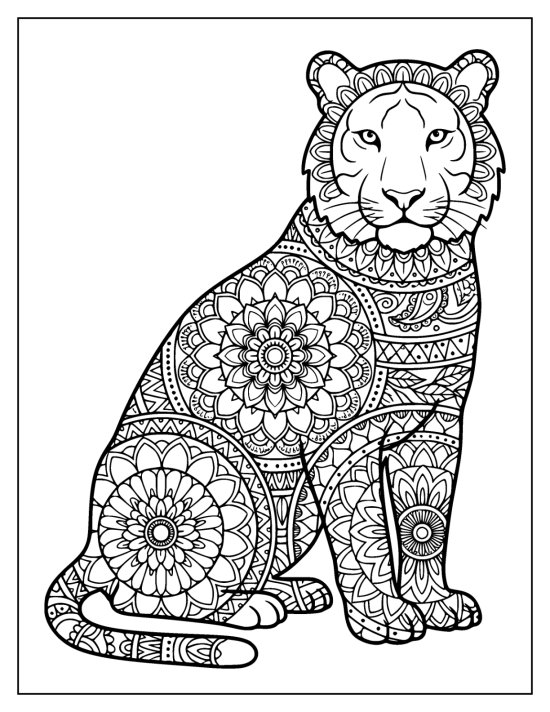
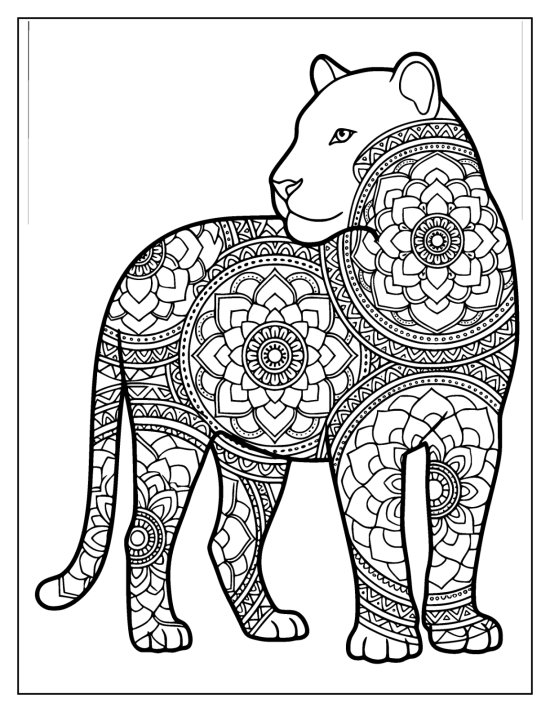
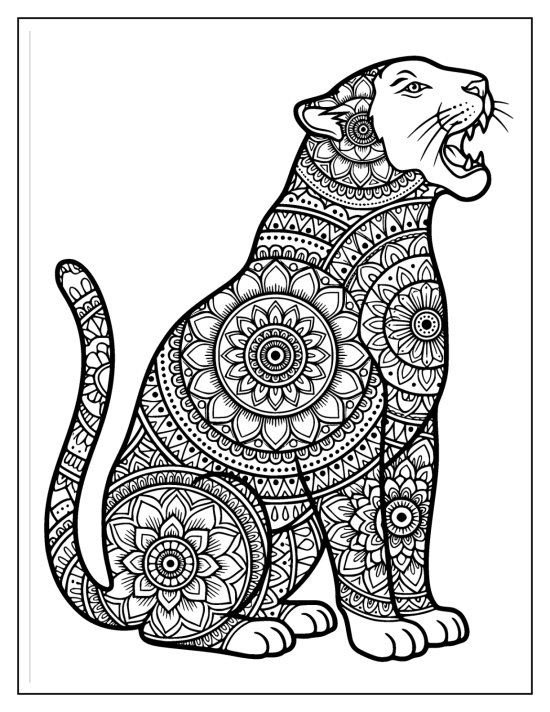
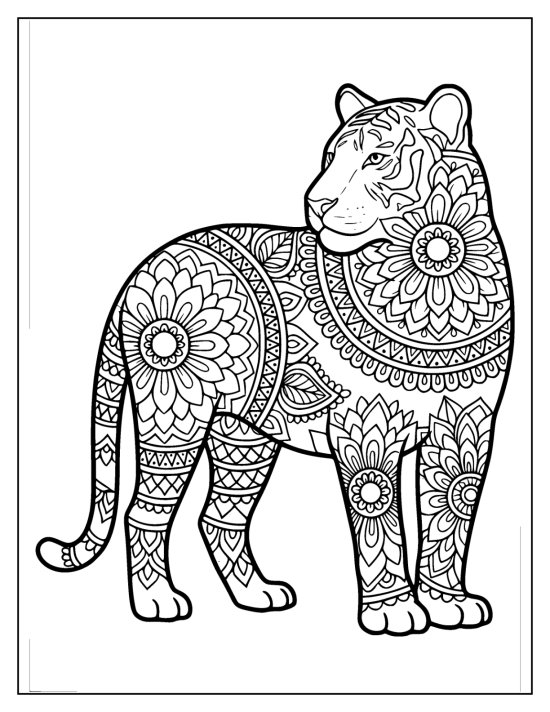
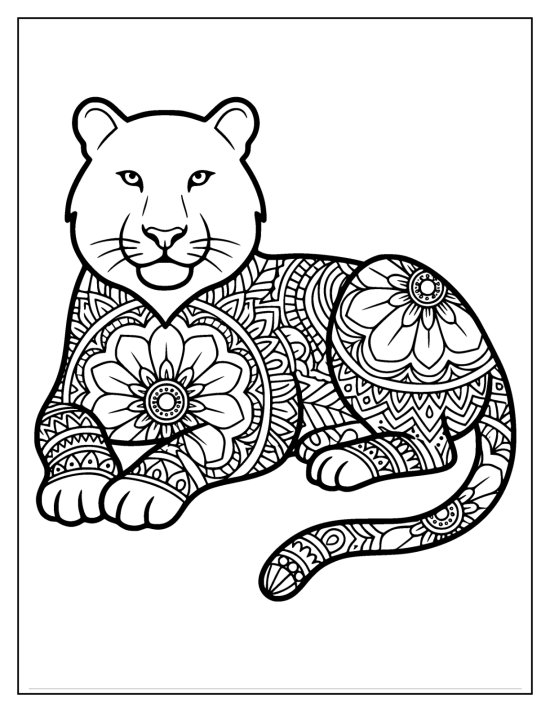
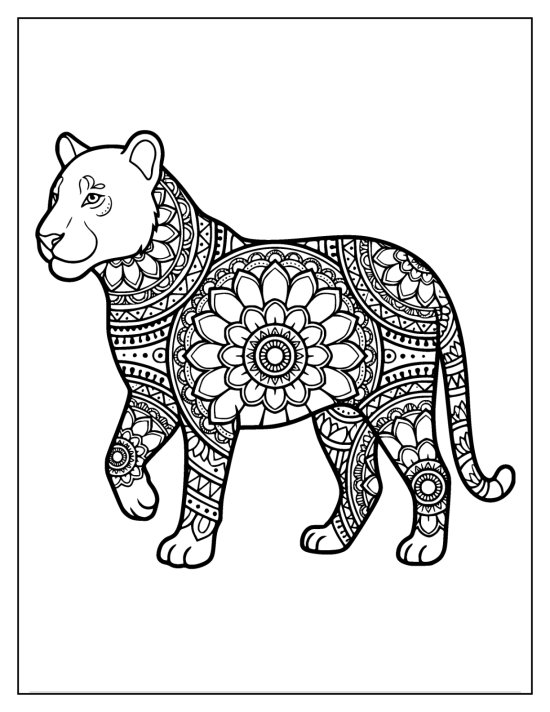
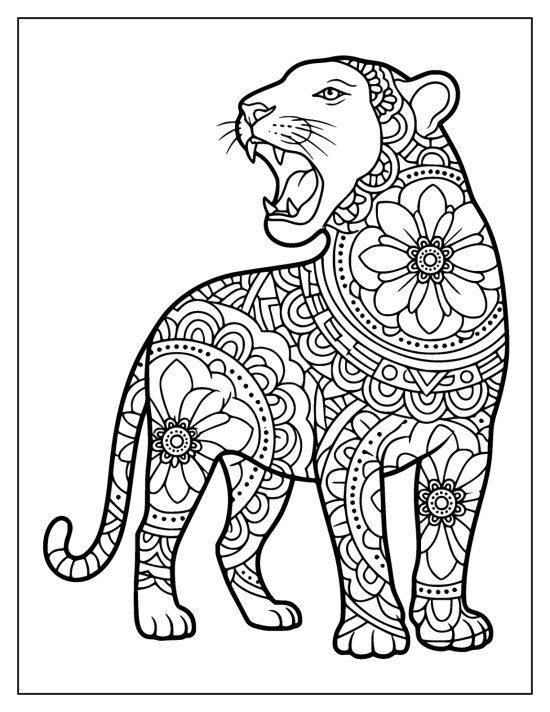
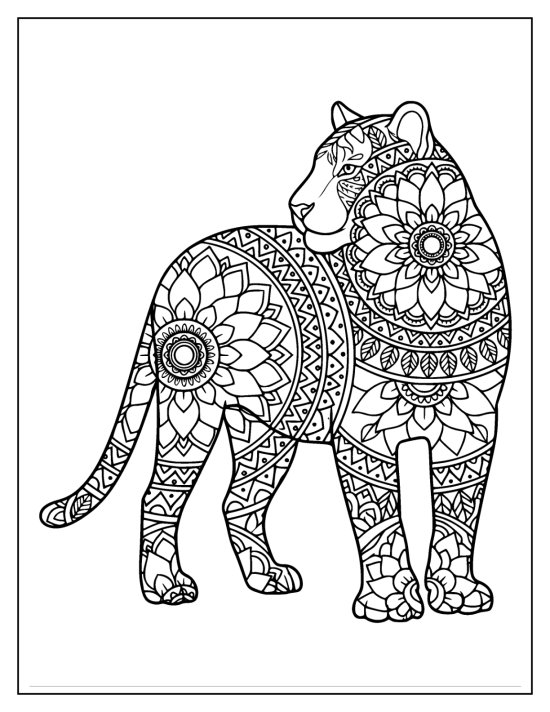
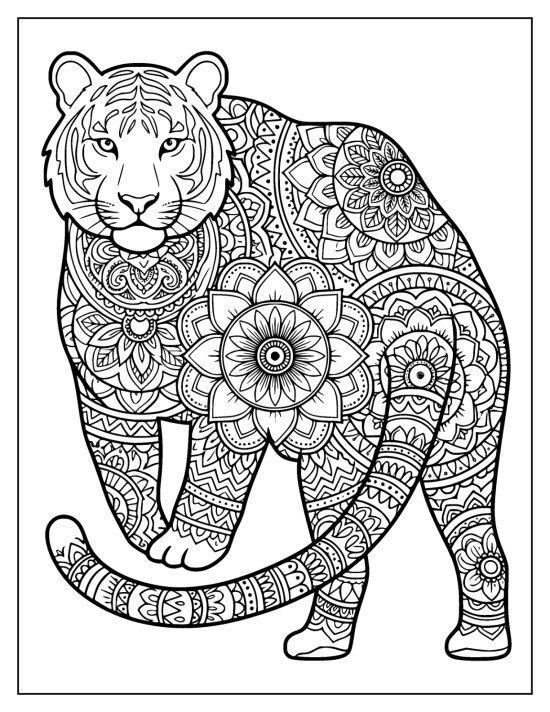
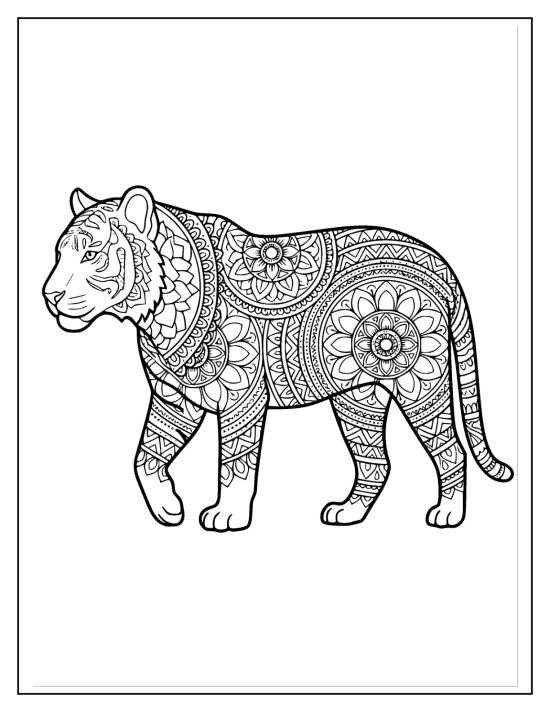
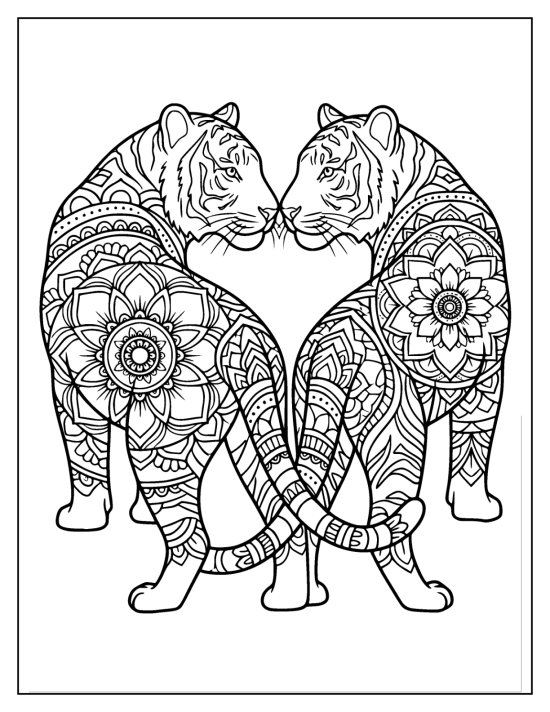
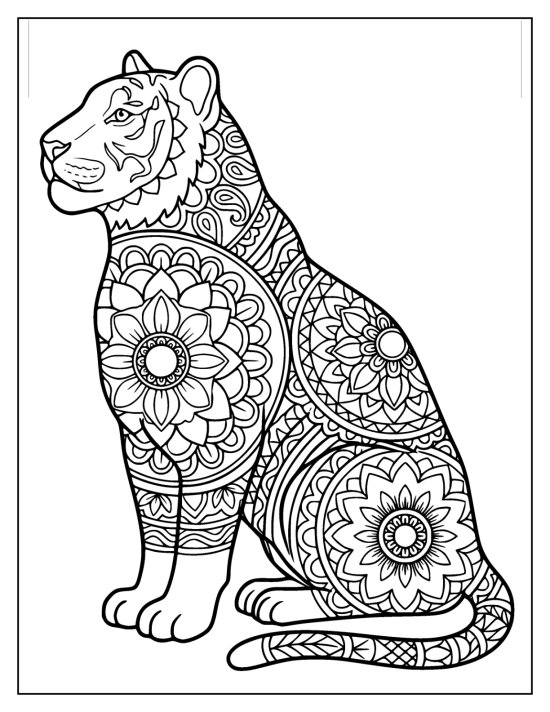
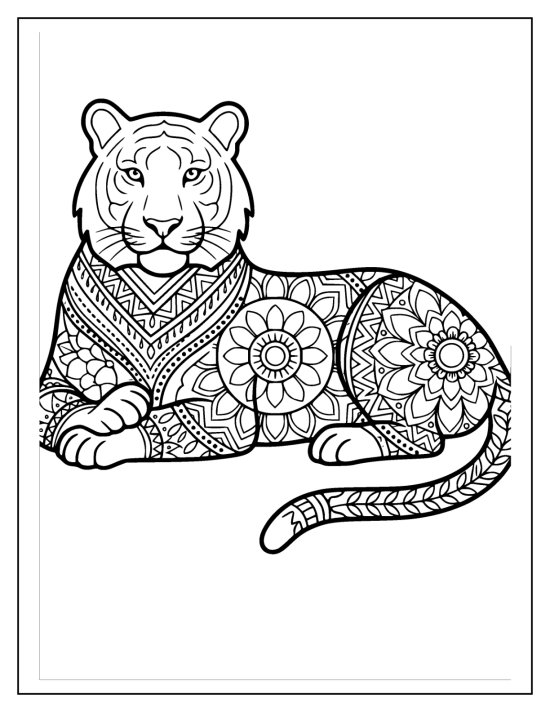
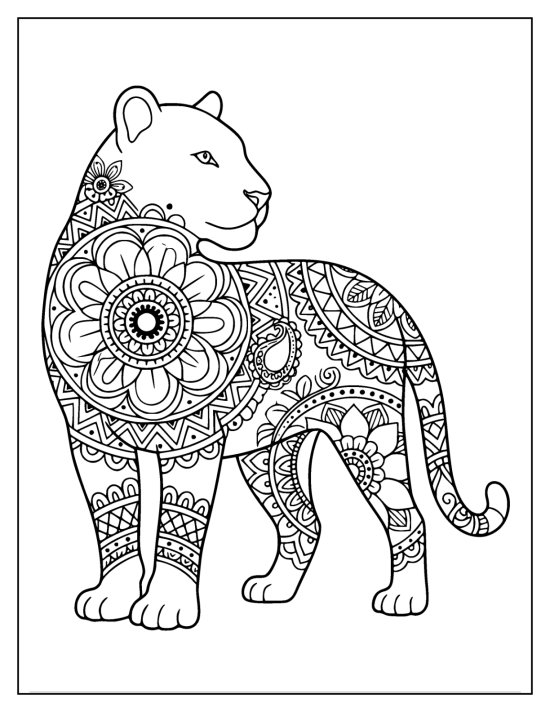
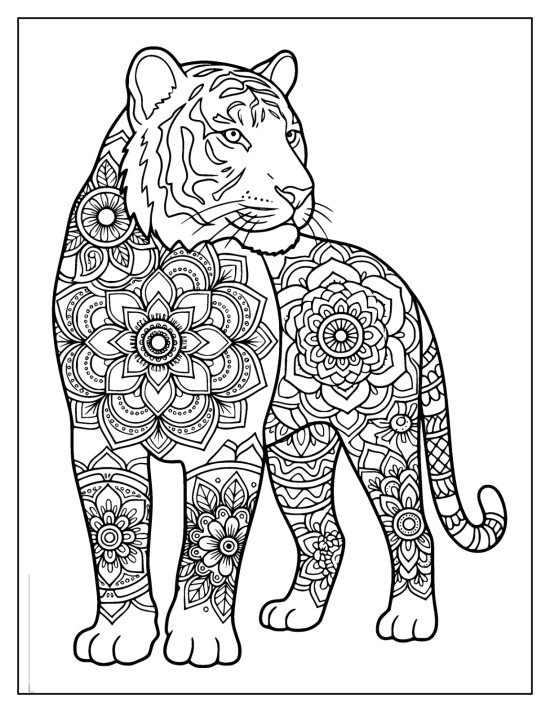
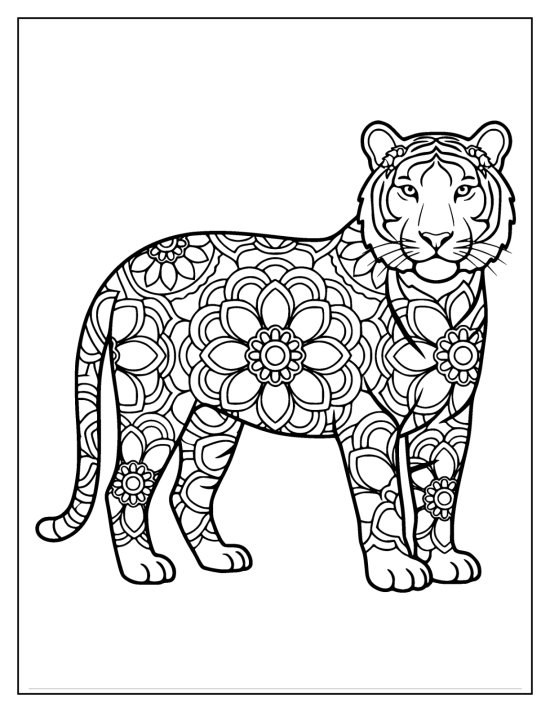
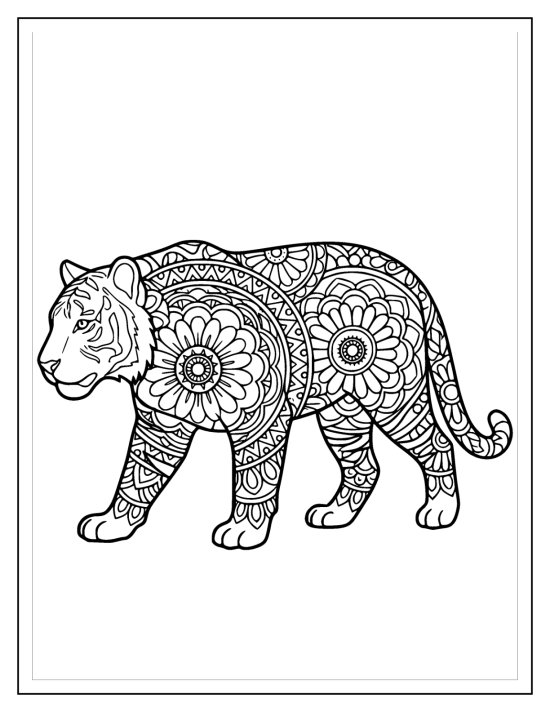
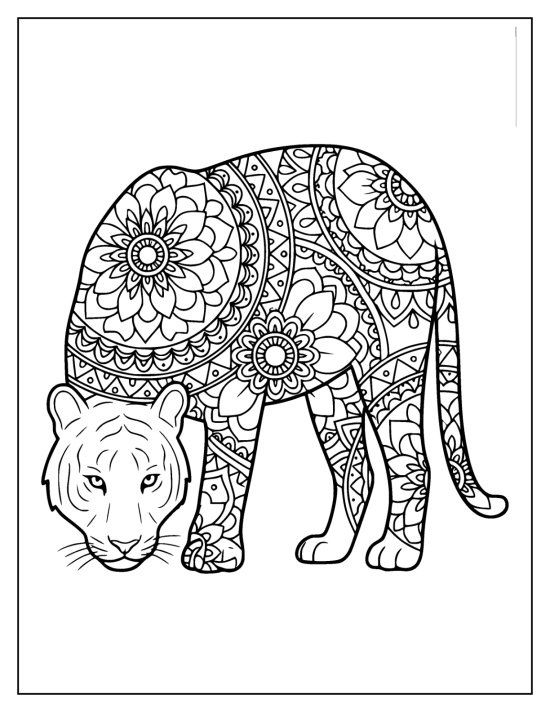
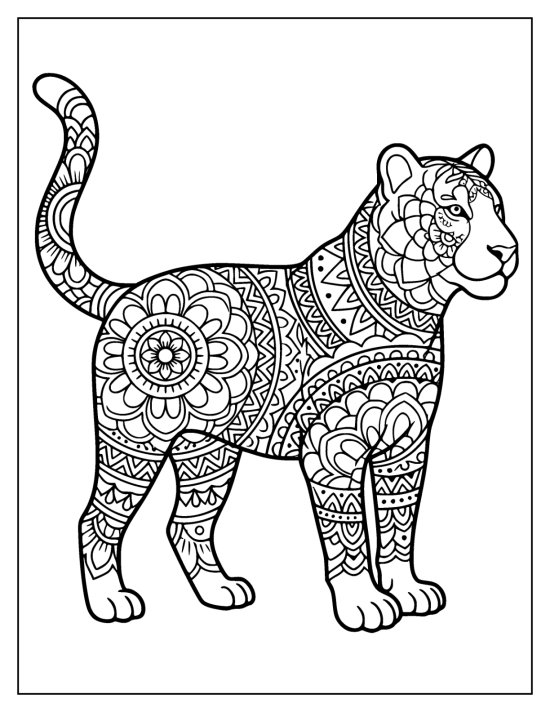
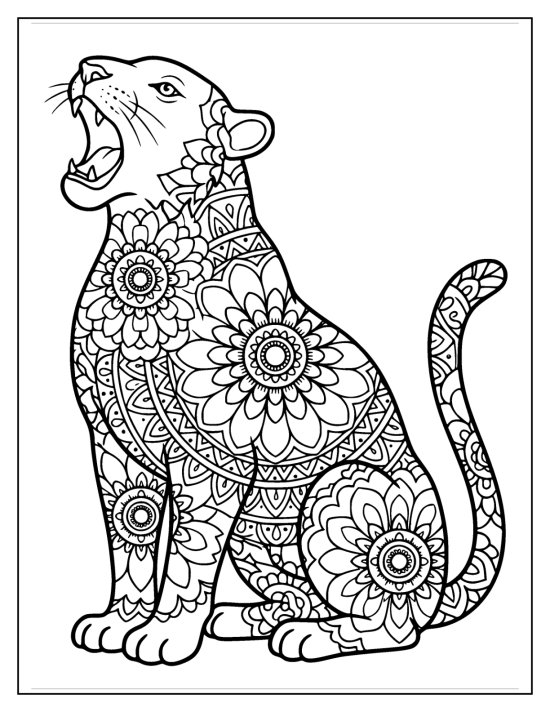
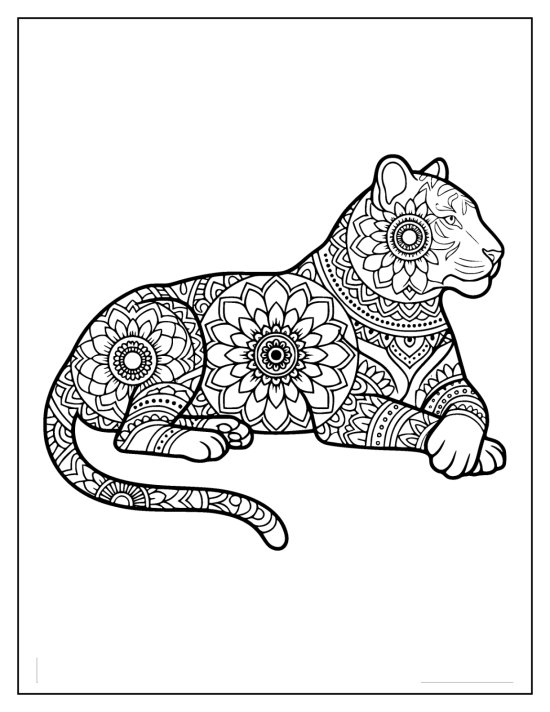
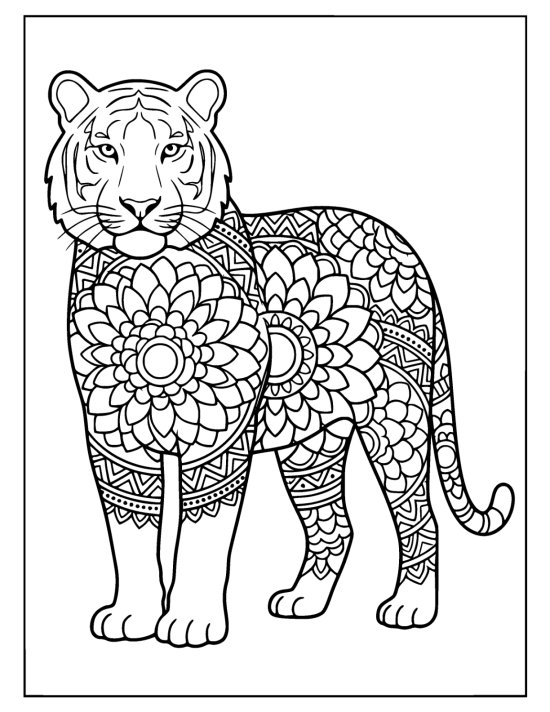
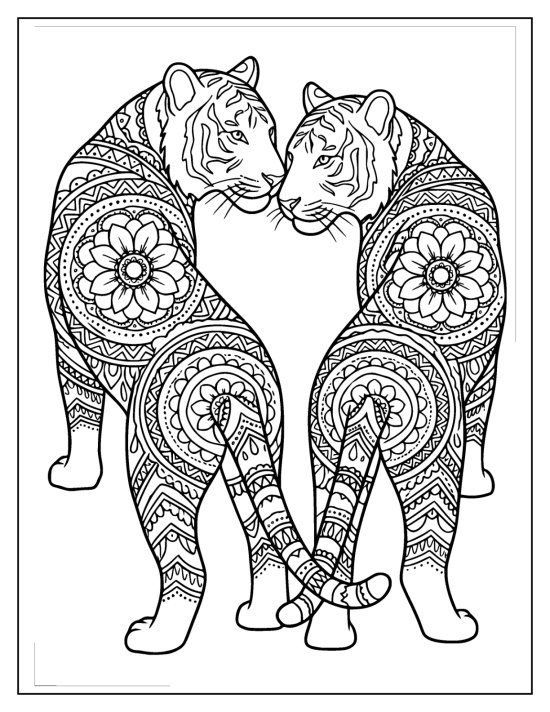
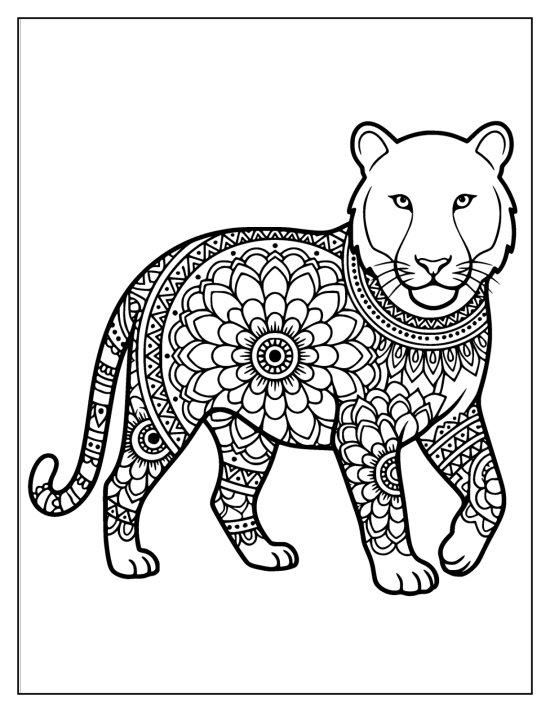
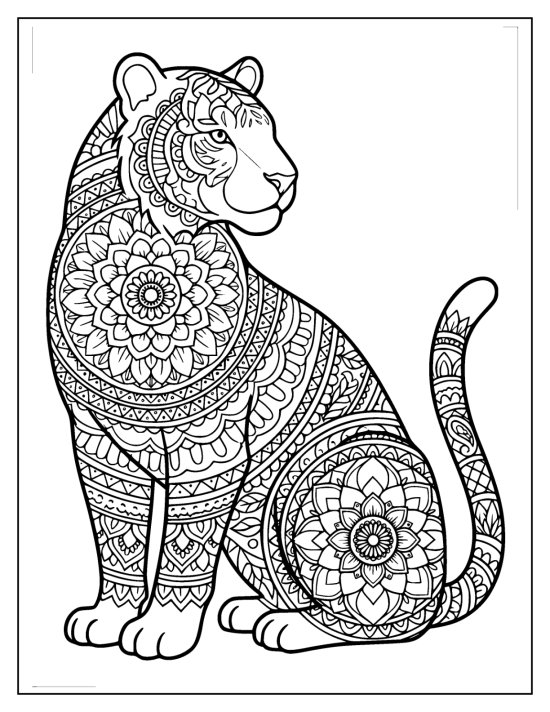
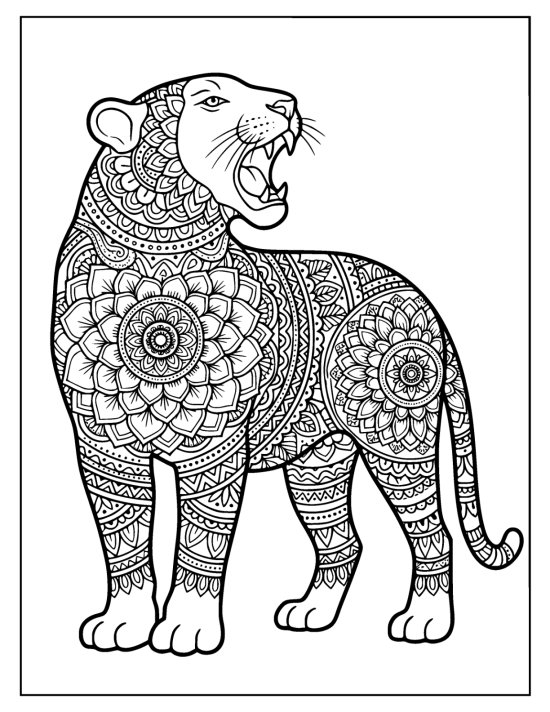
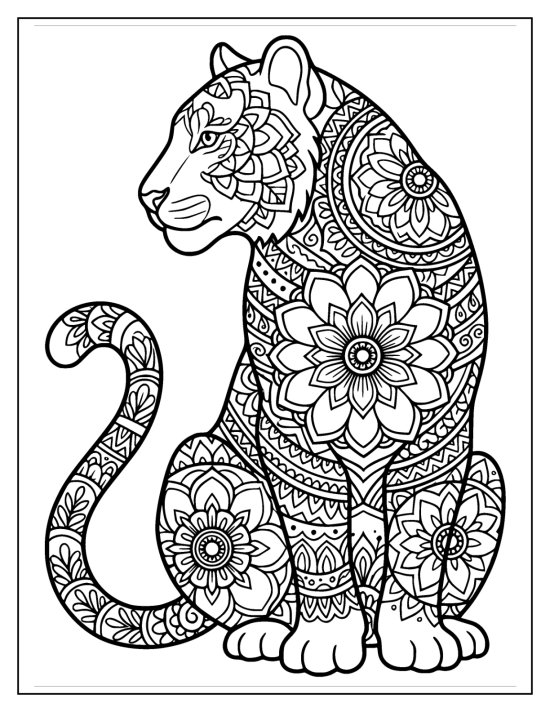
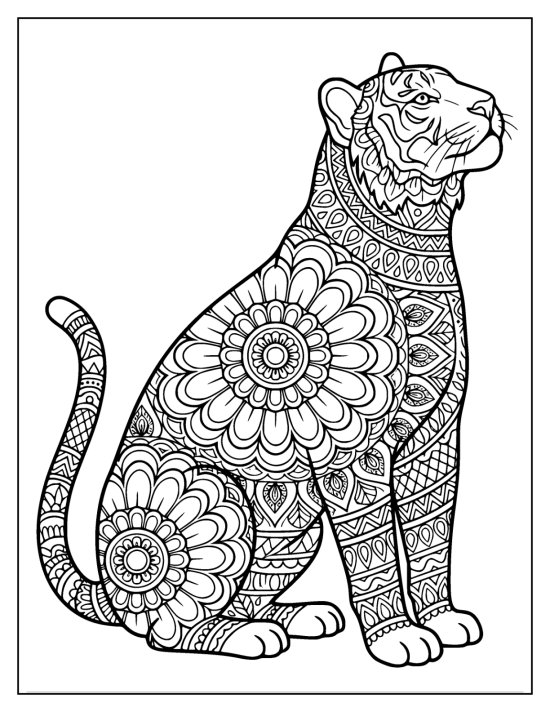
Roaring tigers, standing and prowling tigers, sitting and resting tigers, and tiger pairs
The book moves through four loose groupings, so you can pick a page based on the kind of coloring session you want to spend the next hour on.
Roaring tigers
The signature pose of the book: a tiger with jaws open mid roar, head lifted and chest forward. The arched neck and open mouth make a bold focal point above concentric mandala bands running down the body. These are the most dramatic pages and pair well with colored pencils, letting you build the coat from pale gold up to a deep rust around the face.
Standing and prowling tigers
Side profile tigers standing square or moving in a low, powerful prowl, legs caught mid step. Pattern runs edge to edge across the shoulders, haunches, and long tail, so these are the most detailed pages in the set. They reward a slow afternoon, and fine tip markers hold the layered petal bands without bleeding into each other.
Sitting and resting tigers
Calmer poses with the tiger sitting tall, lying in a sphinx pose, or glancing back over its shoulder. The settled body opens up large, roomy medallions on the chest and haunch plus more white space around the paws, so these finish faster. A friendly place to start if you are easing back into a longer coloring habit.
Tiger pairs
A couple of pages show two tigers together in one scene, heads turned toward each other in a greeting or nuzzling side by side with tails curving together. The interlocking bodies make a lively composition with plenty of mandala medallions to fill. Great for a longer sitting, and a nice one to frame once both tigers are colored.
Tigers take warm oranges and deep browns beautifully, so it helps to settle on a coat palette before you start filling the body mandalas.
What's inside these tiger adult coloring pages
The tiger adult coloring pages here mix two face styles on purpose so the book doesn't feel repetitive. Some tigers have a clear, simple face with two eyes, a nose, and the classic forehead stripes, while others keep the head in profile with just a light suggestion of a muzzle so the whole silhouette reads as one flowing design. Either way the eyes stay open and easy, giving you a calm spot between the busier mandala sections.
The poses do a lot of the work too. A roaring tiger stretches tall and dramatic, a prowling tiger lowers its body into a long line, and a resting tiger settles wide and calm. A couple of pages bring two tigers together into a scene, which changes the whole feel from a single portrait to a little story on the page.
The roar is the heart of the book
The roaring pages are the ones people come to this book for. That open mouth and lifted head make a strong focal point, and the arched neck opens up a tall space that suits concentric mandala bands running down the chest. They feel powerful before you even add a color, and they are surprisingly relaxing to work because the eye has an obvious path to follow from the face down through the body.
If you want the roar to really carry the page, keep the chest medallions large and open and save your darker tones for the outline of the open jaws and the ridge of the nose. That little bit of contrast makes the tiger look like it is truly roaring rather than just sitting with its mouth open.
Warm coats, cool patterns, and palettes that work
Tigers practically beg for warm color, but you don't have to keep the whole page orange. A classic tiger leans bright orange with cream and near black, a white tiger stays pale with soft greys and blues left mostly open, and a golden tiger sits somewhere warm and buttery in between. Pick your coat family first, then treat the body mandalas as a separate decorative layer you can push brighter.
A fun trick on these pages is to color the tiger's actual coat in believable tones, then let the big flower medallions on the haunch and shoulder go somewhere unexpected, a deep teal or a plum. It keeps the animal looking real while giving your eye a bright place to land.
Choosing a page in your roaring tiger mandala coloring pages
If you are easing in, start with a sitting or resting tiger. They carry more open space and fewer tiny bands, so they finish faster and feel like a win. The standing and prowling profiles are the deep end, with pattern running from the nose all the way to the tip of the long tail, and they reward an afternoon when you want the project to last.
The two tiger pages are worth saving for when you have time to enjoy them. Two tigers head to head make a livelier scene than a single portrait, and a finished pair looks great in a frame. Print a couple of extra copies of your favorite pose so you can try a different coat palette each time, since the same tiger really does look new once the colors change.
How to print roaring tiger mandala coloring pages at home
Printing from this book takes about a minute from start to finish. The full book is one PDF, so you can print every page in a single job or pick out only the tiger mandala designs you want.
- Open the book in the embedded viewer. Scroll to the embedded viewer at the bottom of this page, or click any thumbnail in the gallery to jump straight to that tiger mandala page inside the viewer.
- Choose Print or Download from the toolbar. Use the viewer's toolbar to print directly from your browser or download the full PDF to your computer for later use. Both options are free.
- Pick the right paper. For colored pencils, standard 24 lb (90 gsm) printer paper works fine. For markers or gel pens on the dense body and tail bands, step up to 70 to 90 lb cardstock to prevent bleed through and warping.
- Set print quality and scaling. Select your printer's highest quality setting and set scaling to None or Actual Size to keep the bold line work crisp on 8.5x11 paper. On A4, enable Fit to page.
- Test print one sheet first. Before printing the full book, run a test on a single tiger mandala page to check the line crispness and paper behavior with your chosen tool.
More adult coloring themes
If you liked these roaring tiger mandala coloring pages, here are a few more themes you might enjoy.
Butterfly Coloring Pages
Butterflies with detailed wings and little mandala patterns tucked around them, great for unwinding.
Browse butterfly coloring pages →Cat Coloring Pages
Detailed feline portraits with swirly zentangle patterns if you love big cats but want something cozier.
Browse cat coloring pages →Animal Coloring Pages
Lots of intricate wildlife and pet drawings to color if you want more than just tigers.
Browse animal coloring pages →Frequently asked questions
What poses are in the roaring tiger mandala coloring pages?
A good spread across 31 pages. You get roaring tigers with jaws open, standing and prowling tigers in profile, calmer sitting and lying tigers, and a couple of pages with two tigers together. So it is not all roars, even though that is the signature pose.
Do all the tigers have the same kind of face?
No, and that is on purpose. Some tigers have a clear, simple face with two eyes and forehead stripes, while others keep the head in profile with just a light suggestion of a muzzle so the silhouette reads as one flowing pattern. Mixing the two keeps the book from feeling repetitive.
Which pages have two tigers?
A couple of pages bring two tigers together into a single scene, heads turned toward each other in a greeting or nuzzling side by side with tails curving together. The interlocking bodies make a livelier composition than a single portrait and give you extra mandala medallions to fill.
How do I color a tiger so it still looks like a tiger?
Keep the coat believable and let the mandalas be the fun part. Pick a coat family first, bright orange with cream for a classic tiger or soft greys for a white tiger, then color the big flower medallions on the body in any scheme you like. The real coat grounds the animal while the pattern gets playful.
What is the best way to make a roaring pose stand out?
Play up the open mouth. Keep the chest medallions large and open, then press a little darker along the outline of the jaws and the ridge of the nose. That small bit of contrast makes the tiger look like it is truly roaring instead of just sitting.
Are these tiger adult coloring pages very detailed?
They range. The sitting and resting tigers have more open space and finish faster, while the standing and prowling profiles run pattern from the nose to the tip of the tail and take longer. You can pick a quick page or a slow one depending on your mood.
Can I frame a finished tiger page?
Definitely. A single roaring tiger looks striking in a plain frame, and one of the two tiger pages makes a warm gift once both cats are colored. Printing on slightly heavier paper gives a finished piece more of a keepsake feel.