
Giant Panda Mandala Coloring Pages for Adults (Free Printables)
Curated by Coloring Therapy
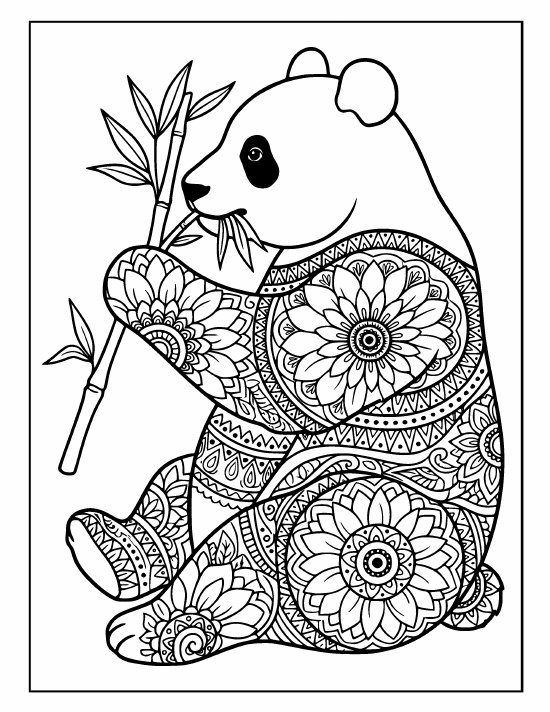
These giant panda mandala coloring pages give you a panda from nose to back paw, with its body filled with big blooming flowers, dotted bands, petals, and little teardrop shapes. Some pages keep the real panda face, the black eye patches and round dark nose, while the body carries all the pattern. Others turn the whole shape into mandala work, head and all. You'll also find pandas munching a bamboo stalk, hugging a leafy shoot, and standing side on with their bodies opened into big easy panels. It's a nice mix, so you can grab a quick one or settle in with a busy one.
Every page prints clean on regular printer paper, and the line work is bold enough to follow without squinting. You can pull a single sheet for an afternoon or work through a few in a row. The flowers repeat in different sizes across the set, so once you find a color combo you like, it carries from one page to the next.
After this book, there are hundreds more printable mandalas to explore.
Browse every page in the book
Click any giant panda mandala coloring page below to preview, print or download.
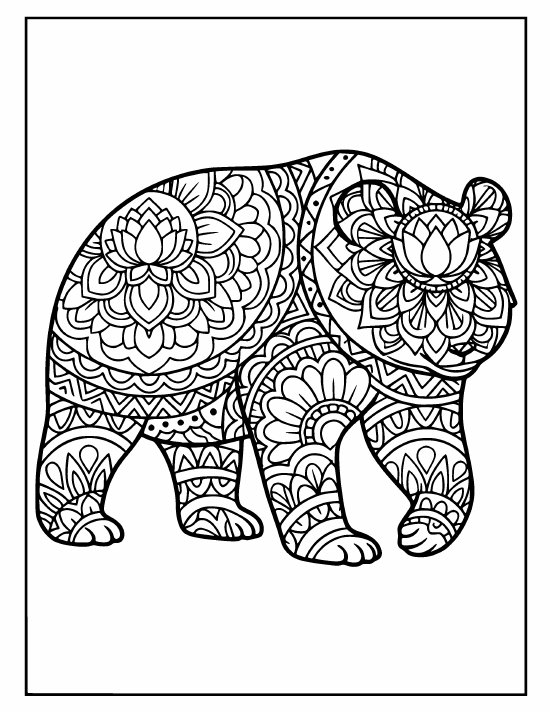
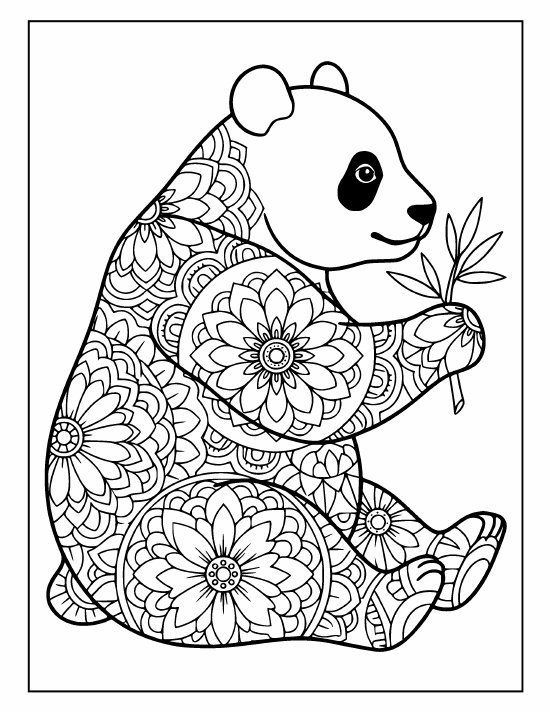
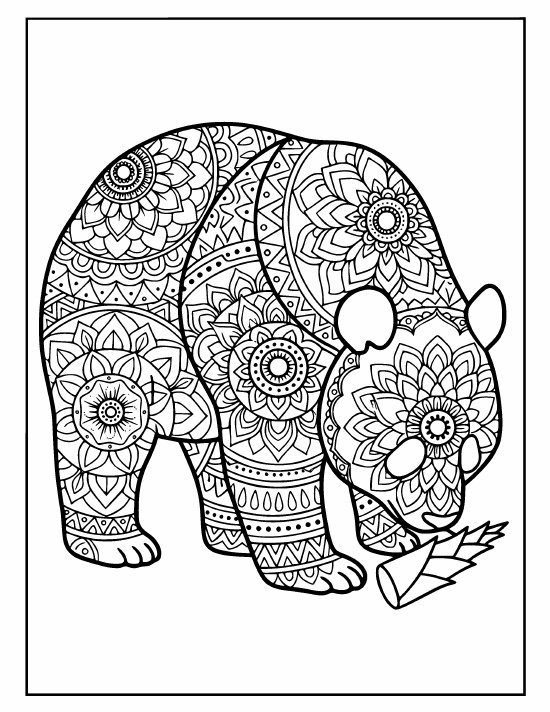
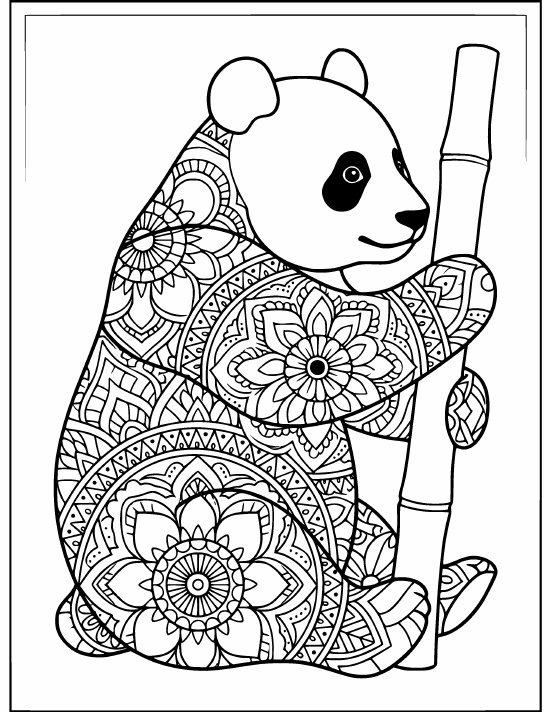
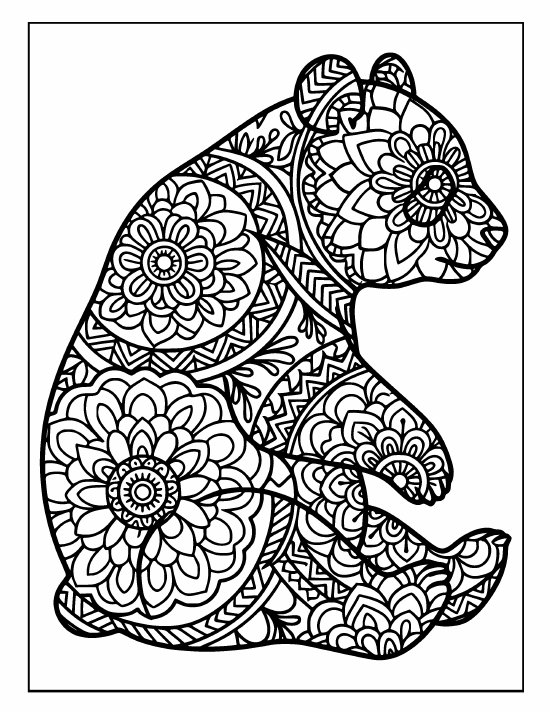
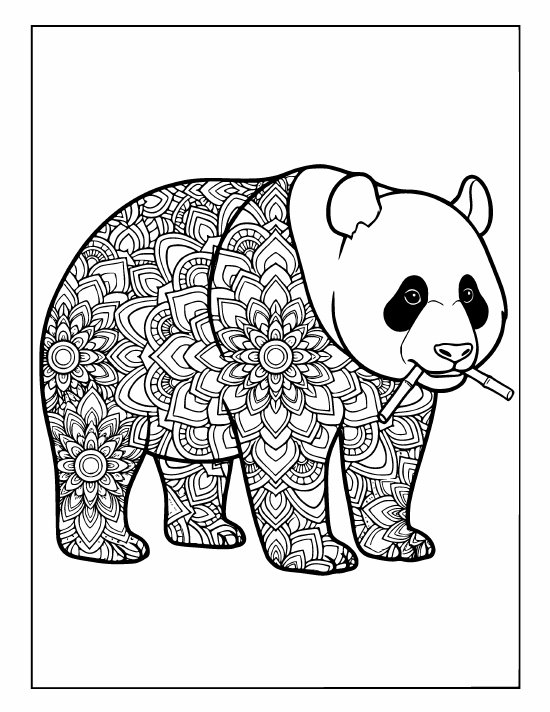
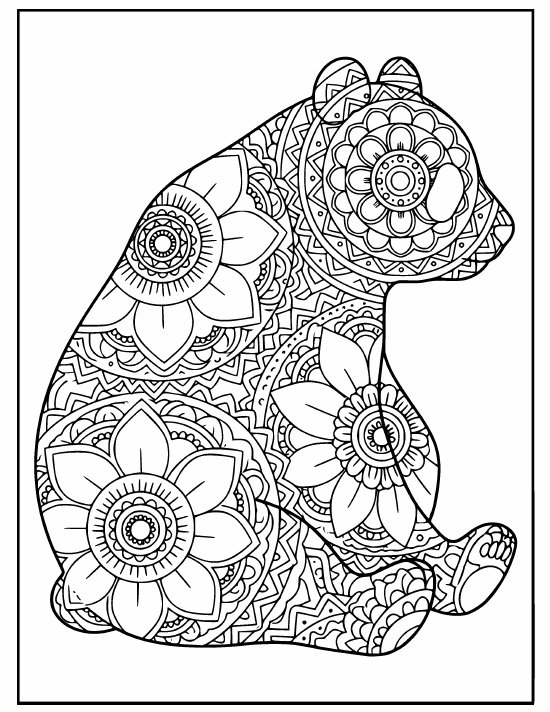
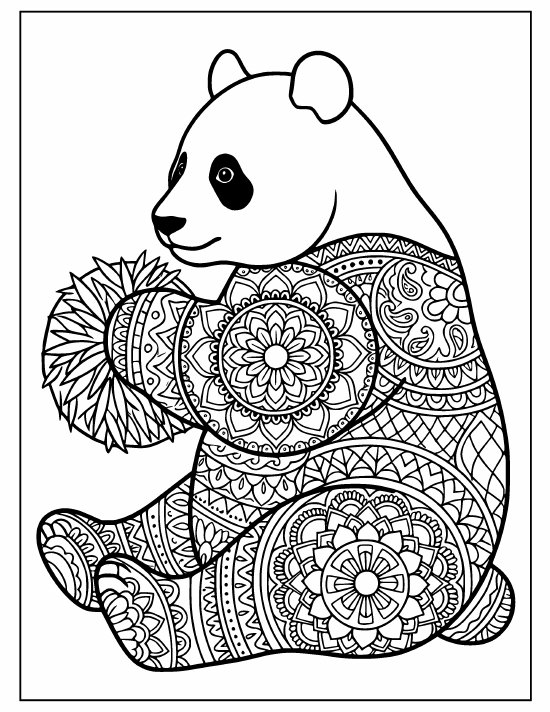
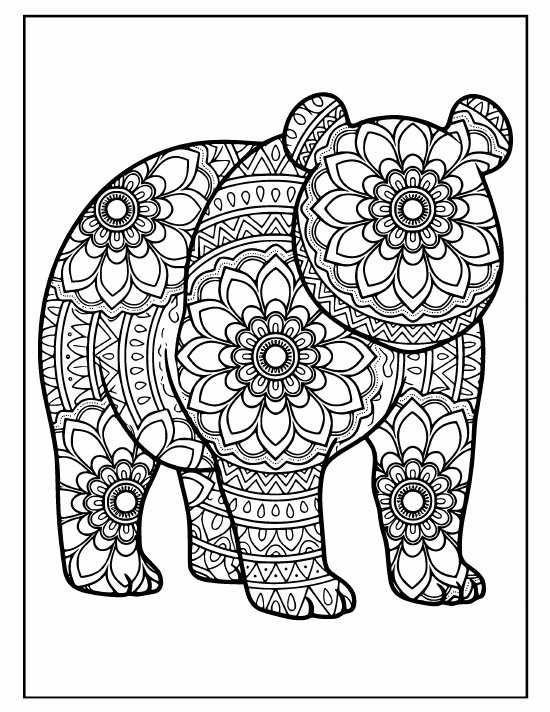
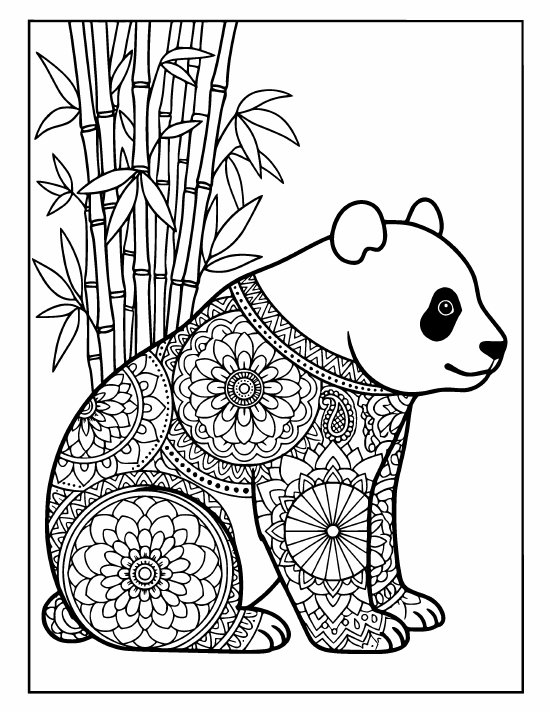
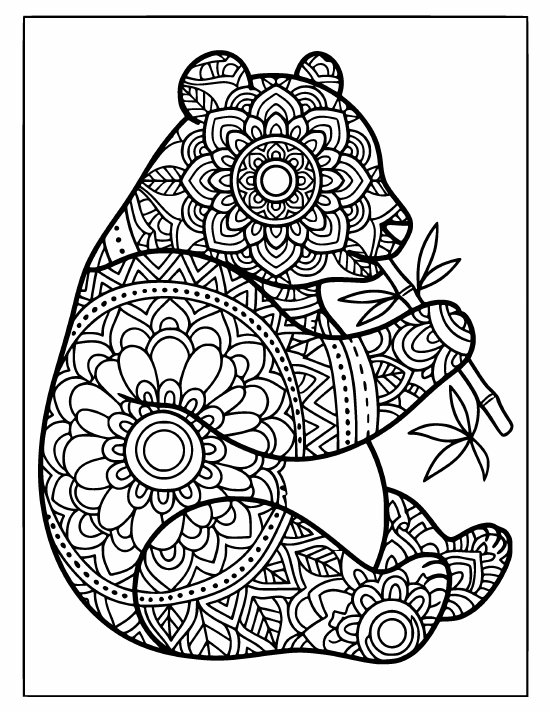
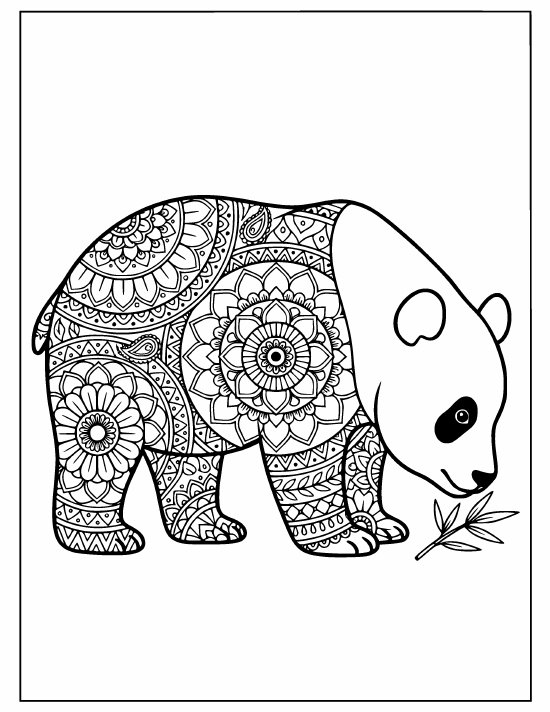
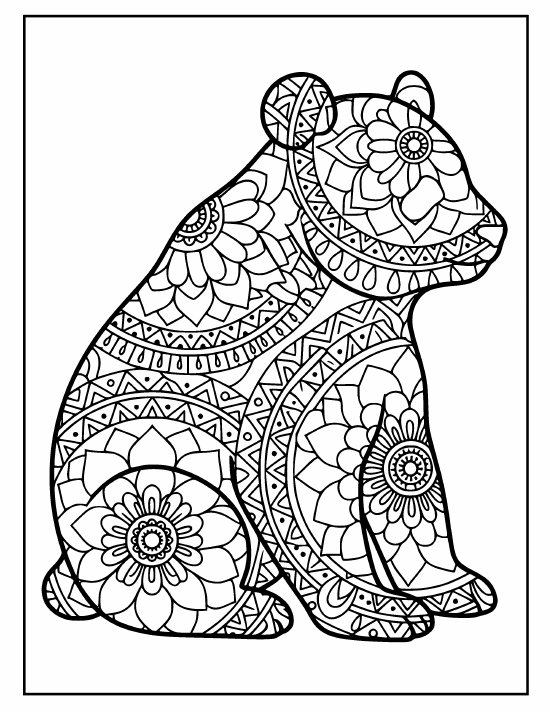
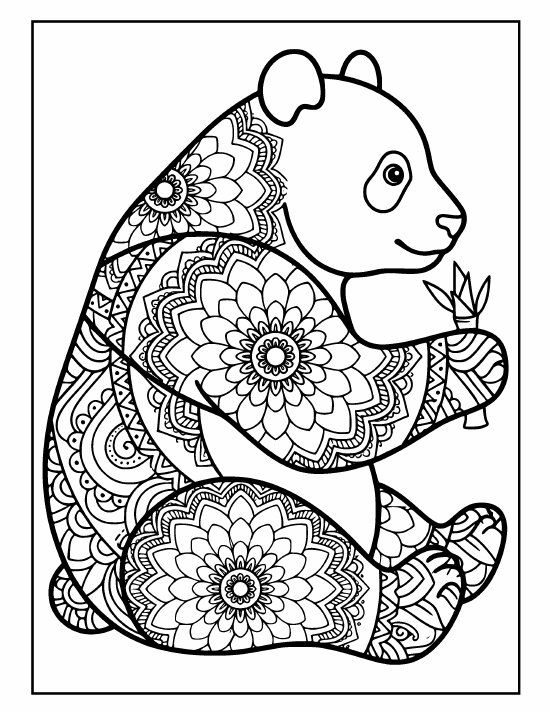
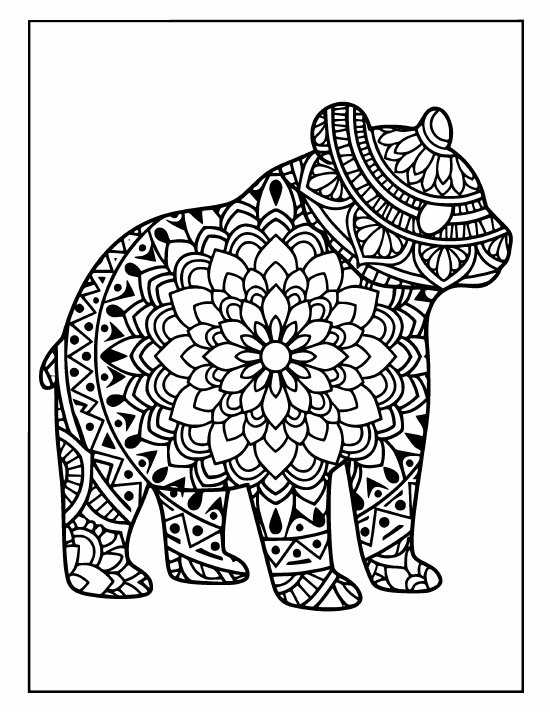
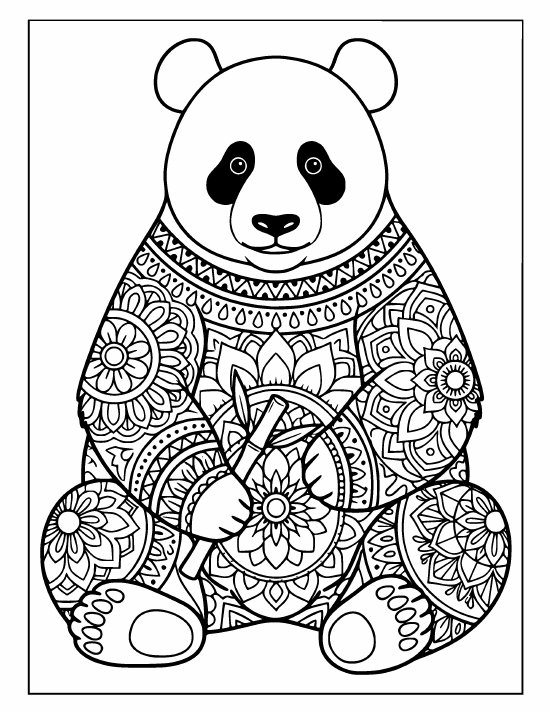
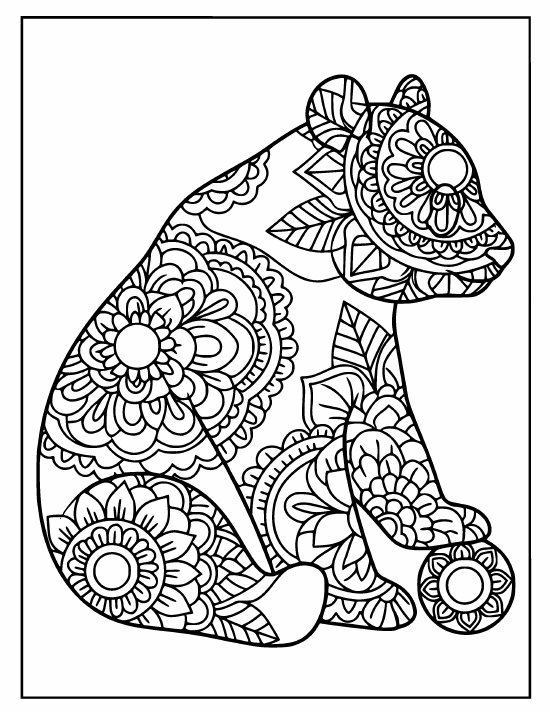
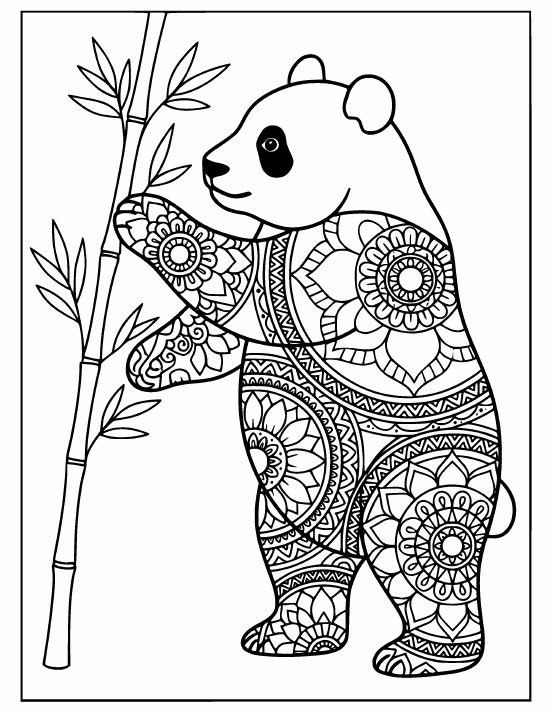
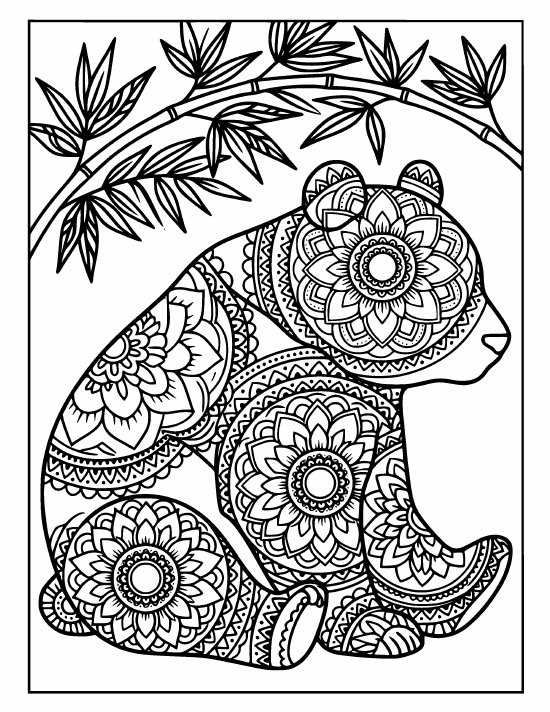
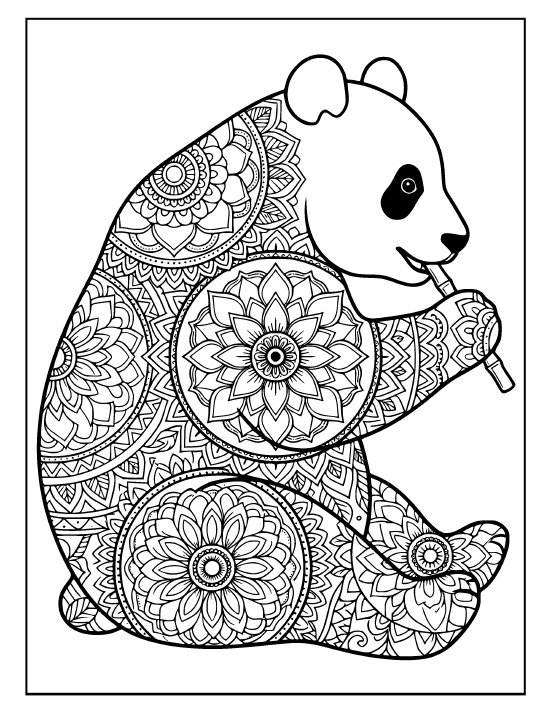
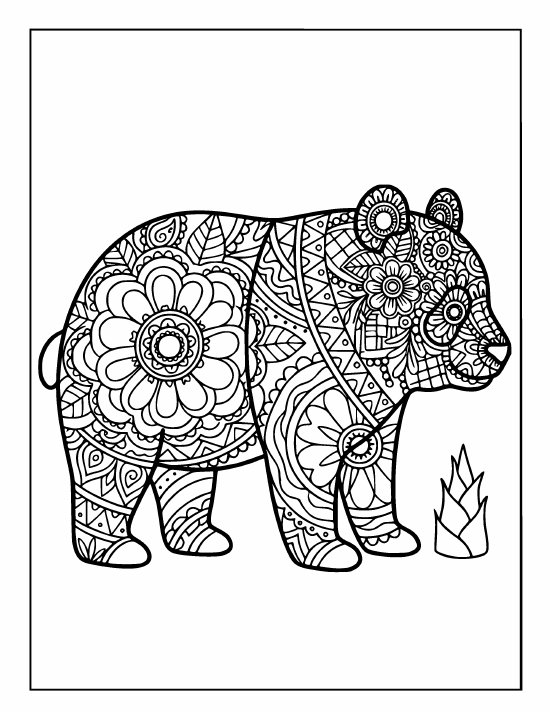
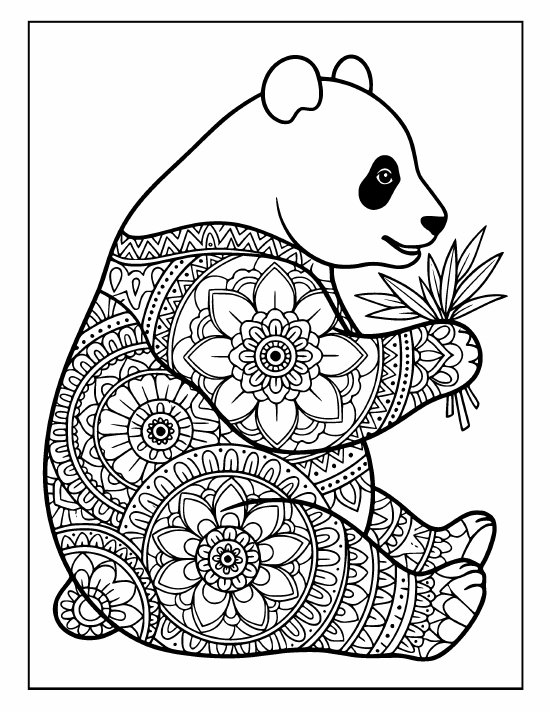
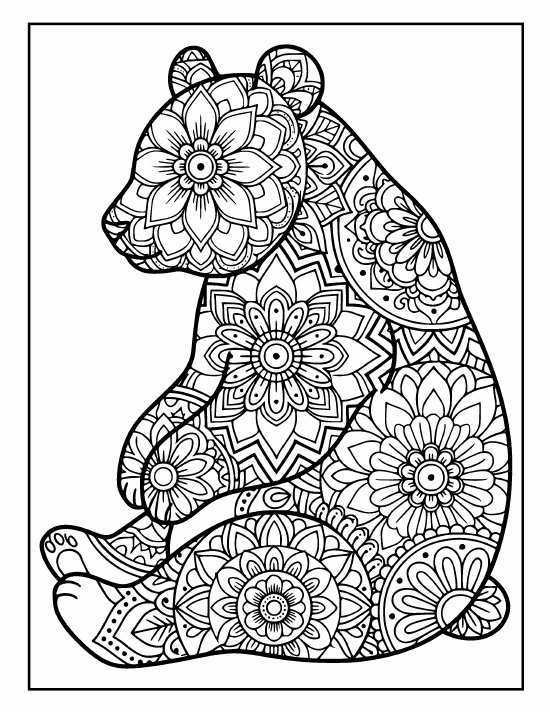
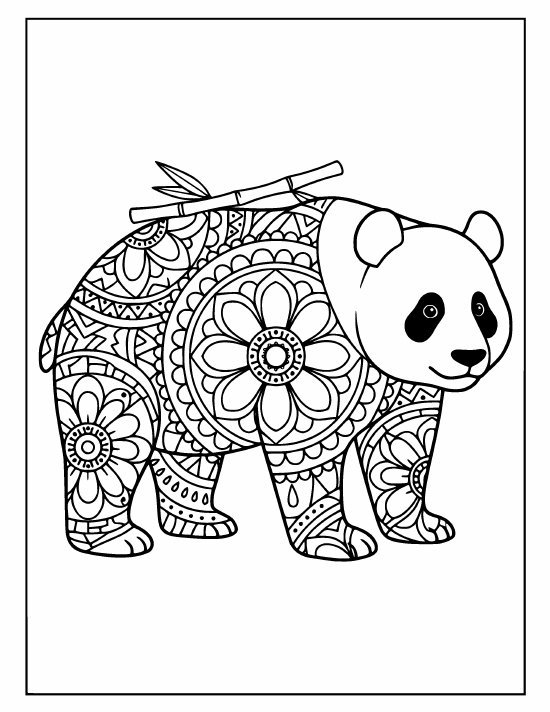
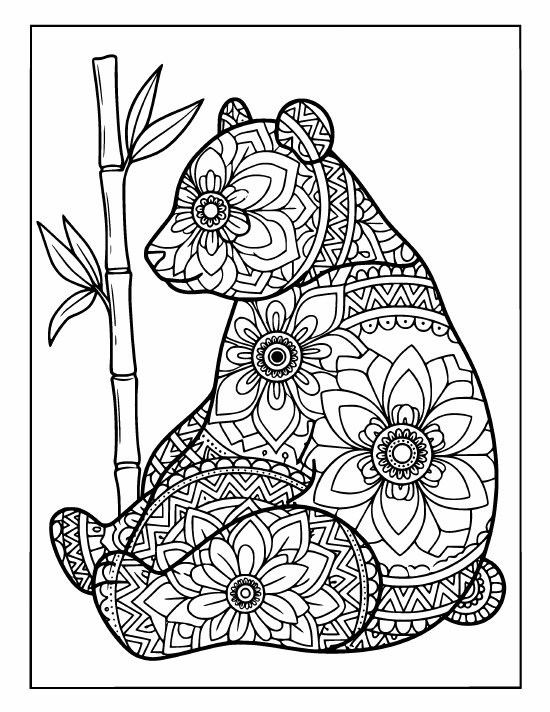
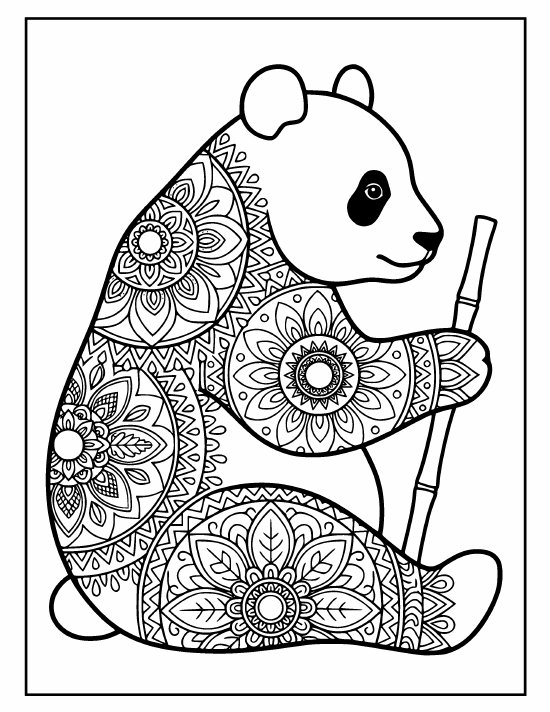
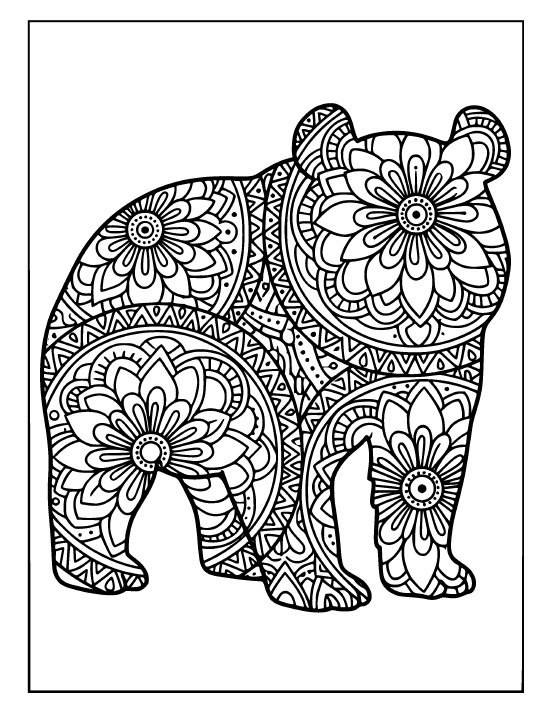
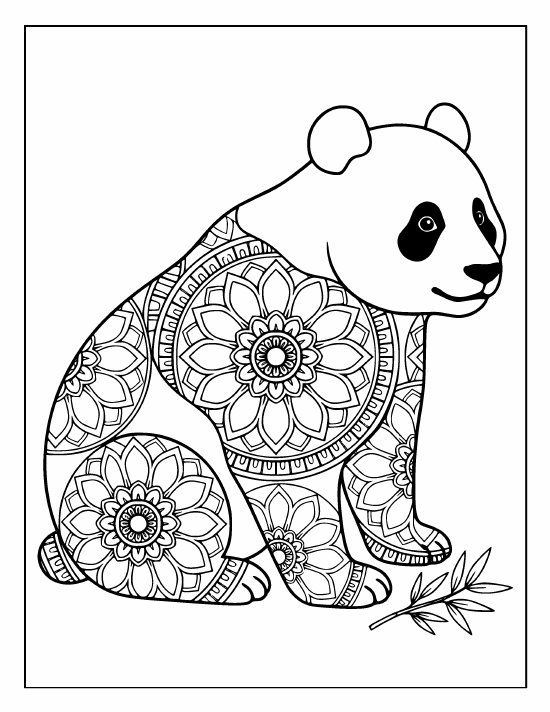
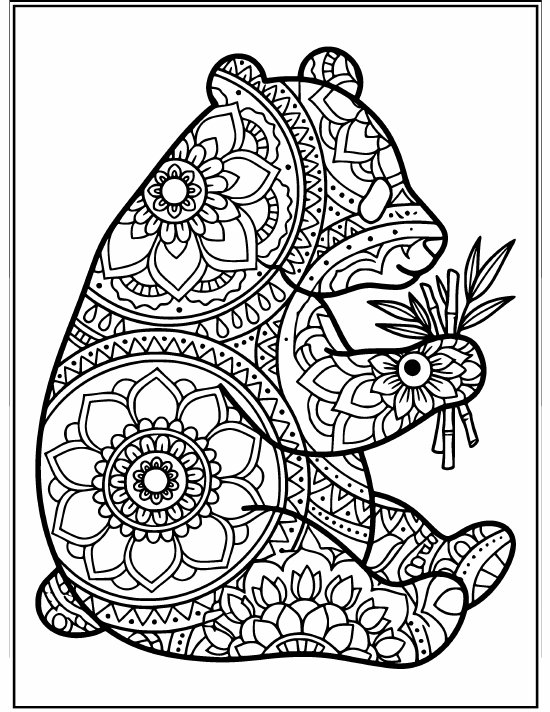
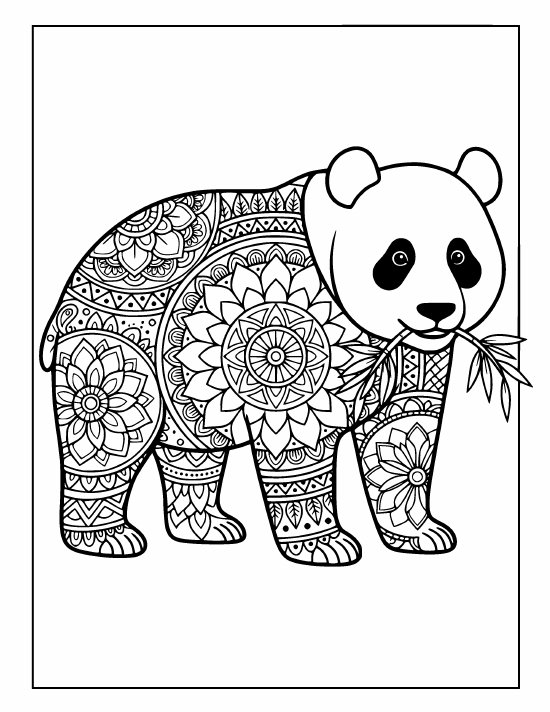
Soft faced panda mandalas, full silhouette mandalas, bamboo scene pages, and standing panda profiles
What changes most from page to page here isn't the scene, it's how much panda you can still see under the pattern, so it helps to know the four kinds before you pick one.
Soft faced panda pages
The panda keeps its real face here, the black eye patches, round eyes, and dark nose left open and clean. Only the body gets the mandala flowers, so it still reads as a panda right away. These are the easiest to start on and the quickest to finish, and they look nice with colored pencils or fine markers.
Full silhouette mandalas
No face on these. The flowers, petals, and dotted bands cover the whole shape, head and all, so the panda turns into pattern from top to bottom. They're the busiest pages and take the longest, and gel pens or fine liners handle the smaller shapes best.
Bamboo scene pages
Here the panda eats, hugs, or sits beside bamboo, sometimes a single stalk, sometimes a potted shoot or a branch overhead. The bamboo is open and simple, a quick break from the busy body, and a handy place to put your greens. A comfortable middle difficulty that suits markers or watercolor pencils.
Standing panda profiles
These show the panda side on, walking or planted on all four legs, with the body opened into big, easy panels. The larger spaces fill fast, so they're a touch easier and a good warm up before the busier silhouettes. Broad markers or chunky pencils give smooth, even fills.
Mix them however you like, a soft faced page when you want the bear to show, a full silhouette when you just want flowers.
What you get in these panda mandala coloring pages
The collection sorts into a few clear types, and knowing them helps you pick the right page for your mood. The soft faced pandas keep their real face open and clean, so the animal reads as a panda right away and only the body gets the flower work. These are the quickest to finish and the friendliest place to start. If you've been away from coloring for a while, begin here.
On the other end you've got the full silhouette pages, where petals, dotted bands, and layered mandalas cover the entire shape, ears and snout included. The panda becomes pattern from top to bottom. These take the longest and reward a little patience, so save one for a quiet evening when you're not in a hurry.
In between sit the bamboo scenes and the standing profiles. The bamboo pages give you a panda eating or holding a stalk, with the plant left simple and open as a quick breather from the busy body. The standing profiles show the panda side on with the body broken into large panels that fill fast.
Color ideas for the flowers and the famous black and white
The fun part of a panda is that the animal itself is just black and white, which means you get to decide how wild the flowers go. One easy approach is to keep the face and paw markings true to life, soft charcoal or warm gray instead of flat black, then let every bloom on the body run bright. Coral, marigold, teal, and plum all look great against the open white fur.
If you'd rather keep things calm, pick three or four colors and repeat them across the whole body. A page of dusty rose, sage, and cream feels gentle and pulls together fast, which is handy on the full silhouette pages where there's a lot to fill. Try shading each flower from a darker outer petal to a lighter center so the mandalas look like they're glowing.
On the bamboo scene pages, the open stalk is the obvious place for your greens, and it gives your eye a rest from all the pattern. A few different greens, one for the stalk and a brighter one for the leaves, makes that corner pop without much effort.
Easy pages to warm up on, busy pages to dig into
The standing profiles are a smart warm up. Because the body opens into big panels, the spaces fill quickly and you get that satisfying done feeling without an hour of tiny shapes. They're also forgiving if your hand isn't steady, since broad fills hide small slips. Use a chunky pencil or a wide marker and you'll cruise right through one.
When you want a real project, the full silhouette mandalas are where to go. The small petals and dotted bands ask for a fine tip, and watching the whole panda turn into flowers is genuinely satisfying. In our 2026 reader survey, 53% use colored pencils and 28% markers, and both work fine here, though pencils give you a little more control on the tightest petals.
A nice trick is to color a soft faced page and a full silhouette page of similar poses, then set them side by side. One reads as a panda first, the other as pure pattern, and the pair looks great framed together.
Pairing pages and a few panda facts to enjoy while you color
These printable pages make easy gifts and easy sets. Color two or three bamboo scenes in the same palette and you've got a matching trio for a kitchen wall or a card. Pandas are a popular pick for new colorers and animal lovers alike, so a single finished sheet tucked into a frame goes over well as a small present.
If you like a little background while you work, here's something to chew on. Real giant pandas eat bamboo for hours every day, sometimes 12 hours or more, which is why so many of these pages put a stalk right in the panda's paws. Newborn pandas are tiny, about the size of a stick of butter, which feels wild next to the big round adults on these sheets. And every panda's black markings sit in slightly different spots, so feel free to treat your shading as your own.
Print a few, keep them somewhere handy, and reach for whichever one fits the moment, a quick standing profile on a busy day or a full silhouette panda mandala when you've got time to spread out.
How to print giant panda mandala coloring pages at home
Printing from this book takes about a minute from start to finish. The full book is one PDF, so you can print every page in a single job or pick out only the panda mandala designs you want.
- Open the book in the embedded viewer. Scroll to the embedded viewer at the bottom of this page, or click any thumbnail in the gallery to jump straight to that panda mandala page inside the viewer.
- Choose Print or Download from the toolbar. Use the viewer's toolbar to print directly from your browser or download the full PDF to your computer for later use. Both options are free.
- Pick the right paper. For colored pencils, standard 24 lb (90 gsm) printer paper works fine. For markers or gel pens on the denser full silhouette pages, step up to 70 to 90 lb cardstock to prevent bleed through and warping.
- Set print quality and scaling. Select your printer's highest quality setting and set scaling to None or Actual Size to keep the bold line work crisp on 8.5x11 paper. On A4, enable Fit to page.
- Test print one sheet first. Before printing the full book, run a test on a single panda mandala page to check the line crispness and paper behavior with your chosen tool.
More adult coloring themes
If you liked these giant panda mandala coloring pages, here are a few more themes you might enjoy.
Intricate Symmetrical Mandalas
Detailed mandalas packed with zentangle fills and pretty circles, great for slow unwinding sessions.
Browse intricate symmetrical mandalas →Butterfly Coloring Pages
Butterflies with matching wings and little mandala details tucked in, fun for bold color combos.
Browse butterfly coloring pages →Animal Coloring Pages for Adults
Detailed wildlife and pet drawings if you want animals beyond just pandas.
Browse animal coloring pages for adults →Frequently asked questions
Why do the giant panda mandala coloring pages use circular mandala frames instead of a simple outline drawing?
The mandala structure gives you a built-in rhythm to follow, so your eye moves outward from the panda's face through rings of bamboo leaves, geometric petals, and repeating shapes without ever feeling lost. That layered repetition is exactly what makes coloring feel meditative rather than like a chore. It also means every finished piece looks polished and balanced, even if you just grab three or four colors and go.
Which pages in this collection feel the coziest for a slow weekend afternoon?
The pages featuring a round, drowsy panda nestled inside a wreath of overlapping bamboo stalks are the coziest picks by far. The shapes are generous and the negative space is calm, so there is no pressure to rush or fuss over tiny details. Pair one of those with a warm drink and you have got a genuinely relaxing hour.
How do the playful, tumbling panda poses change the feel of a panda mandala compared to the seated, centered ones?
The tumbling poses bring a lot of energy and humor into the design, making the whole page feel lighthearted rather than serene. The mandala rings around them tend to echo that movement with curving, asymmetric bamboo arcs instead of strict geometric rings. If you want something that makes you smile while you color, those are the ones to reach for first.
What color palettes work especially well on the bamboo and floral border sections of these pages?
Soft sage greens and warm cream tones keep the bamboo sections feeling natural and fresh without competing with the panda at the center. For a moodier look, try deep forest green paired with dusty rose or terracotta on the floral petals, which makes the black and white panda pop beautifully. Cool mint and pale gold is another combination that feels almost spa-like on the larger petal rings.
Are the giant panda mandala coloring pages with dense geometric outer rings better suited to adults who already color regularly?
They do reward a bit of patience, since the outer rings on some pages have smaller repeated shapes that look stunning when you alternate two or three colors consistently all the way around. That said, they are not difficult, just more time-intensive than the simpler wreath-style pages. Adults who enjoy getting into a flow state tend to love those pages the most.
Can I use these pages as a themed gift for someone who is obsessed with pandas?
Absolutely, a small stack of printed panda mandala pages tucked into a card with a set of colored pencils is a genuinely thoughtful and personal gift. The bamboo wreath pages and the floral mandala pages together make a nice pairing because they feel like a coordinated set even though each one stands alone. You could even frame a completed page from this collection as a finished art piece, since the bold mandala borders look great in a simple frame.
Do giant pandas actually eat the kinds of bamboo shown in these designs, or is it just decorative?
Giant pandas really do eat bamboo almost exclusively, spending up to 14 hours a day munching through it in the wild, so the bamboo in these designs is a genuine nod to their real lives. The stylized stalks and leaves in the borders are drawn in that classic fan-shaped arrangement you see in nature photography of pandas at rest. It is a small detail, but it makes the pages feel grounded in something real rather than purely fantastical.
Which pages from this collection would look best printed large, like on cardstock at full letter size?
The pages where the panda fills most of the central medallion and the outer mandala rings are bold and open print beautifully at full letter size on cardstock. The extra real estate lets you blend colors across the wider petal sections and really show off any shading you add to the panda's fur. Thicker paper also means you can use brush pens or light watercolor washes on those bigger sections without the page buckling.