
Bold and Easy Succulent Coloring Pages for Simple, Calm Coloring (Free Printables)
Curated by Coloring Therapy
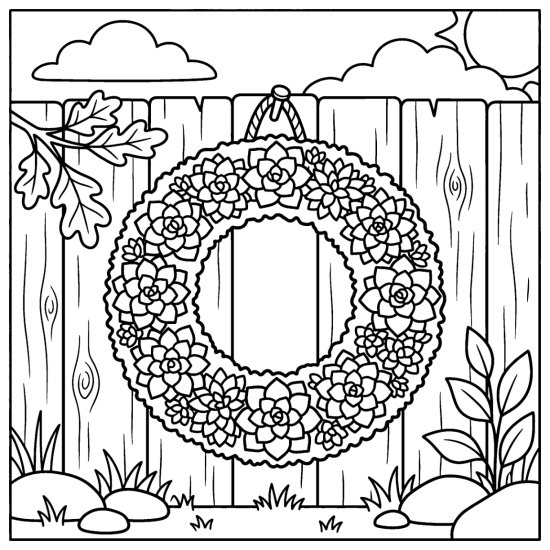
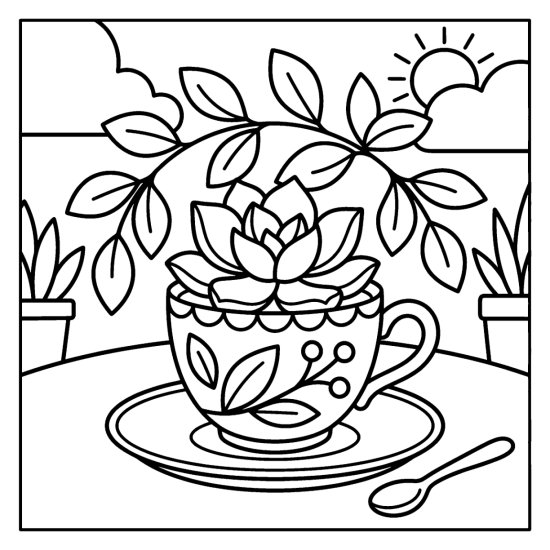
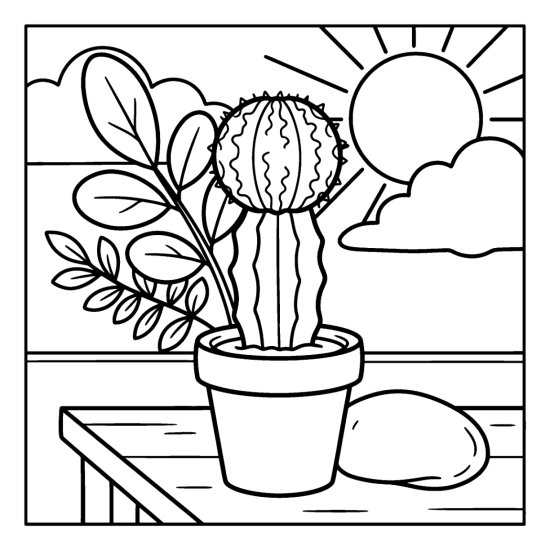
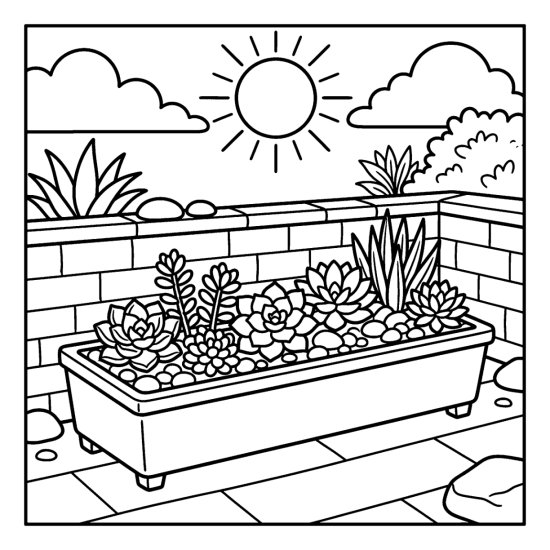
These bold and easy succulent coloring pages give you exactly what the name promises: big, friendly shapes and thick outlines that are simple to fill without any fuss. Inside you will find a single rosette blooming in a hexagon pot on a garden table, a chubby succulent tucked into a patterned teacup with a spoon resting on the saucer, three little cacti lined up on a wooden plank, and a long stone trough packed with rosettes and agave under a cheerful sun. Every scene is drawn for relaxed coloring, so you spend your time choosing colors instead of squinting at tiny gaps.
What makes this collection so easy to settle in with is the range. Some pages are quiet, with just one plant and a watering can or a pebble nearby. Others are busy in a good way, with rock gardens and tiered planters full of small shapes you can color one at a time. Whether you have ten minutes or a whole evening, there is a page here that fits.
Below, I will walk you through the different kinds of scenes you will meet, plus a few color and palette ideas that work especially well for plants like these.
Browse every page in the book
Click any succulent coloring page below to preview, print or download.
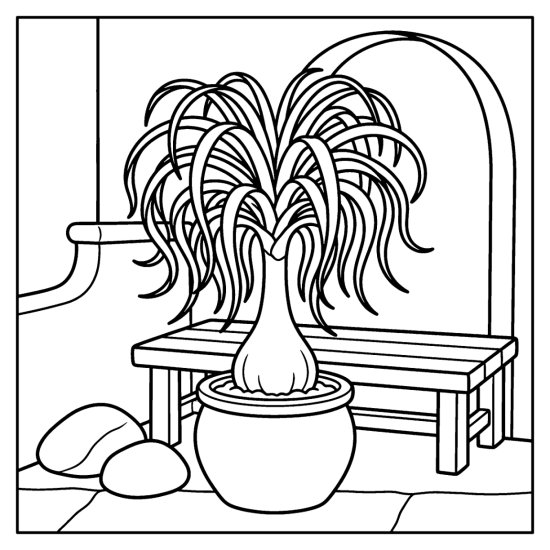
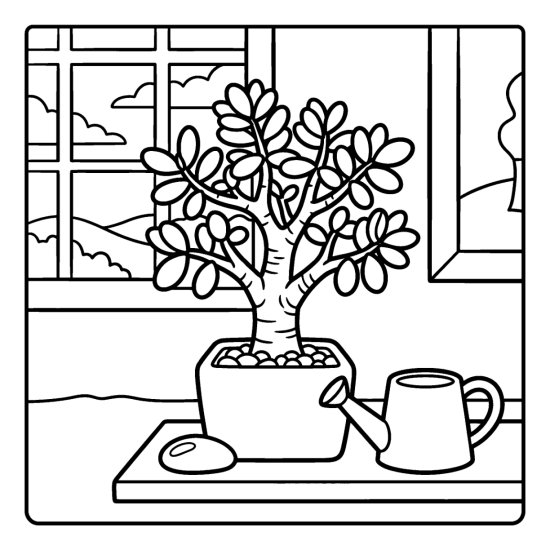
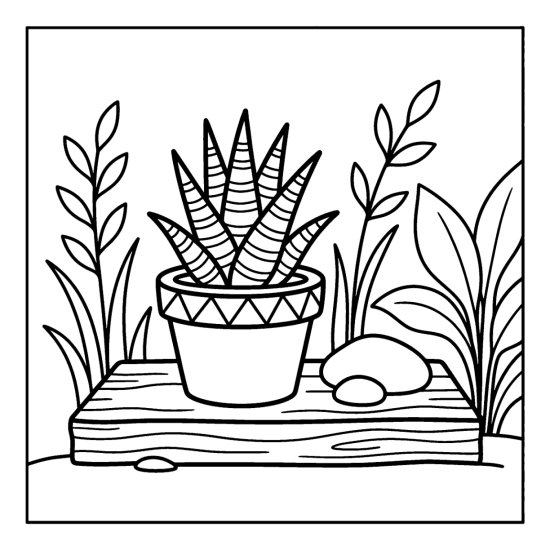
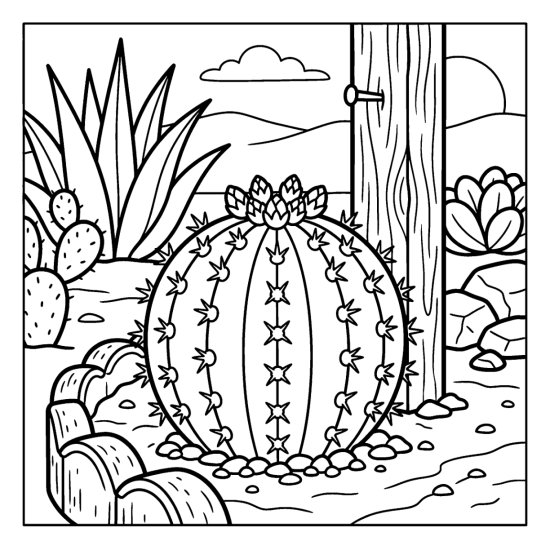
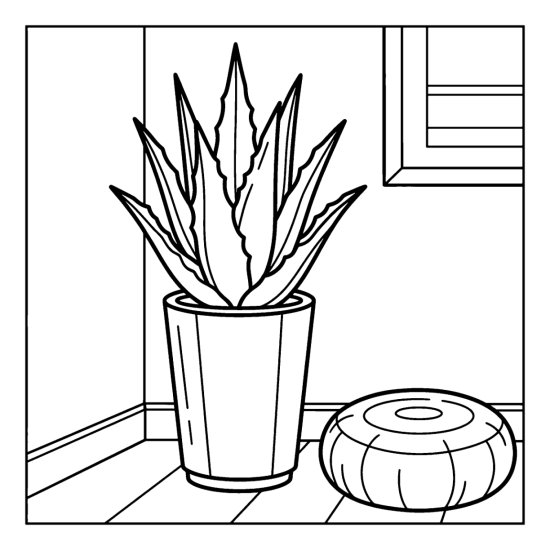
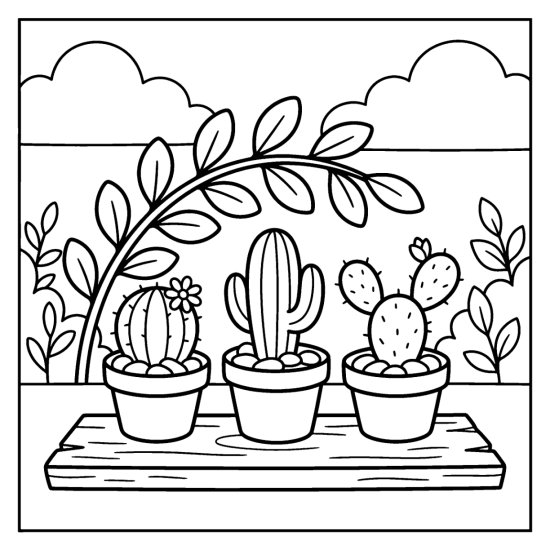
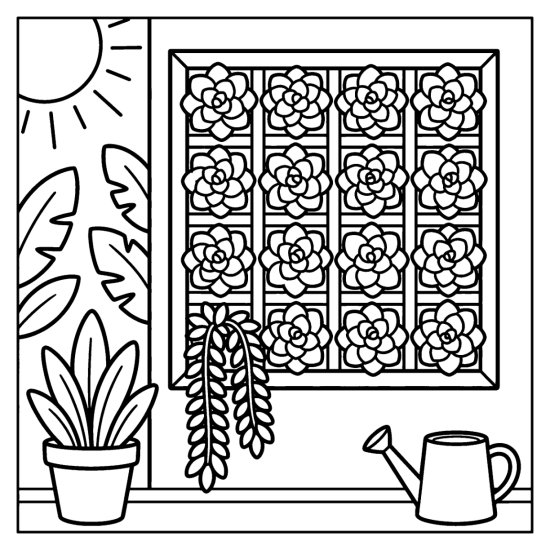
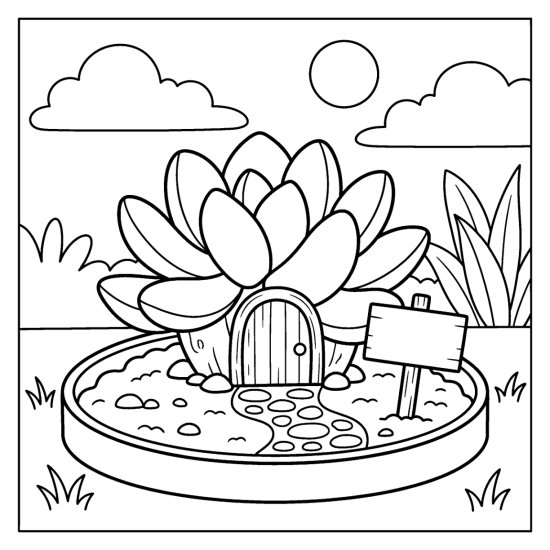
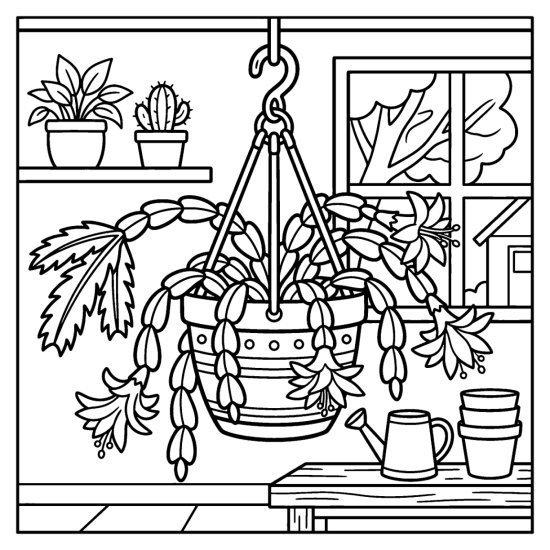
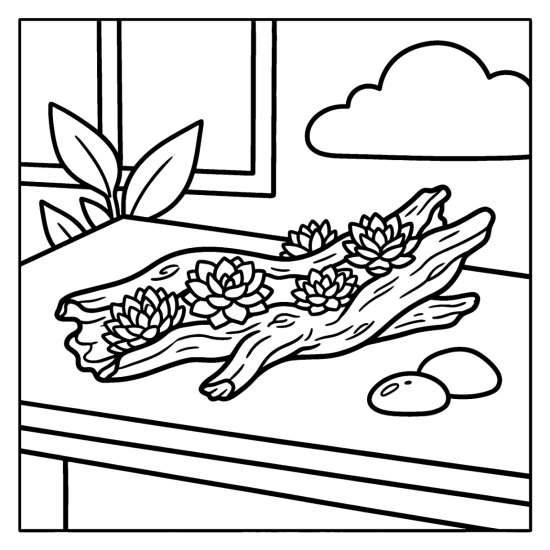
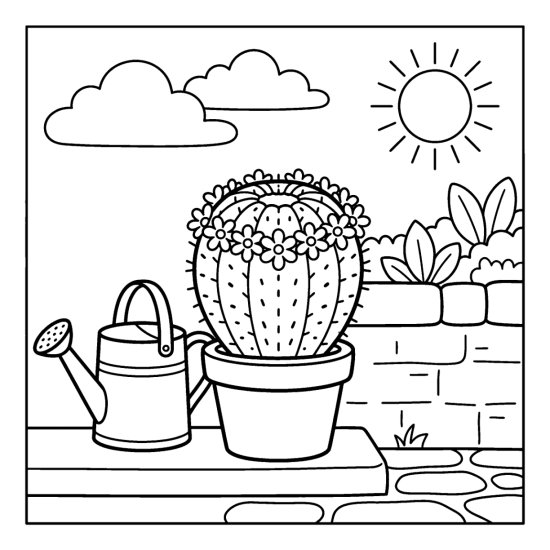
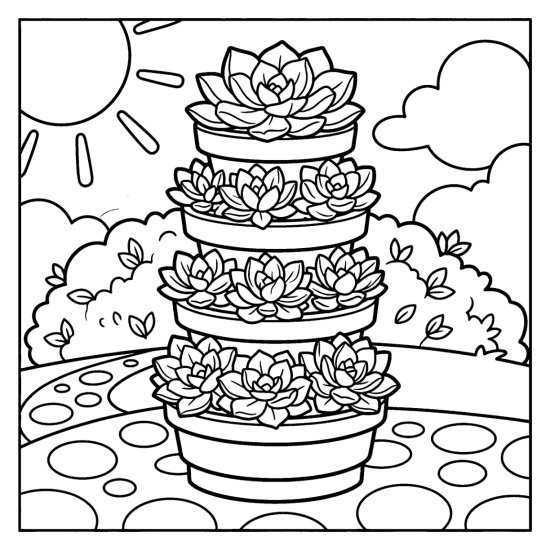
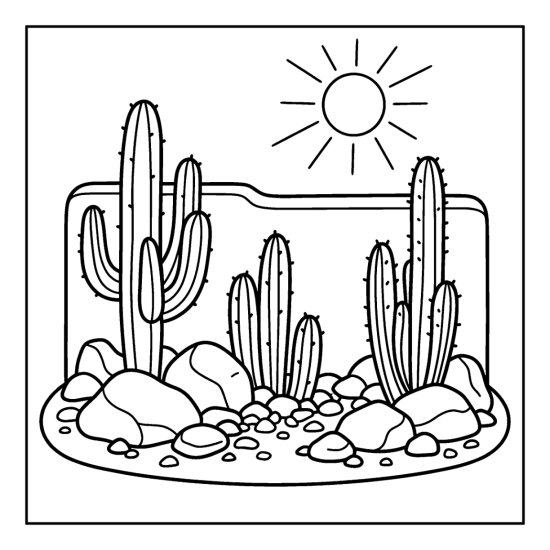
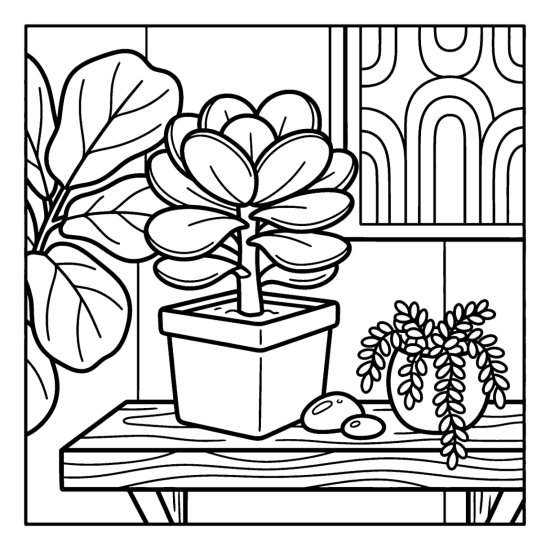
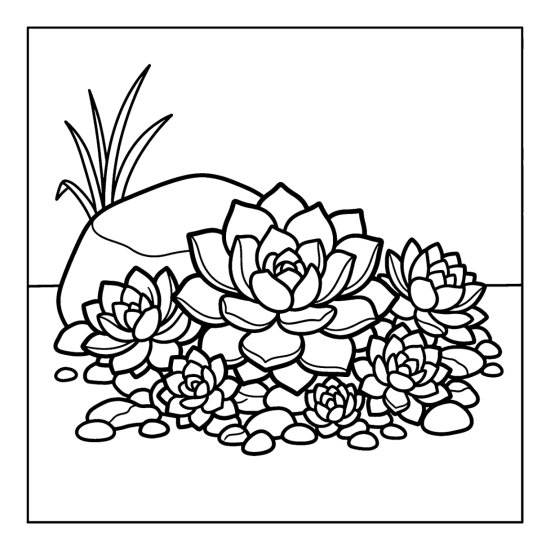
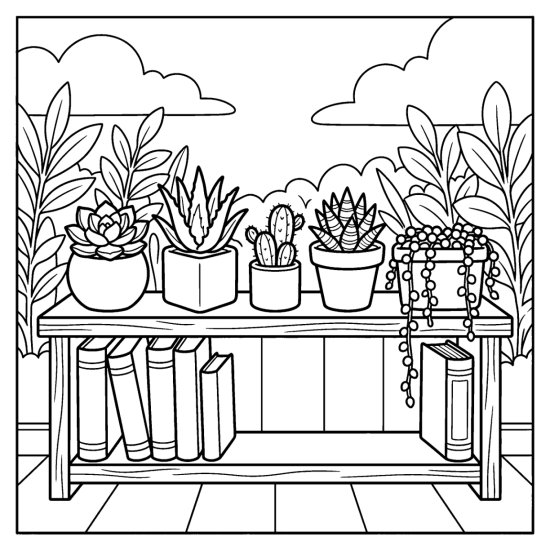
Potted succulents, desert cacti, garden arrangements, and trailing varieties
The book moves through four loose groups, so you can pick a page based on the kind of calm, simple coloring you want to spend the next hour on.
Potted succulent pages
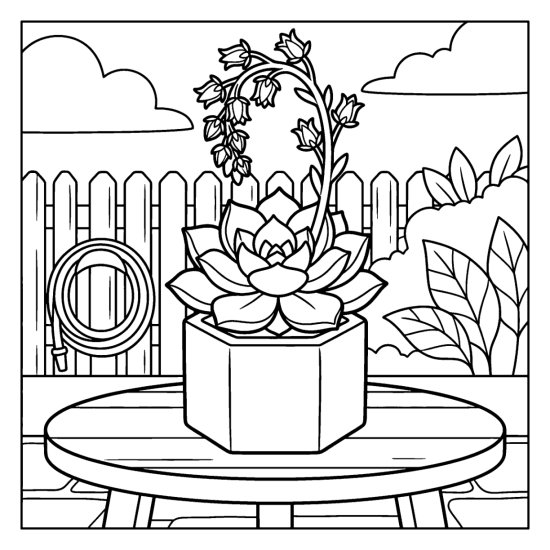
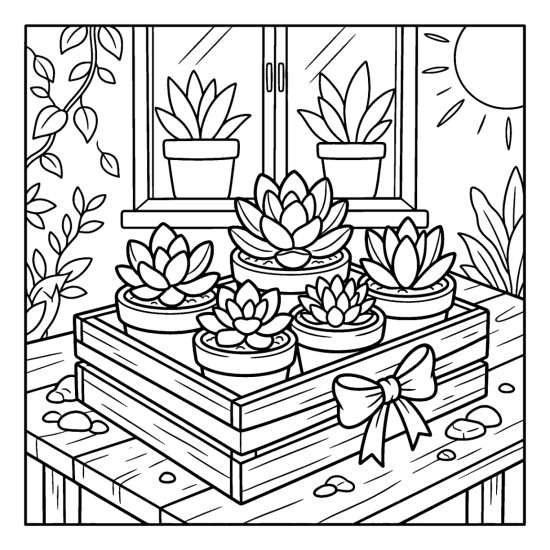
Single rosettes and small plants tucked into teacups, mugs, crates, and glazed pots, each on a table or ledge with a pebble or watering can nearby. The thick outlines and large open leaves make these the friendliest starting point for beginners. Pair them with colored pencils or fine markers, and most finish comfortably in one relaxed sitting.
Desert cactus pages
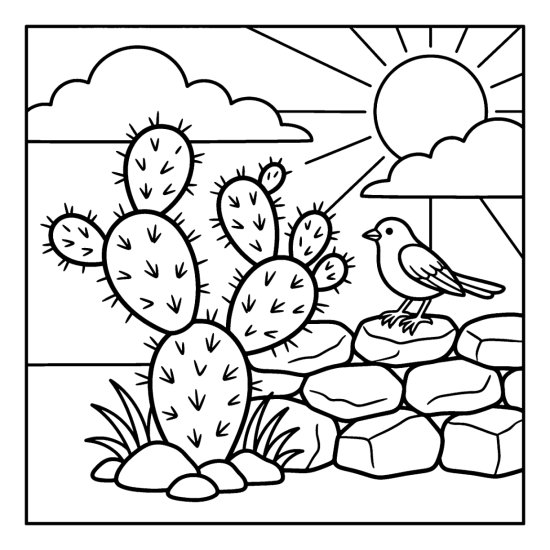
Barrel cacti, prickly pears, organ pipe columns, agave, and full xeriscape yards set among gravel, rocks, and low walls under a simple sun. The wide background shapes give you room to layer warm sandy tones. These pages carry a little more detail than the potted ones, so they suit an unhurried evening with pencils or gel pens.
Garden and arrangement pages
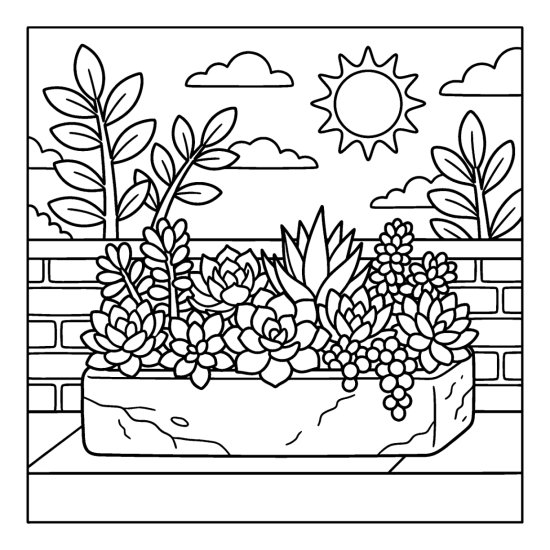
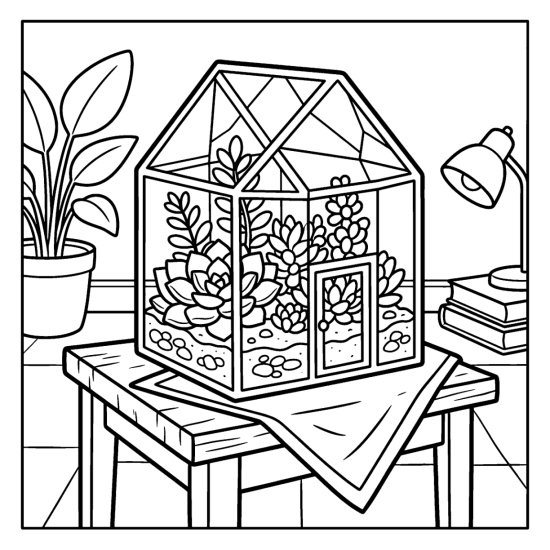
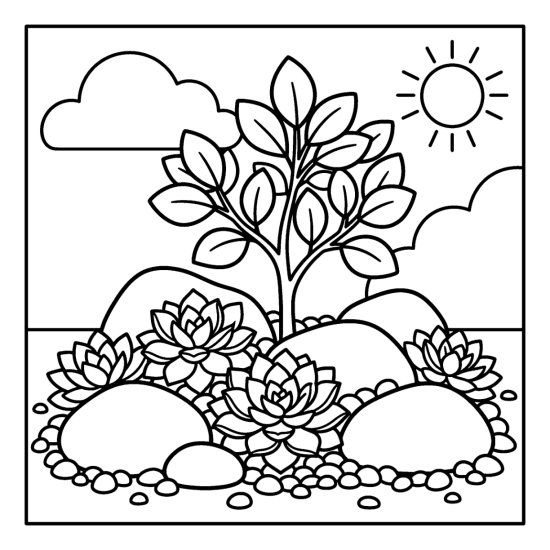
Stone troughs, rock gardens, tiered towers, wall grids, and driftwood plantings packed with many small rosettes side by side. The repeated simple shapes are soothing to fill in one by one and reward a varied green palette. Beginners can take them slowly, and a single arrangement can stretch across two or three short sessions.
Trailing and specialty pages
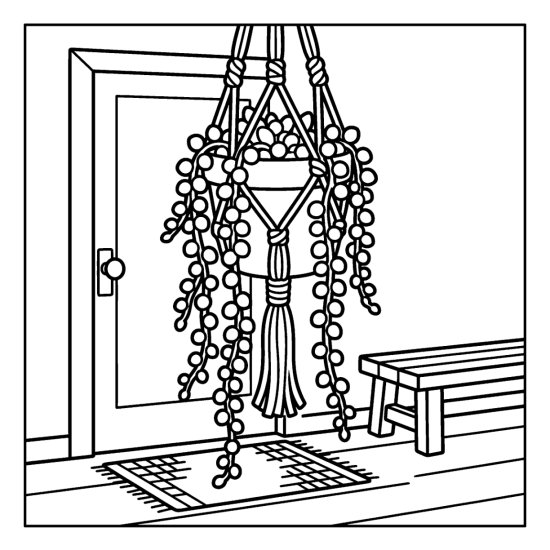
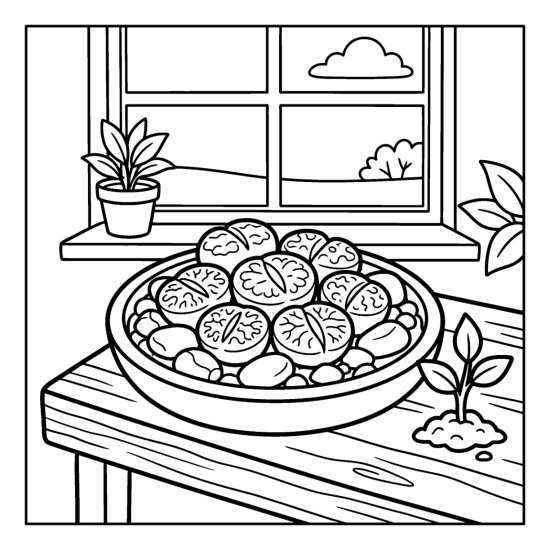
String of pearls, burros tail, Christmas cactus, lithops living stones, moon cactus, and a tiny fairy garden scene bring the most playful shapes in the book. The cascading strands and rounded forms stay bold and easy to read. They pair beautifully with soft greens and a few accent colors for the blooms.
Most pages stand on their own, so you can print one at a time or work through a whole group in an afternoon.
Where these simple succulent coloring pages begin
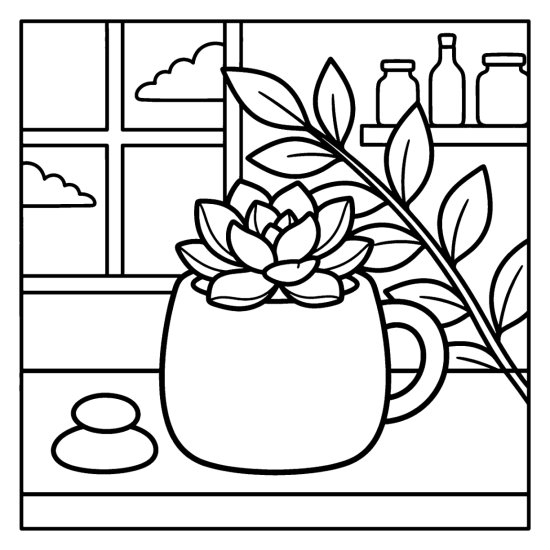
If you are new to coloring, start with the potted pages. These are the friendliest in the book: a single rosette in a teacup, a small plant in a glazed mug, or a chubby succulent in a crate set on a table or ledge. The thick lines and large open leaves mean you can color a whole leaf with a few easy strokes, no careful edging required.
The teacup scene is a nice example. The cup itself has a leaf pattern and a little scalloped rim, so you get a second thing to color once the plant is done. A spoon and saucer round out the picture without crowding it. Most adults finish a page like this in one relaxed sitting, which feels great when you just want a quick win.
Color the rosette in a soft sage or jade green, then add a faint blush of pink at the leaf tips, the way real echeverias do in bright light. That tiny bit of pink makes the whole plant pop and it takes about thirty seconds.
Cacti, gravel, and warm desert backgrounds
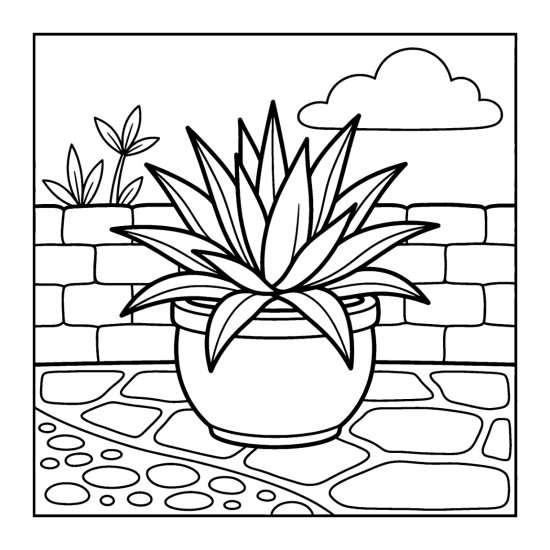
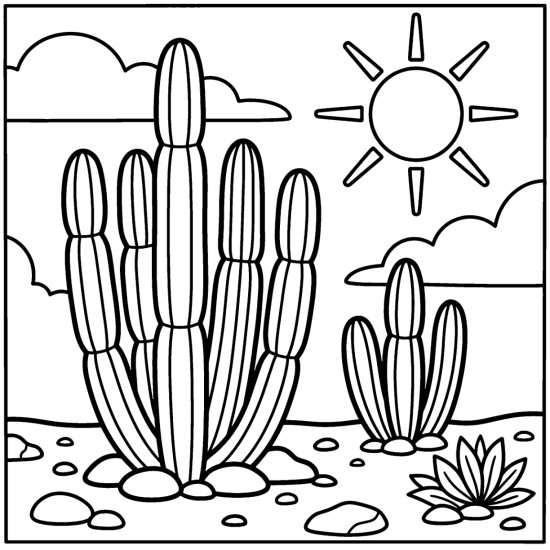
The desert pages step things up just a little. You will find barrel cacti, tall organ pipe columns, prickly pears, spiky agave, and full backyard xeriscape scenes set among gravel, low walls, and a simple sun. The three cacti on a wooden plank are a good entry point here, with one even sporting a tiny flower on top.
What I love about these is the open background. The sky, the rocks, and the sandy ground give you big areas to layer warm tones. Try a base of pale tan, then build up with terracotta and a touch of dusty orange for a sunset feel. Keep the cacti in cooler greens so they stand out against all that warmth.
These carry a bit more detail than the potted pages, so they suit a slower evening. If you like, color the spines in a slightly darker shade than the body of the cactus to give each plant a little texture.
Rock gardens, troughs, and tiered arrangements
When you want something to spread across a few short sessions, reach for the arrangement pages. These show stone troughs, rock gardens, wall grids, and tiered towers packed with many small rosettes side by side. The long planter under the sun is a great one, with rosettes, trailing stems, and spiky agave all crowded together in a single box.
The repeated shapes are the whole point. You can fill them one rosette at a time, and it is genuinely satisfying to watch the box fill up with color. This is also where a varied green palette shines. Mix sage, olive, mint, and a deeper forest green from rosette to rosette so no two look quite the same.
Real succulent gardens often pair plants with different textures on purpose, so you are free to get creative. A few gray-blue rosettes among the greens read like powdery agave and keep the whole arrangement from looking flat.
Trailing strands and playful specialty plants
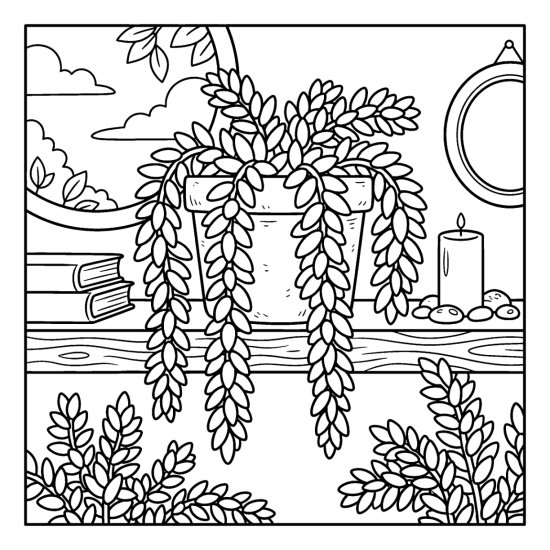
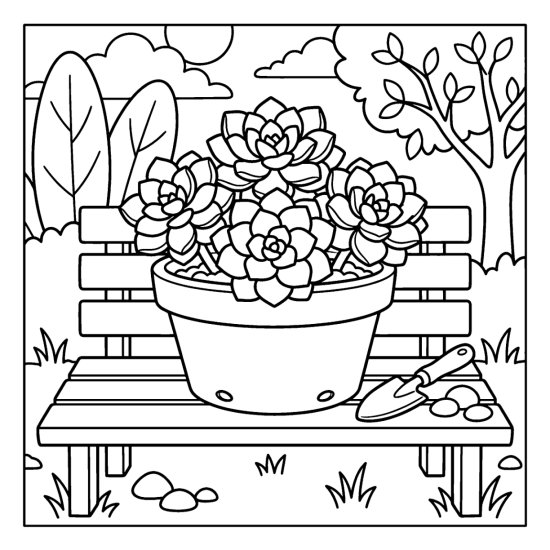
The most fun shapes in the book live here. Think string of pearls spilling over a pot rim, a fuzzy burros tail, a Christmas cactus mid bloom, lithops living stones, a bright moon cactus, and even a tiny fairy garden scene. The bench page with a pot of large rosettes and a little trowel has this same playful, rounded feel.
These stay bold and easy to read even though the shapes are unusual. The round beads of a string of pearls, for instance, are just simple circles, so they are beginner friendly even when they look fancy. Color them in a clean light green and they practically glow.
Lean on soft greens for the foliage and save your brightest colors for the blooms. A Christmas cactus with hot pink or coral flowers, or a moon cactus in cherry red, gives you one cheerful focal point against all that calm green. According to our 2026 reader survey, 58% of folks color in the evening, and these playful pages are a lovely way to end the day.
Easy ways to pair, frame, and gift these pages
Because the styles range from a single teacup plant to a full rock garden, it is easy to build a little themed set. Color three potted pages in matching pots and you have a trio that looks great framed together on a kitchen wall. The thick lines hold up well at small sizes, so even a 5 by 7 print stays clear.
These also make warm, simple gifts. A finished teacup succulent tucked into a card works for a plant-loving friend, and the cheerful cacti plank is a fun one to color with a younger family member who wants in on the fun. Print them on slightly heavier paper if you plan to use markers, since the open shapes invite bold, saturated color.
However you use them, the goal is the same: low pressure, plenty of green, and pages that are genuinely easy to finish. Pick whichever scene catches your eye today and just start coloring.
How to print bold and easy succulent coloring pages at home
Printing from this book takes about a minute from start to finish. The full book is one PDF, so you can print every page in a single job or pick out only the bold and easy designs you want.
- Open the book in the embedded viewer. Scroll to the embedded viewer at the bottom of this page, or click any thumbnail in the gallery to jump straight to that succulent scene inside the viewer.
- Choose Print or Download from the toolbar. Use the viewer's toolbar to print directly from your browser or download the full PDF to your computer for later use. Both options are free.
- Pick the right paper. For colored pencils, standard 24 lb (90 gsm) printer paper works fine. For markers or gel pens on this bold line work, step up to 70 to 90 lb cardstock to prevent bleed through and warping.
- Set print quality and scaling. Select your printer's highest quality setting and set scaling to None or Actual Size to keep the thick outlines crisp on 8.5x11 paper. On A4, enable Fit to page.
- Test print one sheet first. Before printing the full book, run a test on a single potted succulent page to check the line crispness and paper behavior with your chosen tool.
More adult coloring themes
If you liked these bold and easy succulent coloring pages, here are a few more themes you might enjoy.
Easy Coloring Pages for Adults
Bold outlines and roomy spaces on all kinds of subjects, perfect for quick relaxing sessions.
Browse easy coloring pages for adults →Flower Coloring Pages
Pretty flowers and bouquets with more detail if you want a bigger challenge than the plants here.
Browse flower coloring pages →Bold and Easy Coloring Pages
Thick lines and big simple shapes across mixed themes, low stress and lots of fun.
Browse bold and easy coloring pages →Frequently asked questions
What makes these bold and easy succulent coloring pages different from a typical botanical coloring book?
These pages lean into thick lines and large, simple shapes instead of fine crosshatching or tiny details, so your hand never cramps trying to stay inside a hairline border. Think chunky echeveria rosettes, plump barrel cacti, and wide-mouthed pots with plenty of breathing room between each section. It is the kind of page where you can zone out to a podcast and still end up with something that looks great.
Are the echeveria rosette pages good for trying out a gradient or ombre coloring technique?
They are honestly perfect for it. Each petal layer on the echeveria rosettes is its own clean, thick-outlined segment, so you can shade from a pale mint at the center out to a deep teal at the tips without the colors bleeding into each other. Even if you have never tried a gradient before, the simple structure of these pages makes the technique feel approachable and satisfying.
Which pages in this collection feel the most cozy and would work well as a slow-morning coloring session?
The potted echeverias and the clustered dish-garden arrangements have that quiet, windowsill energy that is perfect for a slow morning with coffee. The shapes are rounded and friendly rather than spiky, and the simple succulent coloring pages in that group do not demand a lot of decision-making, so you can just settle in and color. If you want something a little livelier, the tall columnar cacti pages have a fun, graphic quality that still keeps the relaxed pace.
Do the desert cactus pages use the same thick lines and beginner-friendly style as the potted succulent pages?
Yes, the whole collection is drawn to the same bold and easy standard, so the desert cacti get the same chunky outlines and open fill areas as the potted plants. The saguaro and prickly pear pages have large, clearly separated sections that are easy to fill without a tiny detail brush or a super fine marker tip. Beginners will find the desert scenes just as relaxed to color as the indoor pot arrangements.
How would I turn a finished page from this collection into a small gift?
The potted echeveria and aloe pages trim down beautifully to a 5x7 size, which drops right into a standard frame you can grab at any craft store. Color one, pop it in a simple white frame, and it reads as a thoughtful handmade piece of botanical art. It is a genuinely sweet housewarming or birthday gift, especially for someone who keeps real plants.
Can I pair two or three pages from this set to color as a matching series?
Absolutely, and it is one of the most fun ways to use simple succulent coloring pages like these. Try pulling the echeveria rosette page, the haworthia page, and one of the dish-garden arrangements, then stick to the same palette across all three for a cohesive little series. Hang them together in a row and they look like a coordinated set of prints rather than individual coloring pages.
What color palettes actually look stunning on these bold and easy succulent coloring pages?
A dusty, muted palette of sage, terracotta, and warm cream feels very on-trend and suits the desert cactus pages especially well. For the rosette-heavy pages, a jewel-tone approach with deep plum, emerald, and cobalt makes the thick outlines pop in a really dramatic way. If you want something softer, blush pinks and lavenders on the echeveria pages give them a dreamy, almost watercolor feel even with standard colored pencils.
When do succulents actually bloom, and does this collection include any flowering plants to color?
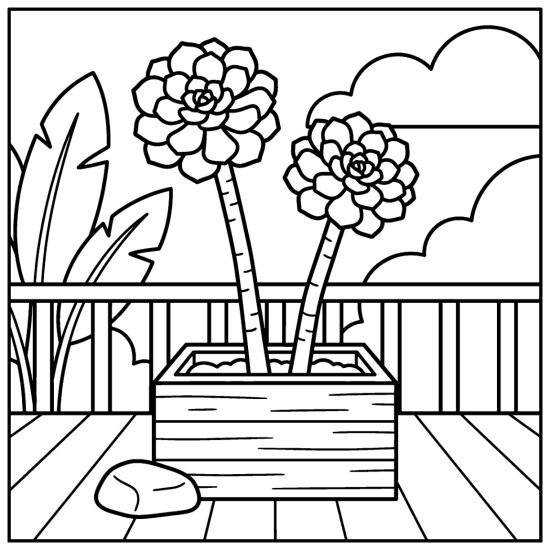
Most succulents bloom in late spring through summer, though some echeverias and aloes push out flowers in winter, which makes them a nice surprise for indoor gardeners. A few pages in this collection do feature small blooms sitting at the center of rosettes or on tall stalks above the plant, giving you an extra pop of color to play with. It is a small but lovely detail that makes those particular pages feel a little more alive once you add a bright coral or yellow to the flower.