
Bold and Easy Plant Coloring Pages for Calm, Simple Coloring (Free Printables)
Curated by Coloring Therapy
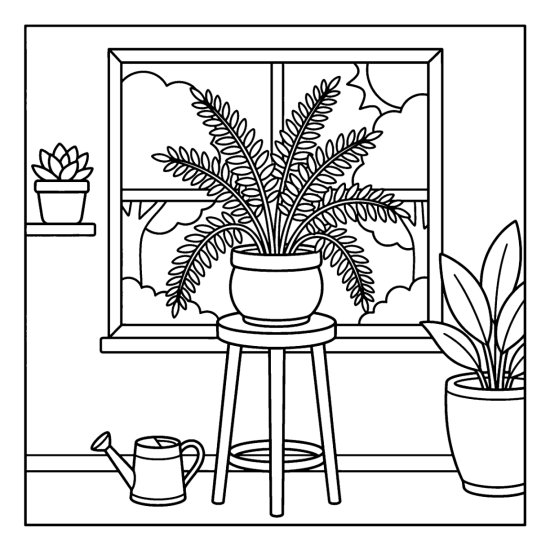
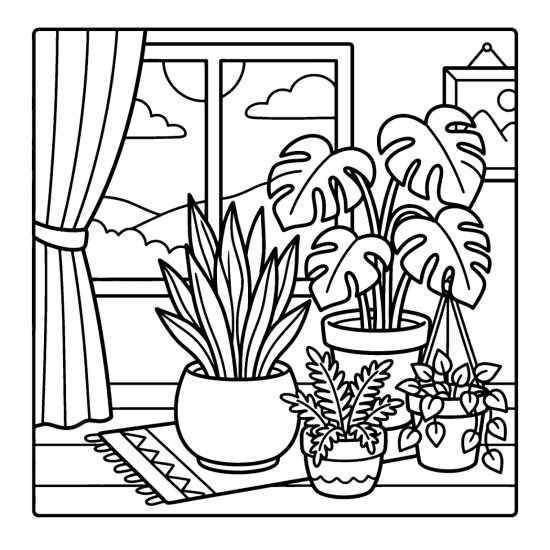
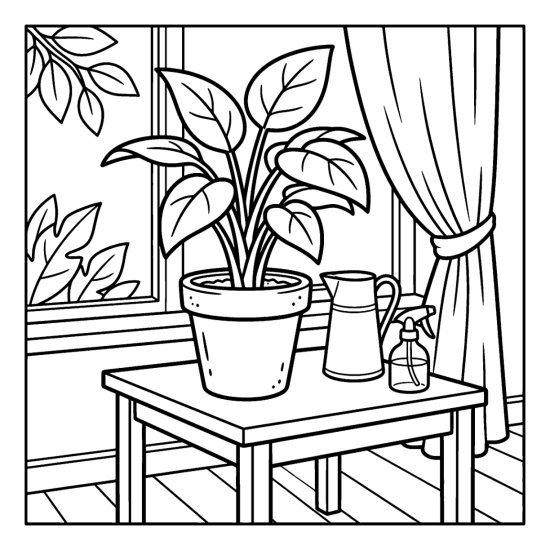
If you want plants you can color without squinting, these bold and easy plant coloring pages are built for you. The collection runs from a single monstera by a sunny window to a spider plant trailing its babies over a shelf, a pair of leafy pots flanking a watering can, and a feathery plant perched on a little wooden stool. Every scene uses thick lines and big open shapes, so you get the calm of coloring without the fuss of tiny detail work.
What ties the whole book together is how forgiving it is. The leaves are large, the pots are roomy, and the backgrounds keep things simple with a window, a curtain, and a wood floor. That makes these great for beginners or anyone who just wants a relaxed half hour with a plant on the page. Whether you reach for colored pencils or markers, the generous spaces give you room to work without going outside the lines.
Below I will walk you through what is actually inside, from the big leafy houseplants to the cacti, the trailing vines, and the busier plant displays. I will toss in some color ideas for each and point out which pages are the quickest wins when you are short on time.
Browse every page in the book
Click any plant coloring page below to preview, print or download.
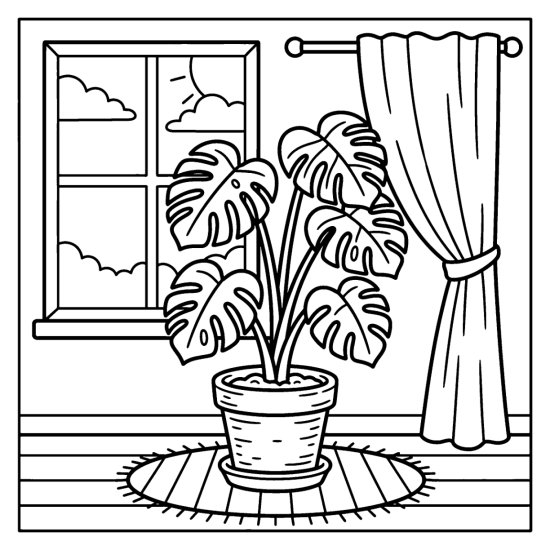
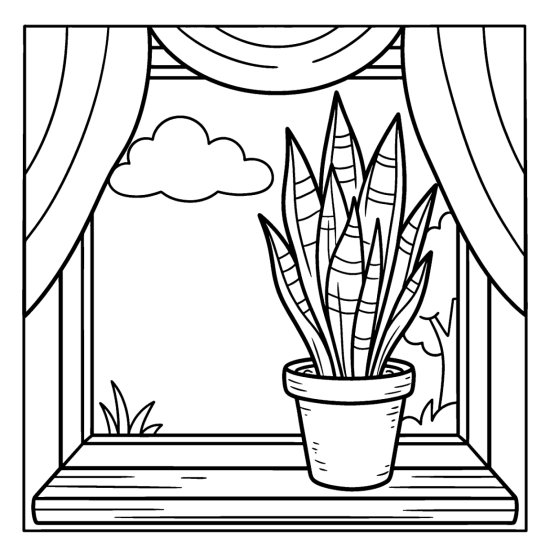
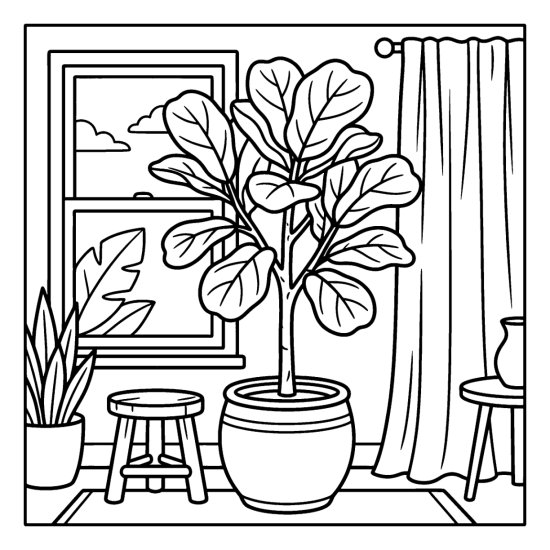
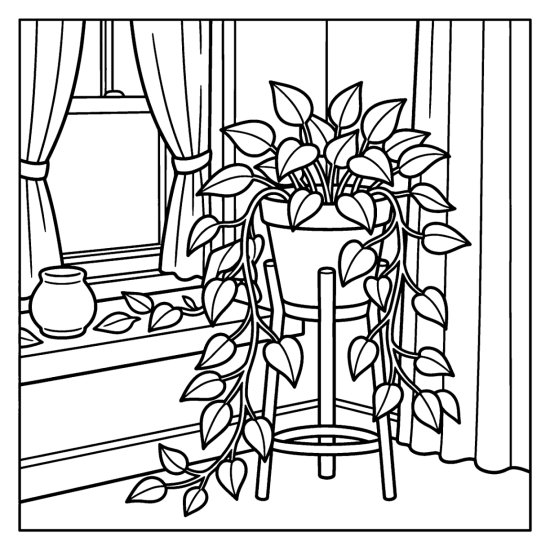
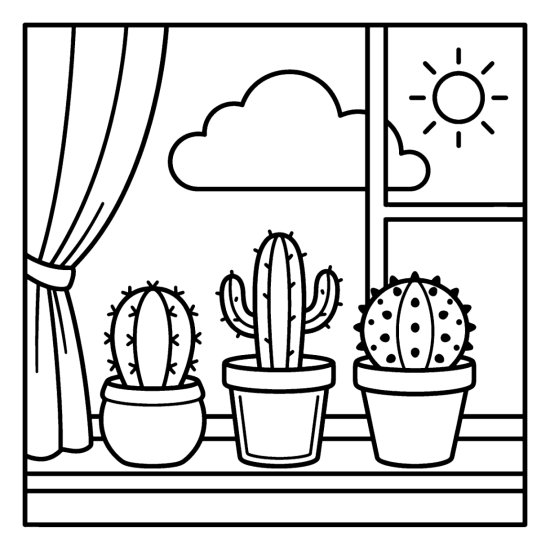
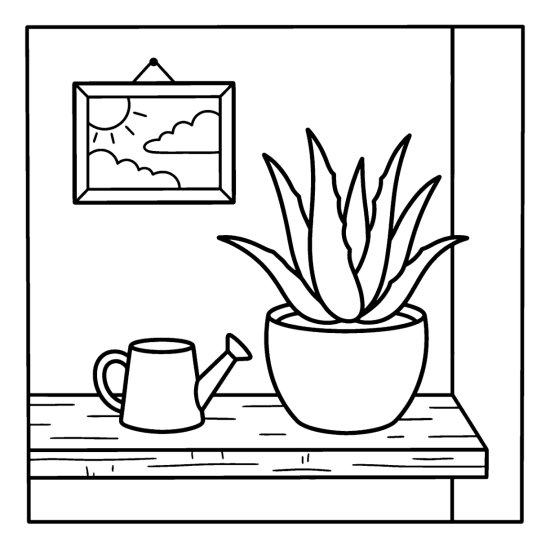
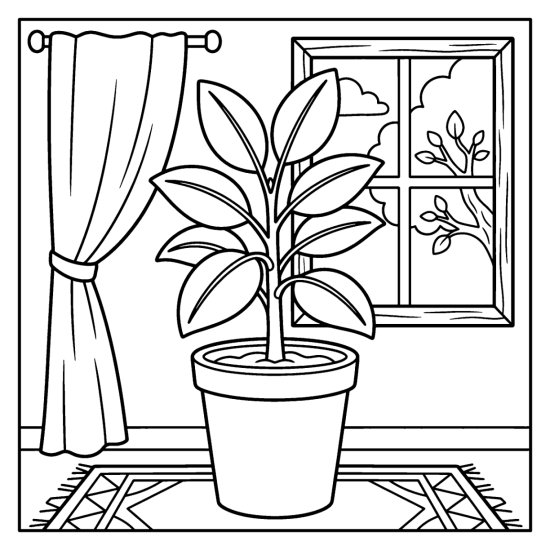
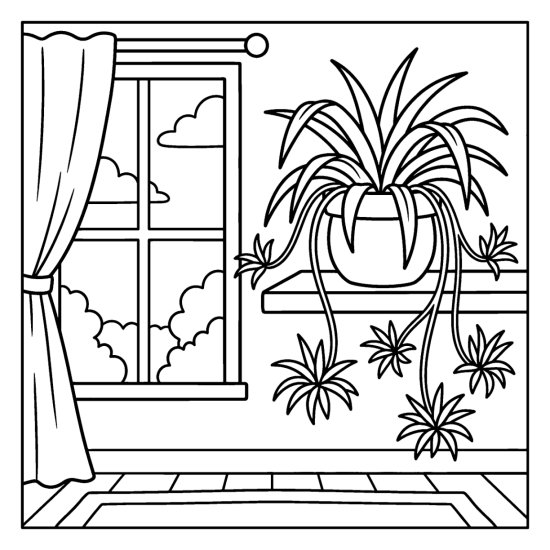
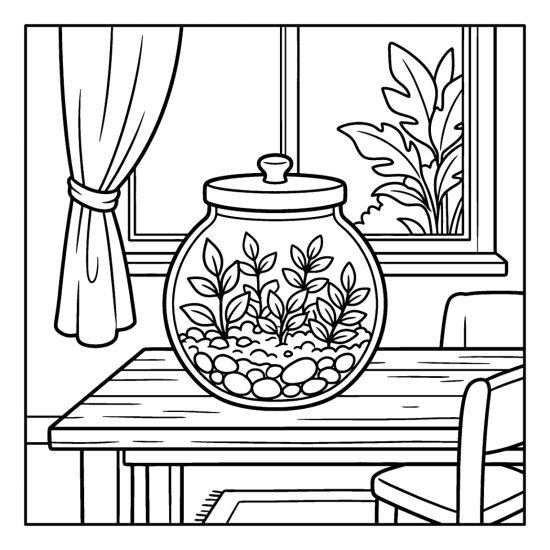
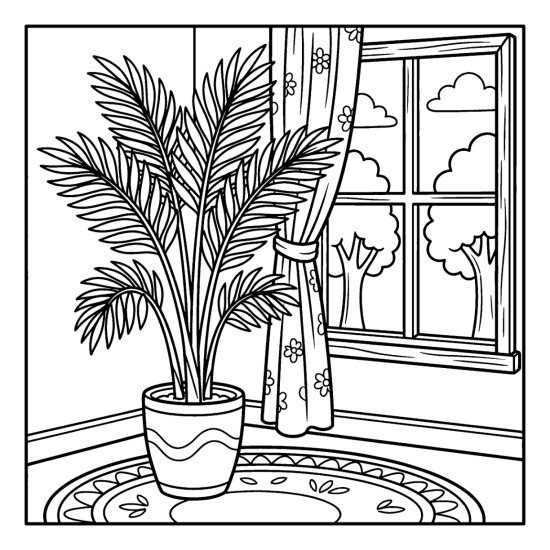
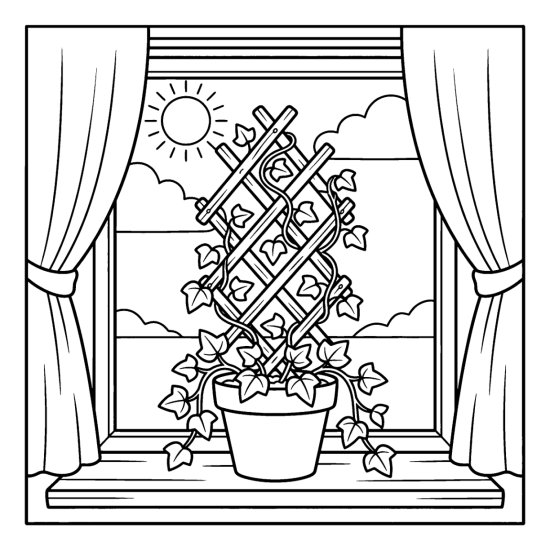
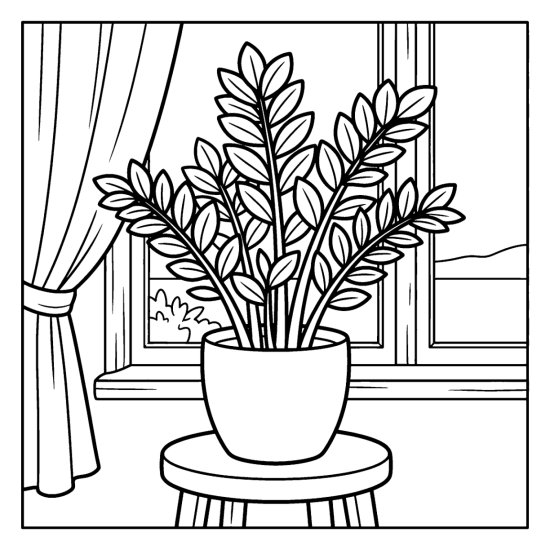
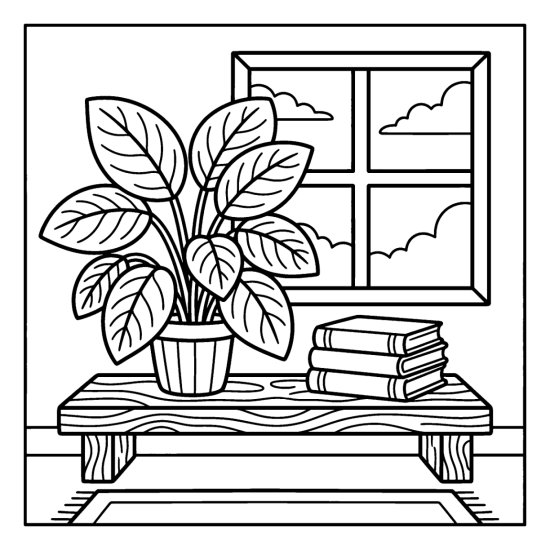
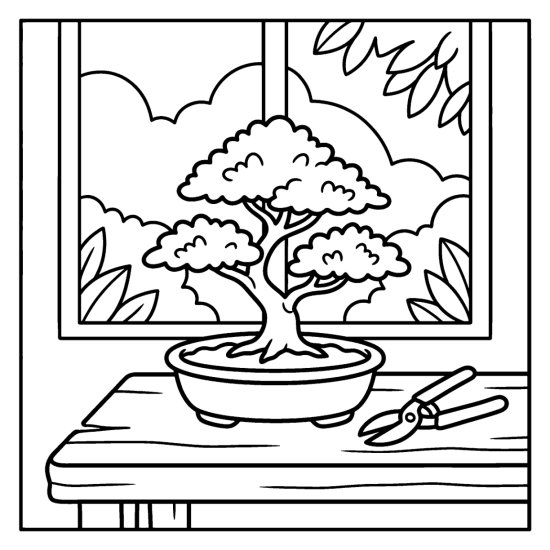
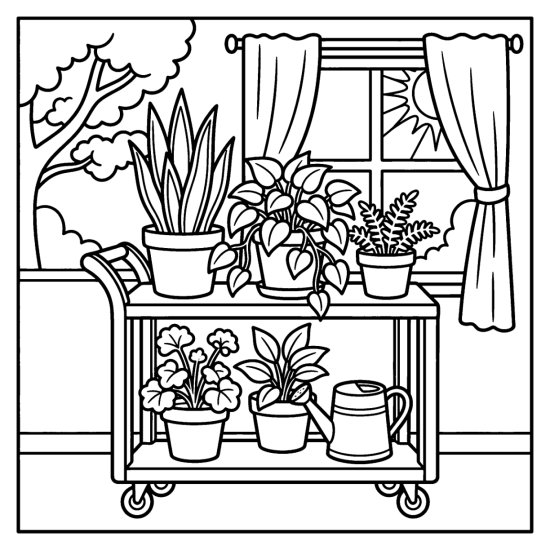
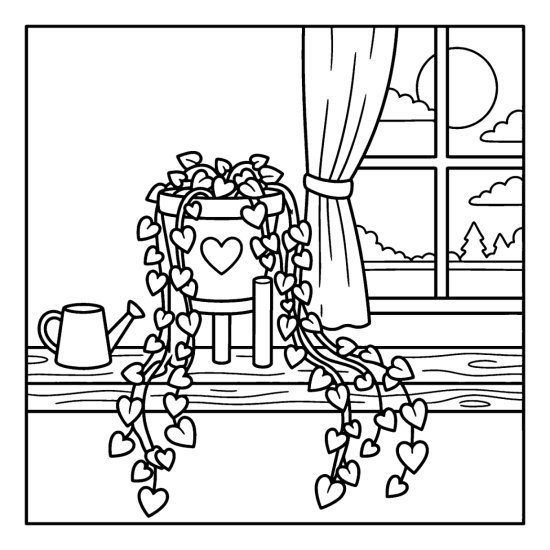
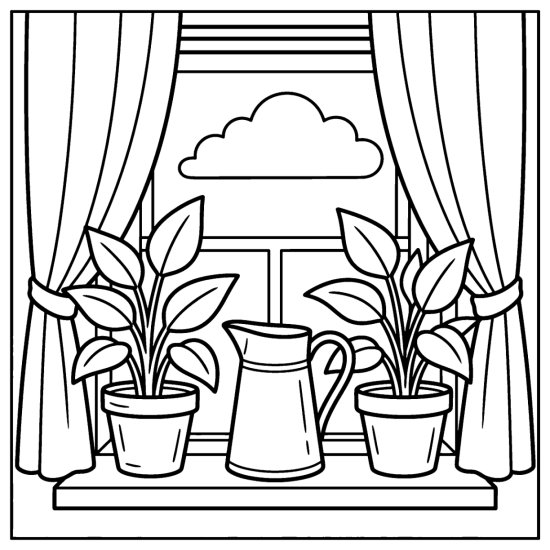
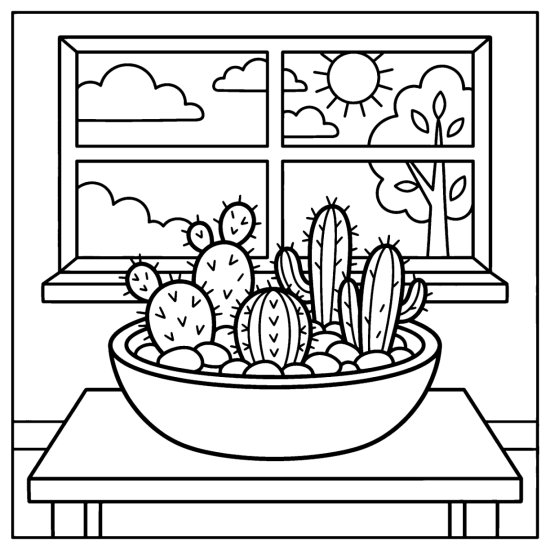
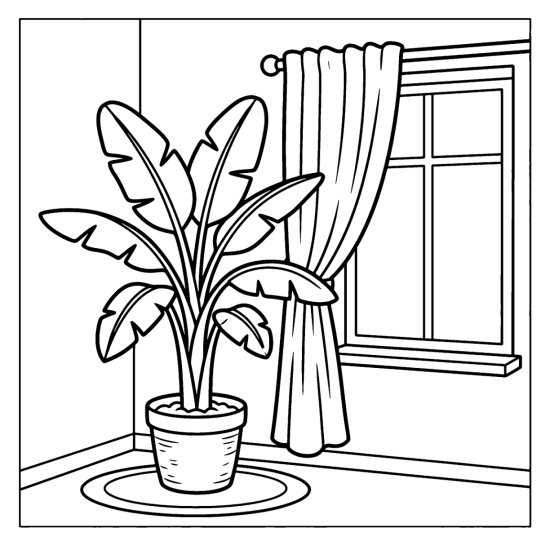
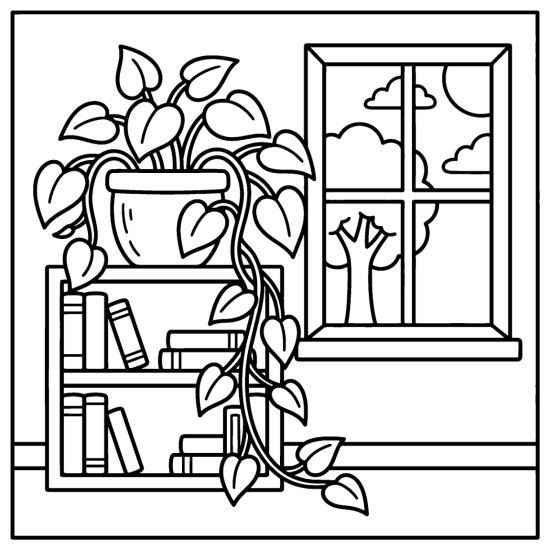
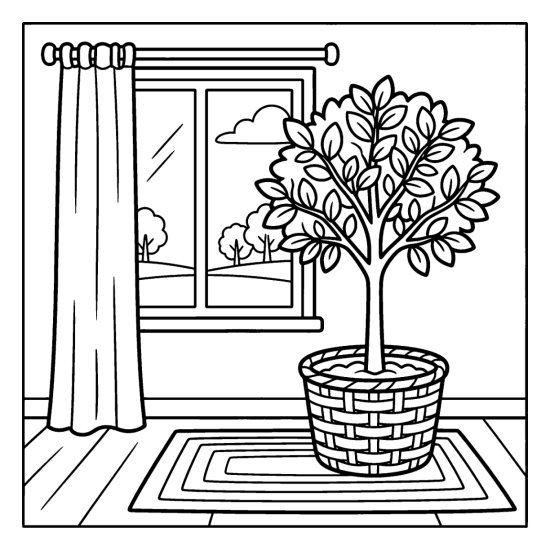
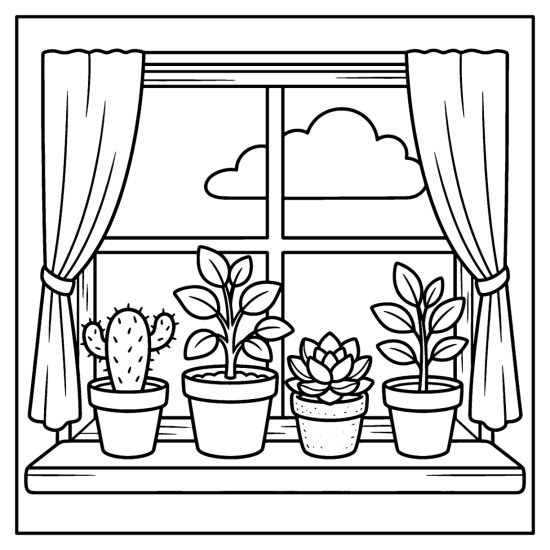
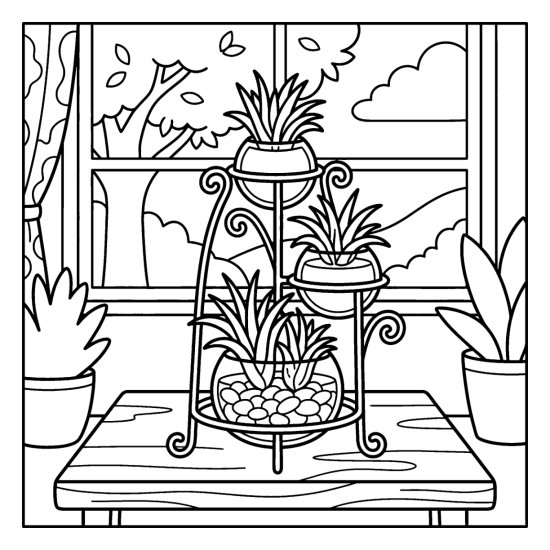
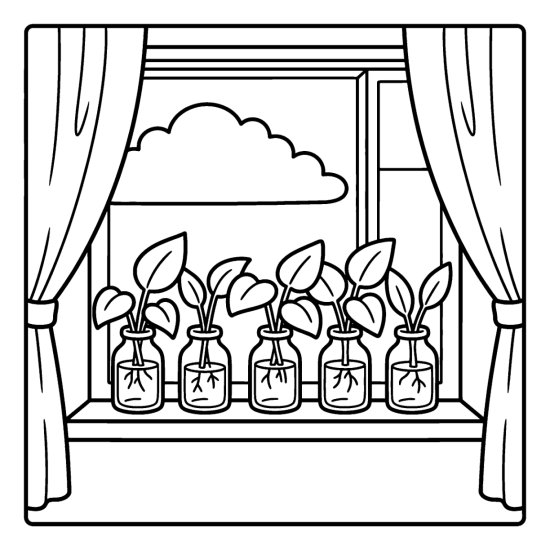
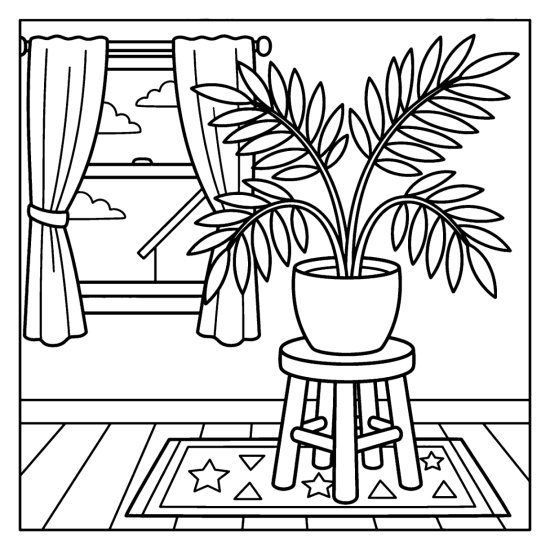
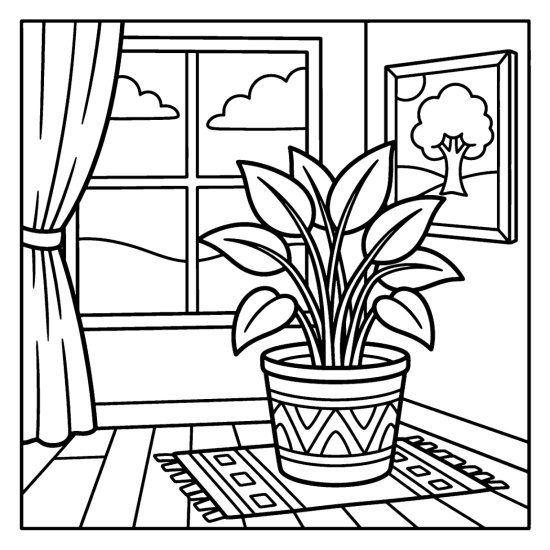
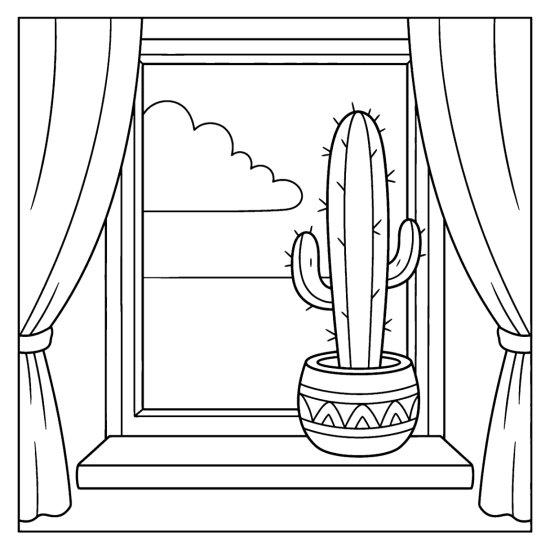
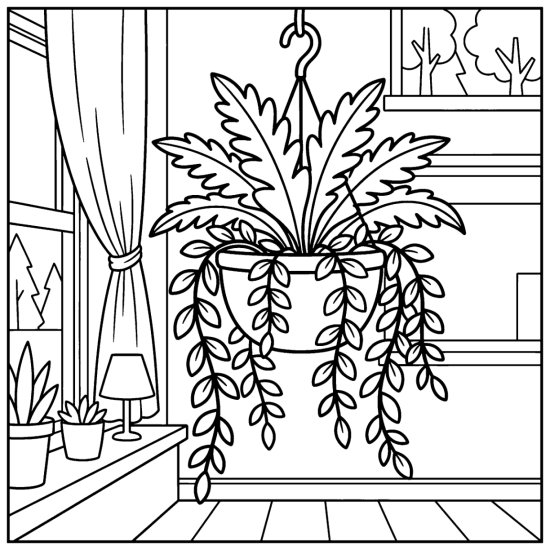
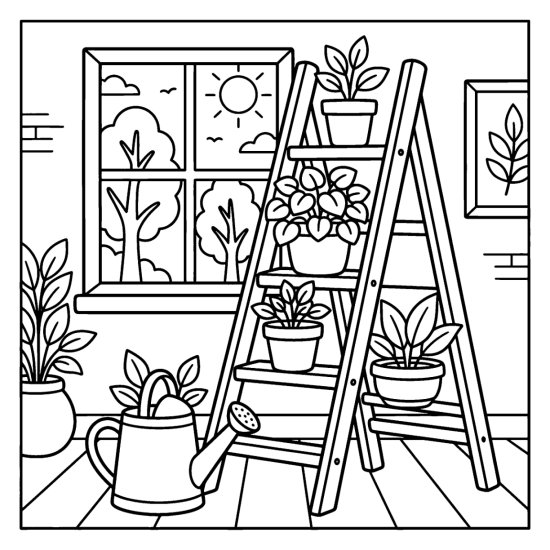
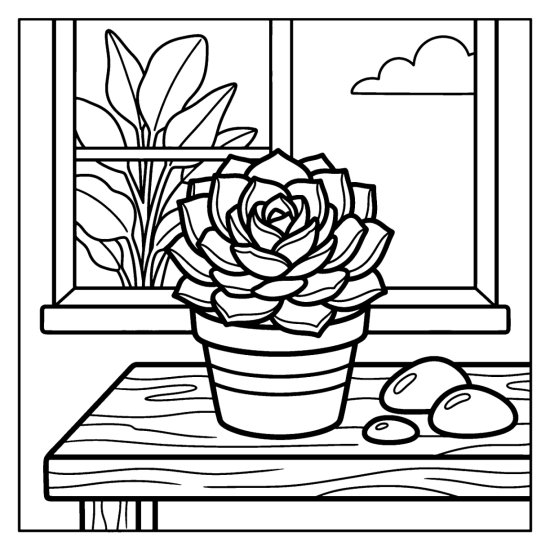
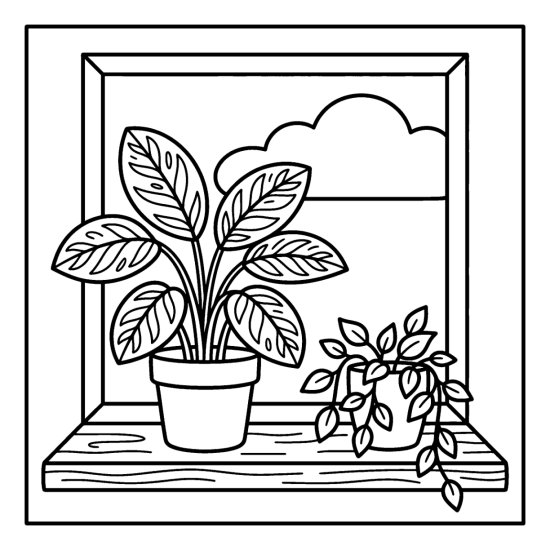
Leafy houseplants, ferns and trailing vines, cacti and succulents, and plant displays
The book moves through four loose groups of plants, so you can pick a page based on the kind of calm coloring you want to spend the next hour on.
Leafy houseplant pages
These pages star big broad leaved houseplants like monstera, fiddle leaf fig, and rubber plant set in simple potted scenes by a window. The thick outlines and large open leaves make them the most beginner friendly pages in the book. Colored pencils or markers both sit well in the generous leaf shapes, and most finish in a relaxed half hour.
Ferns and trailing vines
Here the foliage spills and arches: feathery ferns, a spider plant with trailing babies, and pothos and ivy winding from raised pots and hanging baskets. The flowing strands add a little more line work than the broad leaf pages, so they reward a steady hand. Gel pens or fine markers suit the slender leaves, and shades of green layer nicely.
Cacti and succulents
A sunny cluster of cacti, a shallow bowl of desert plants, a tall column cactus, and a single rosette succulent fill this group. The rounded simple shapes and roomy pots are quick and forgiving, ideal for beginners or a short coloring break. Warm sandy tones and soft greens work well, and they look bright with marker.
Plant displays and arrangements
These scenes gather plants together: glass terrariums, propagation bottles, rolling trolleys, ladder shelves, and grouped pots by a window. With more props and background detail they are the busiest pages here, yet still bold and easy to color. They make satisfying afternoon projects, and a mixed palette of greens with wood browns brings them to life.
Together the four groups move from the simplest single plant pages to fuller indoor scenes, so the book grows with your confidence.
What you get in this easy plant coloring pages pdf
The book splits into four natural groups, and you can dip into whichever one matches your mood. There are big leafy houseplants like monstera, fiddle leaf fig, and rubber plant in simple potted scenes. There are ferns and trailing vines, including a spider plant with its little hanging babies and pothos winding from a basket. Then come the cacti and succulents, plus busier plant displays with terrariums, propagation bottles, and grouped pots by a window.
Because this is a printable set, you can run off as many copies as you want and try the same monstera page three different ways. That matters more than people expect. Our 2026 reader survey found that 87% prefer printing on paper over phone or tablet apps, and a printable easy plant coloring pages pdf gives you that paper feel without driving to a store. Print one, mess it up, print another, no harm done.
The thick outlines are the real star here. They keep markers from bleeding past the leaf edges and they make each shape easy to read, even the slimmer fern fronds. That is what makes the whole thing genuinely beginner friendly rather than just labeled that way.
Big leaves you can fill in fast: monstera, fiddle leaf, and rubber plant
The broad leaf pages are the easiest place to start. A monstera by the window gives you those split leaves with plenty of open space inside each one, so you can lay down color quickly and still feel like you nailed it. The rubber plant and fiddle leaf fig work the same way, with simple potted shapes sitting on a wood floor next to a curtain.
For color, a single page of greens can look surprisingly rich if you vary it. Try a deeper green for the older lower leaves and a brighter spring green for the newer ones near the top. The terracotta pot is a nice excuse for a warm rusty orange that plays off all that green. If you want to keep it gentle, soft sage and a pale clay pot read calm and modern.
These pages tend to finish in about half an hour, which makes them perfect for a coffee break. The big open shapes mean you can use markers without worrying about thin gaps, and they are the most forgiving spot in the book for anyone just getting comfortable.
Trailing spider plants, ferns, and pothos that spill off the shelf
The vine and fern pages bring a bit more line work, but they are still simple to follow. The spider plant sends its babies down off a shelf in long arching strands, and the pothos and ivy wind out of raised pots and hanging baskets. The feathery fern and the palm style plant on the wooden stool give you rows of slim leaves to work through one by one.
These slender shapes are where a fine marker or a gel pen earns its keep, since the strands are narrow. Layering greens helps a lot here. Color the trailing stems a touch lighter than the main clump so the babies look like they are catching the light. A little brown on the shelf or stool grounds the whole scene.
If you like a steady, almost meditative pace, the fern fronds are great for that. There is no rush and no fiddly background, just leaf after leaf until the plant fills out. They look especially nice as a pair, so color the spider plant and the fern side by side and hang them together.
Quick wins with cacti, succulents, and grouped plant displays
When you only have a few minutes, the cacti and succulents are your friends. A sunny cluster of cacti, a shallow bowl of desert plants, a tall column cactus, and a single rosette succulent all use rounded simple shapes and roomy pots. They color up bright and fast, and sandy tans next to soft greens give that warm desert look without much effort.
On the other end, the plant displays are the busiest pages here, with glass terrariums, propagation bottles in a row, rolling trolleys, and ladder shelves of grouped pots. They still keep the thick lines and the bold and easy style, so do not let the extra props scare you off. They just make better afternoon projects when you have time to spread out.
A mixed palette really shines on these display scenes. Run a range of greens through the foliage, add wood browns for the shelves and trolleys, and leave the glass terrariums and bottles mostly clear with the faintest blue or gray so they read as glass. Frame a finished display page for a kitchen or plant corner, and it makes an easy, personal gift for the plant lover in your life.
How to print bold and easy plant coloring pages at home
Printing from this book takes about a minute from start to finish. The full book is one PDF, so you can print every page in a single job or pick out only the bold and easy plant designs you want.
- Open the book in the embedded viewer. Scroll to the embedded viewer at the bottom of this page, or click any thumbnail in the gallery to jump straight to that plant scene inside the viewer.
- Choose Print or Download from the toolbar. Use the viewer's toolbar to print directly from your browser or download the full PDF to your computer for later use. Both options are free.
- Pick the right paper. For colored pencils, standard 24 lb (90 gsm) printer paper works fine. For markers or gel pens on these bold open leaves, step up to 70 to 90 lb cardstock to prevent bleed through and warping.
- Set print quality and scaling. Select your printer's highest quality setting and set scaling to None or Actual Size to keep the thick line work crisp on 8.5x11 paper. On A4, enable Fit to page.
- Test print one sheet first. Before printing the full book, run a test on a single plant page to check the line crispness and paper behavior with your chosen tool.
More adult coloring themes
If you liked these bold and easy plant coloring pages, here are a few more themes you might enjoy.
Bold and Easy Mushrooms
Cozy toadstools and little mushroom houses with thick, simple lines that color in fast.
Browse bold and easy mushrooms →Bold and Easy Cottagecore
Calm cottage and garden scenes with easy shapes, perfect when you want slow, relaxing coloring.
Browse bold and easy cottagecore →Flower Coloring Pages
Detailed flowers and bouquets if you want busier lines than these chunky plant outlines.
Browse flower coloring pages →Frequently asked questions
Do the cacti and succulents in this set have a lot of tiny detail to fill in?
Not at all. The cacti and succulents are drawn with thick lines and big, open shapes, so there are no fiddly spines or micro-textures to wrestle with. Each section is roomy enough to fill confidently with markers, colored pencils, or even chunky brush pens. It is one of the reasons these bold and easy plant coloring pages feel so satisfying to finish.
Which pages in this collection would make the coziest framed art for a living room?
The potted houseplant pages are the strongest candidates because their simple, clean silhouettes look intentional on a wall rather than like a coloring exercise. A monstera or fiddle-leaf in a terracotta pot reads as modern botanical art once it is colored and popped into a basic frame. Stick to a warm earthy palette, think terracotta, sage, and cream, and it will look like something you picked up at a market.
How do the fern pages compare to the cactus pages in terms of difficulty?
The fern pages have a few more fronds to color, but the thick outlines keep each section clearly separated so you never lose your place. The cactus pages are the most beginner-friendly of the bunch because the shapes are bold and geometric with almost no interior detail. If you are just getting started, the cacti are a great warm-up before moving on to the ferns.
Can I print these bold and easy plant coloring pages as a gift for a friend who is just getting into coloring?
Absolutely. Printing a handful of pages and tucking them into an envelope with a small set of colored pencils makes a genuinely thoughtful gift. Because the designs use simple shapes and thick lines, your friend will not feel overwhelmed on their first sit-down. The easy plant coloring pages pdf format means you can print as many copies as you like, so you can keep a set for yourself too.
What color palettes work especially well on the potted houseplant pages?
A limited palette of two or three colors actually makes these pages shine. Try deep forest green with a warm terracotta for the pot and a soft cream background, or go unexpected with dusty pink leaves and a cobalt blue planter. Because the shapes are so simple and open, bold color choices read really well without looking messy or overdone.
Are the thick lines in these designs actually easier to stay inside than standard coloring pages?
Yes, and that is the whole point of the bold and easy style. The outlines are noticeably heavier than a typical adult coloring page, which gives you a clear visual boundary and a little margin for error. It makes the whole experience feel more relaxed, especially if you are coloring at the end of a long day and do not want to concentrate too hard.
When would these plant pages feel most seasonally fitting to color?
The cactus and succulent pages have a warm, sunny energy that feels perfect in late spring and summer. The fern pages lean cooler and lush, so they are a natural fit for rainy autumn afternoons. That said, potted houseplants are an all-year subject, so most of this collection works any time you want a calm, greenery-filled coloring session.
Is there a way to pair pages from this set into a small themed coloring project?
A fun approach is to pull two or three pages that share a similar plant family, say the fern, the trailing pothos, and the monstera, and color them all in the same palette so they feel like a coordinated set. You can then frame them together as a triptych or use them as botanical-themed cards. Since the easy plant coloring pages pdf lets you print multiples, you can experiment with different colorways before committing to your final version.