
Bold and Easy Ocean Animal Coloring Pages for Beginners (Free Printables)
Curated by Coloring Therapy
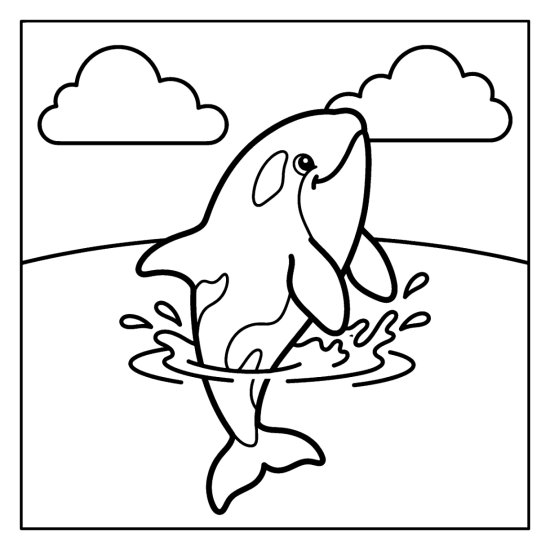
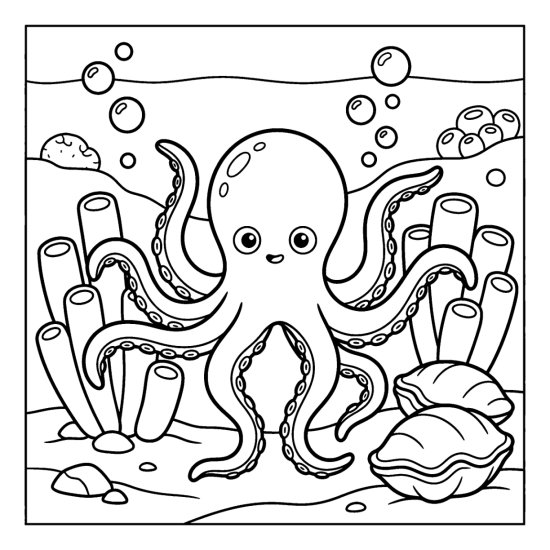
These bold and easy ocean animal coloring pages are built for grabbing a marker and just going. You get a round eyed octopus stretching its arms past a couple of clams, a seal lounging on a rock while the sun comes up behind it, a jellyfish drifting beside tall kelp, a smiling shark cruising over scattered stones, and a spotted whale shark trailed by two little fish. Every one of these is drawn with big shapes and thick outlines, so there's no squinting and no tiny corners to fuss over.
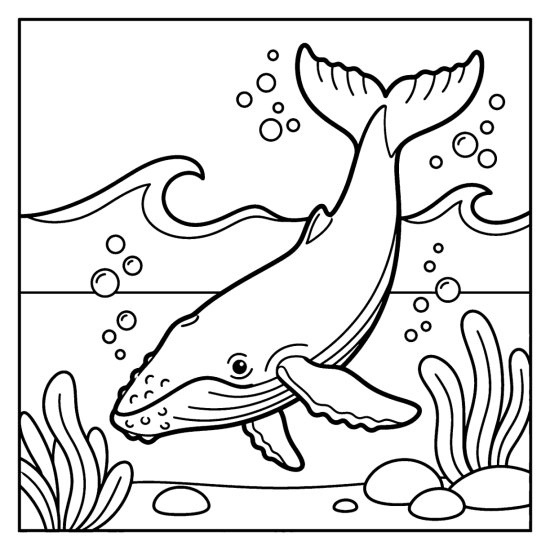
The whole collection runs warm and friendly. You'll find humpbacks tipping into a dive, a blue whale beside its calf, a sea otter floating with a clam on its belly, a hermit crab tucked in its spiral shell, and a slow parade of tide pool finds like starfish, sea urchins, sand dollars, and ruffled anemones. Some pages finish in a few minutes. Others give you lots of small shapes to wander through when you want to take your time.
If you've been hunting for printable pages that feel doable instead of fussy, this is the set. Big subjects, open backgrounds, and plenty of room to color in whatever order you like.
There are swimming and flying reptiles waiting in our dinosaur coloring pages collection, alongside 80 designs on land.
Browse every page in the book
Click any ocean animal coloring page below to preview, print or download.
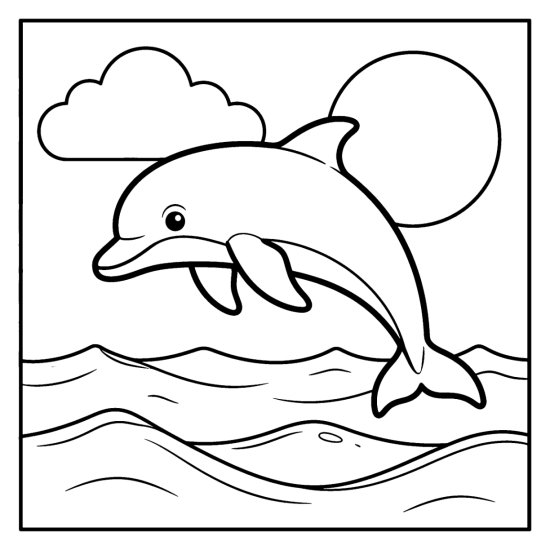
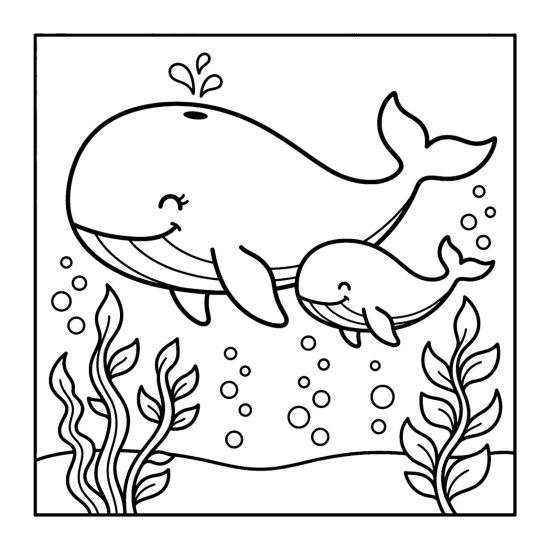
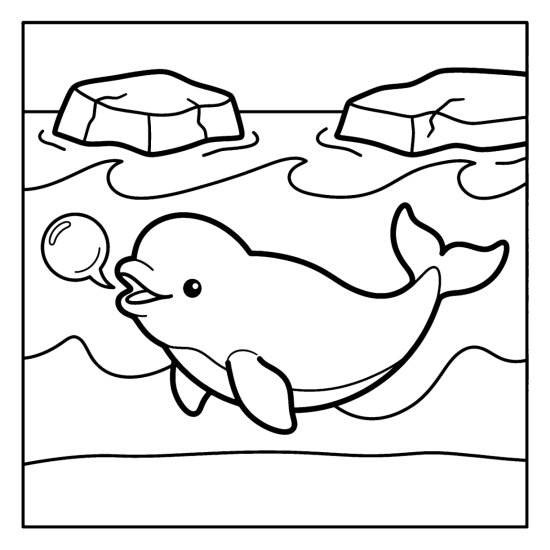
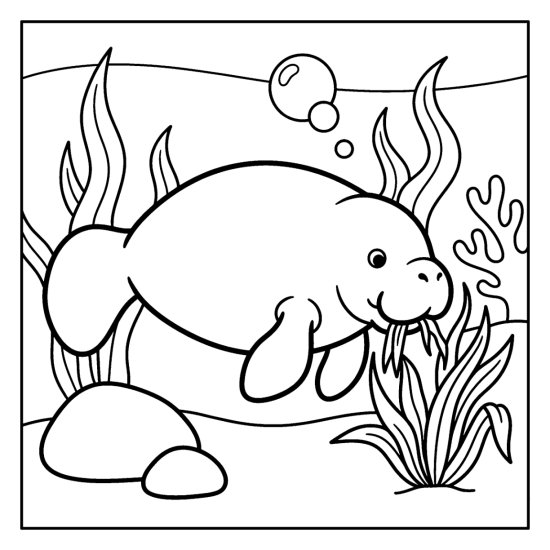
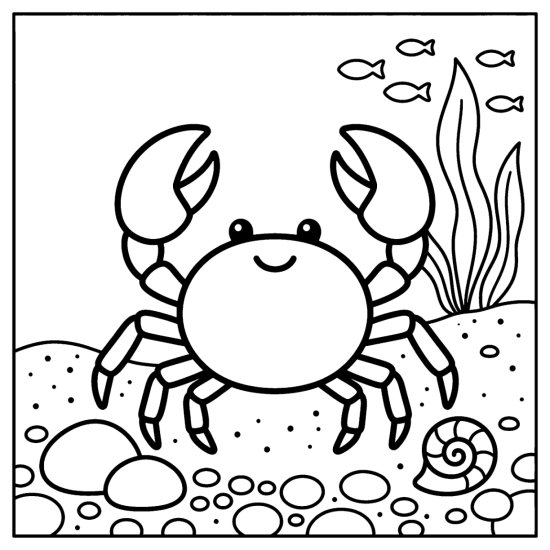
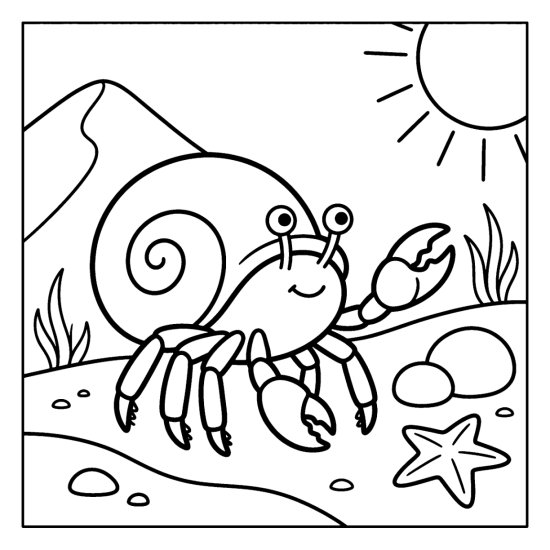
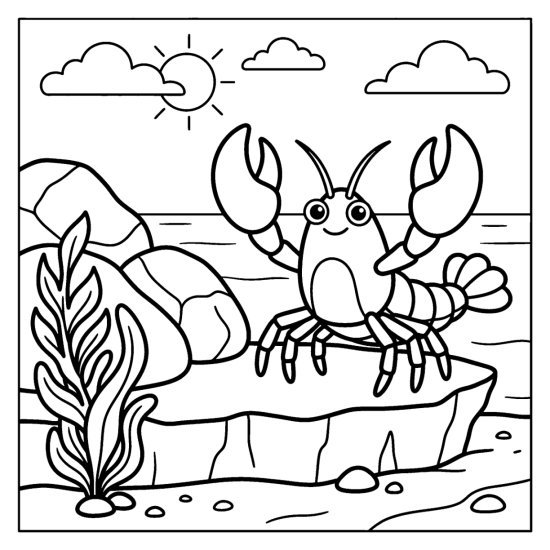
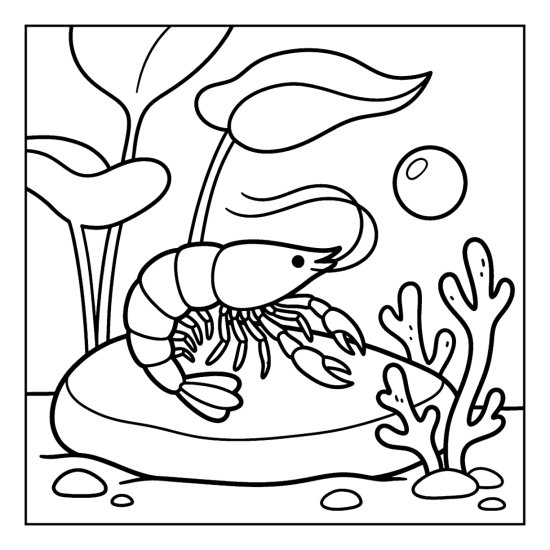
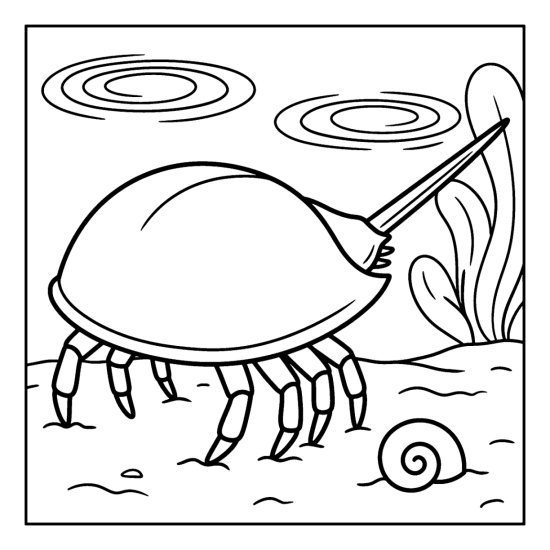
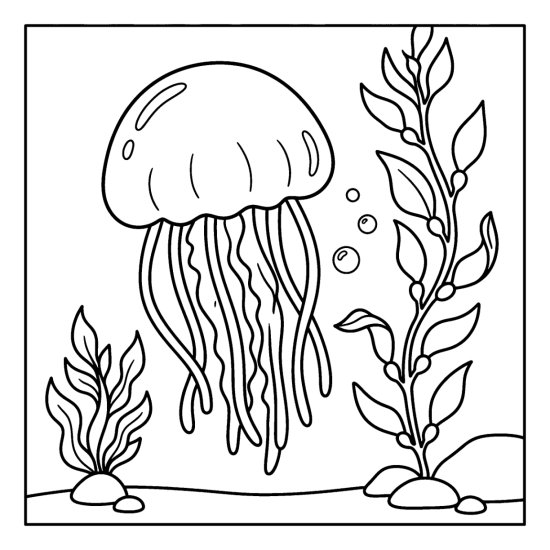
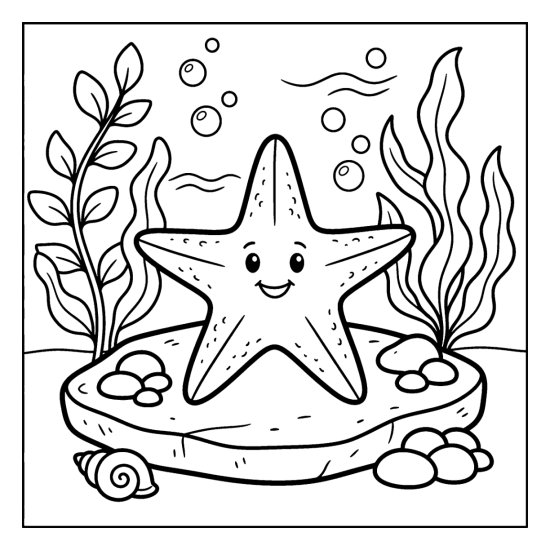
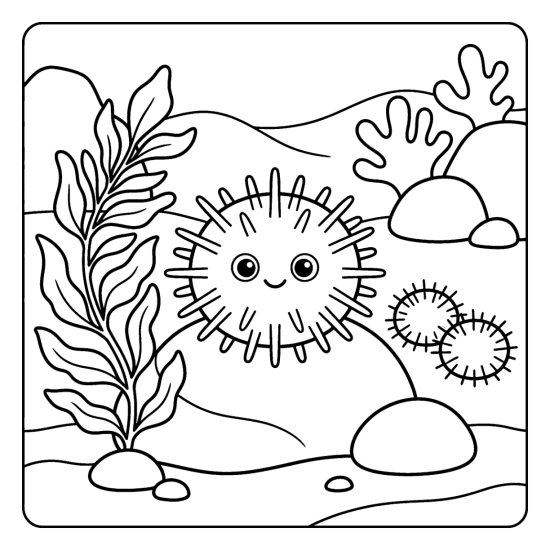
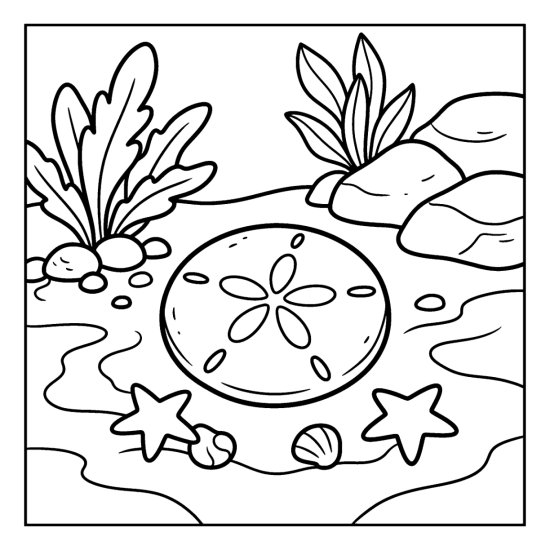
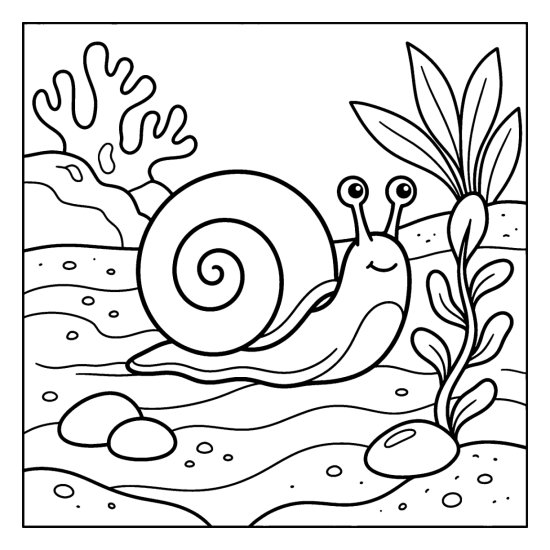
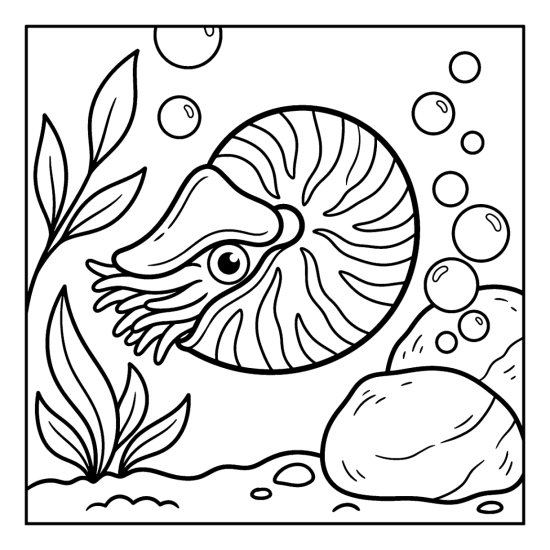
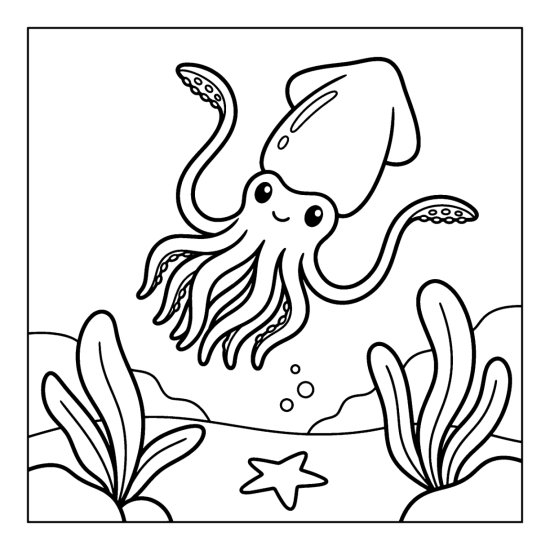
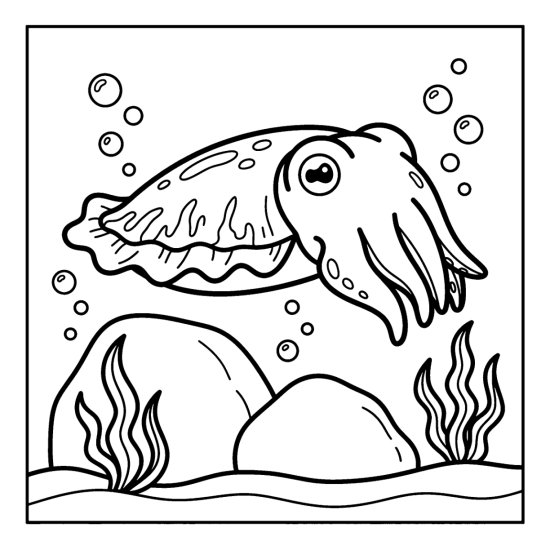
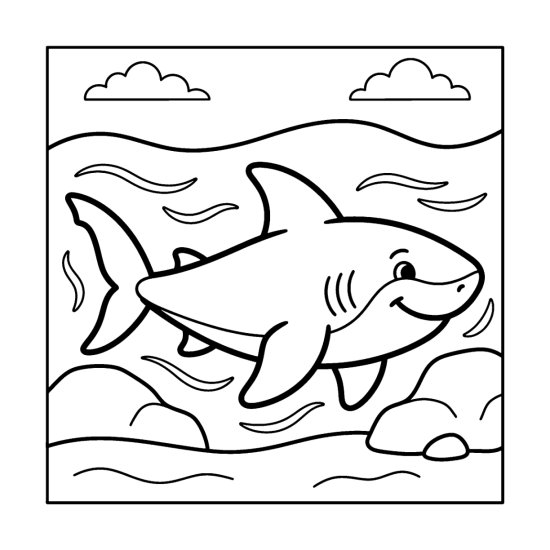
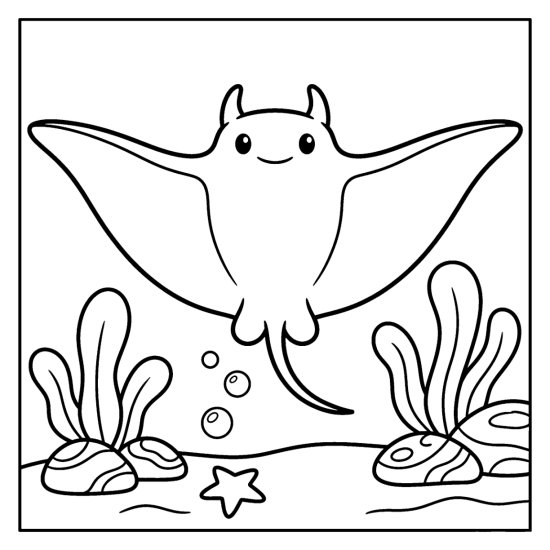
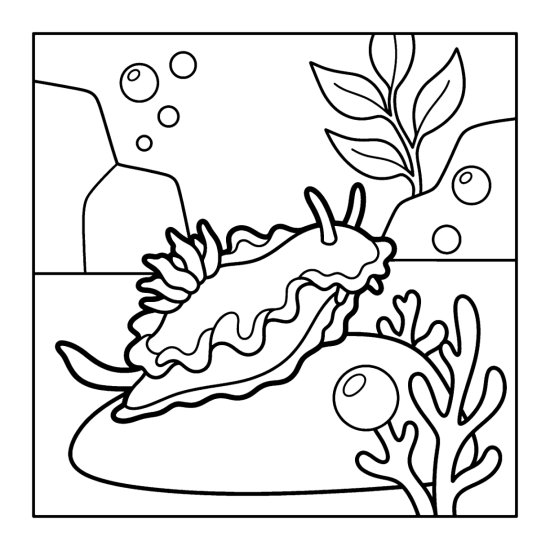
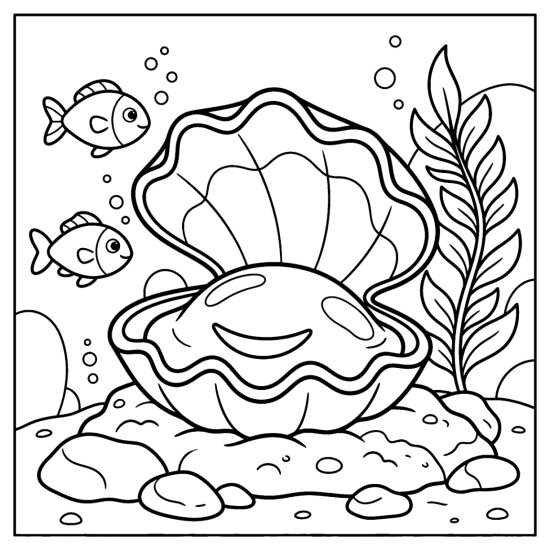
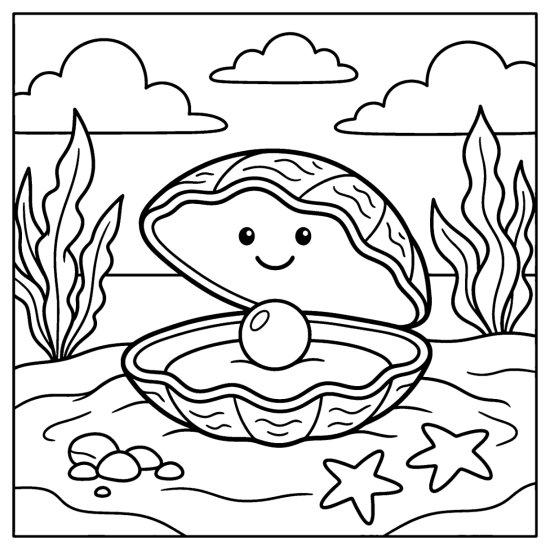
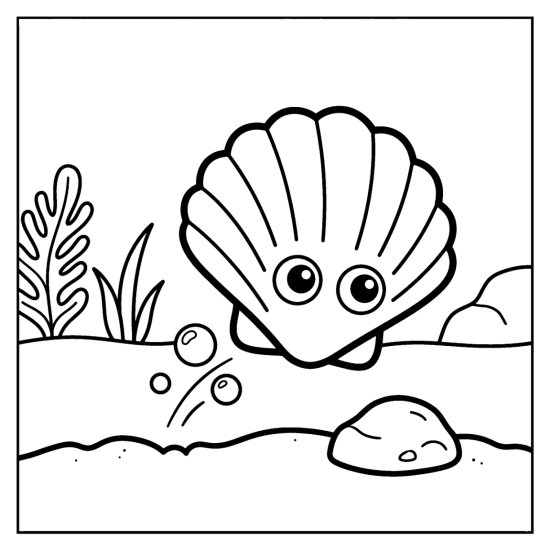
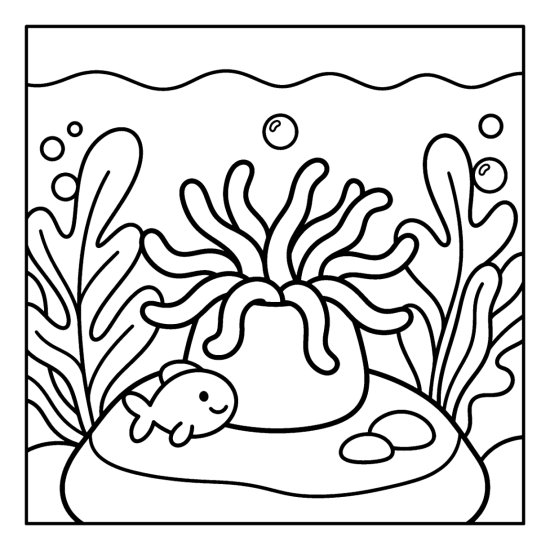
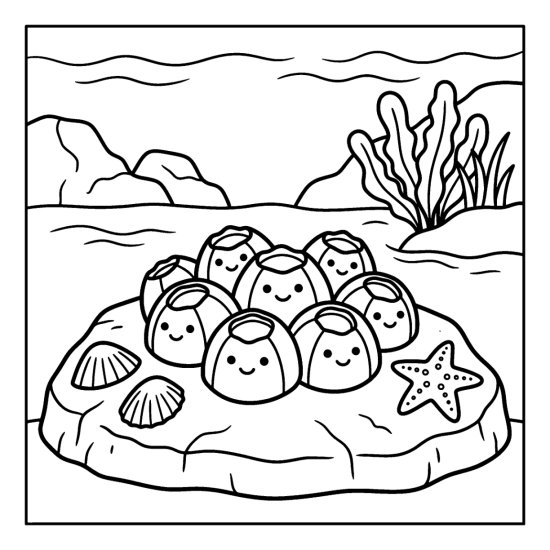
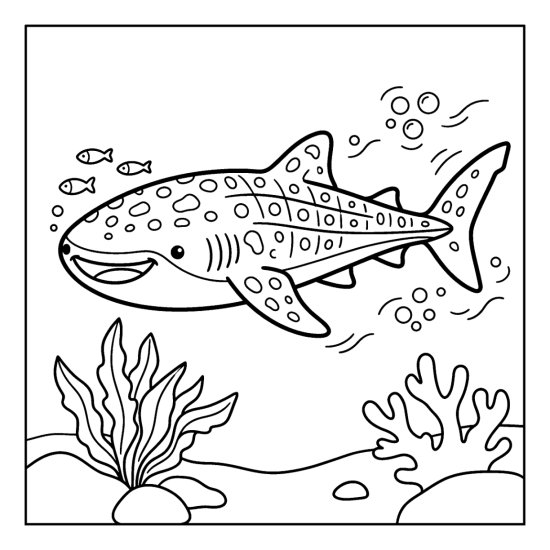
Whales and gentle giants, shore mammals, crabs and crustaceans, and tide pool creatures
The book moves through four loose groups of sea life, so you can pick a page based on the kind of ocean scene you want to spend the next hour coloring.
Whales and gentle giants
Big open swimmers carry these pages: humpbacks tipping into a dive, a blue whale beside its calf, a breaching orca, a beluga blowing a bubble ring, plus a smiling shark, manta ray, and spotted whale shark. The bodies are large unbroken shapes with thick outlines, the easiest pages here to finish fast. Gel pens or wide markers fill the broad backs in minutes.
Shore mammals
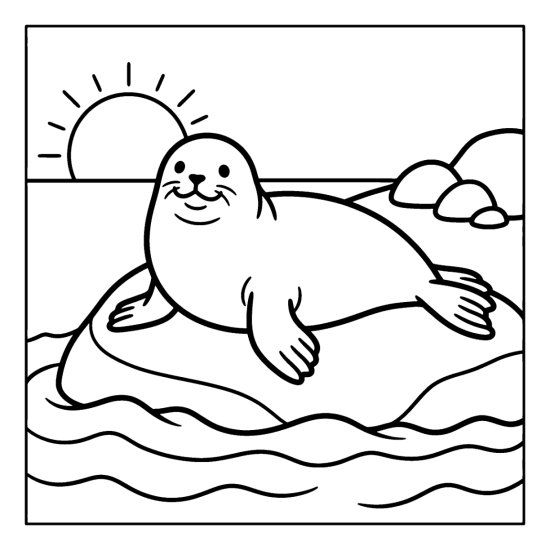
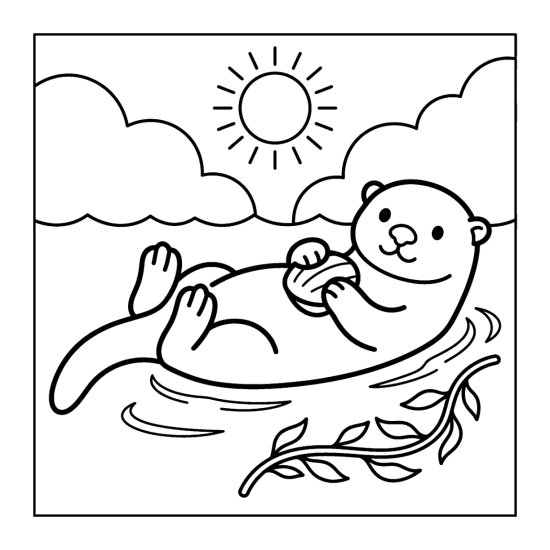
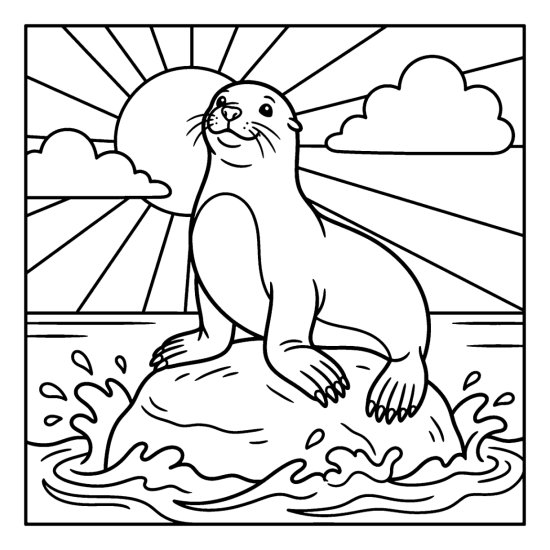
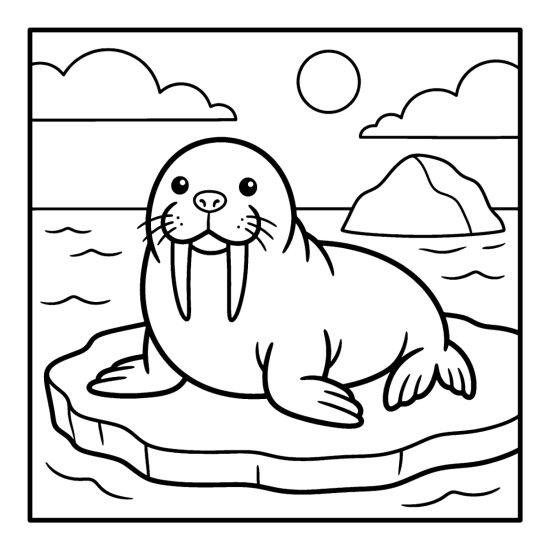
Warm, rounded coastal animals sit on rocks and ice: a lounging seal, a sea otter floating with a clam, a balancing sea lion, a tusked walrus, and a grazing manatee. Generous fur and flipper shapes leave plenty of room, and the simple sun, cloud, and wave backgrounds keep things calm. Colored pencils suit the soft bodies, with markers for the open sky.
Crabs and crustaceans
Claws and legs give these pages a little more line work without crowding: a round crab, a hermit crab in its spiral shell, a lobster on a ledge, a perched shrimp, and a domed horseshoe crab. The segmented legs are still bold and beginner friendly. Fine tip markers or pencils handle the smaller leg sections while the shells stay wide open.
Tide pool and reef creatures
The largest group gathers the small wonders: octopus, squid, cuttlefish, and nautilus, then jellyfish, starfish, sea urchin, sand dollar, sea snail, nudibranch, clam, oyster, scallop, anemone, and barnacles. Spirals, tentacles, and ruffled edges add gentle variety while staying simple. These pages reward slow, meditative coloring with pencils or thin markers across many small shapes.
Most colorists drift between the groups, starting with a big open whale page to warm up before settling into the smaller tide pool scenes.
Why the thick line ocean animal coloring style works for beginners
The whole point here is that the lines do the hard part for you. Look at the seal on its rock or the shark gliding past the clouds. Those bodies are one big shape with a heavy outline around them, so you can fill them fast without worrying about staying perfectly inside a hair thin edge. That's what makes a simple page so forgiving. If your marker slips a little, the thick lines cover it.
It also means you don't need fancy supplies to feel good about the result. A handful of markers or some basic colored pencils will fill the broad back of a whale or the round dome of a jellyfish in no time. Beginners tell us this is the part that hooks them, because the page looks finished and tidy even on the first try.
And because the shapes are large, you can put a page down and come back to it. The octopus has eight arms and a couple of clams nearby, but none of it traps you in fiddly detail. You color one arm, then the next, and the page just builds.
Whales, sharks, and the big swimmers you can finish fast
The open water pages are the quickest wins in the book. A breaching orca, a beluga blowing a bubble ring, the humpback mid dive, and that grinning shark with two puffy clouds overhead all share one thing: enormous unbroken bodies. You can fill a whale back with a single color and it already looks great. These are the pages I'd hand someone who says they can't color.
Color wise, you've got room to play. Real orcas are crisp black and white, but nobody's stopping you from going teal or deep purple. The blue whale and its calf look sweet in two shades of the same blue so the little one reads as a smaller echo of mom. For the whale shark, lean into those spots. Leave them pale and color the body around them, or flip it and make the spots pop against a darker back.
Quick true fact for the kids in your life or your own curiosity: a blue whale is the biggest animal that has ever lived, bigger than any dinosaur. On the page it's just a giant friendly shape waiting for color, which feels about right.
Slow pages for tide pool and reef creatures
When you want something to do with your hands for a while, head for the tide pool group. This is the biggest part of the collection, and it's full of small wonders: octopus, squid, cuttlefish, the spiral nautilus, plus jellyfish, starfish, sea urchin, sand dollar, sea snail, nudibranch, clam, oyster, scallop, anemone, and barnacles. The shapes stay simple and bold, but there are more of them, so a single page can keep you busy in a good way.
The jellyfish page is a favorite for this kind of coloring. Long trailing tentacles, a rounded bell, and tall kelp on either side give you several spaces to fill at your own pace. Nudibranchs are the wild card. Those little sea slugs come in real life in hot pink, electric blue, and bright orange, so you can go as loud as you want and still be accurate.
Our 2026 reader survey found that 74% of readers color as a mental tool, and these slower pages are where that really shows. There's no clock on a starfish.
Pairing pages and gifting a finished scene
A few of these go together beautifully as a set. Color the lounging seal, the floating sea otter, and the grazing manatee with the same soft palette and you've got a little shore mammal trio that looks great framed in a row. The crabs and crustaceans do the same trick: the round crab, the hermit crab in its shell, and the lobster on a ledge share warm reds and oranges, so three pages turn into one matching wall.
If you're making something for someone, pick a subject that means something to them. A grandkid who loves sharks gets the smiling shark or the spotted whale shark. Someone who collects shells gets the scallop and the sand dollar. Sign and date the back, and a printable coloring page becomes a real little gift.
The simple backgrounds help here too. Those plain suns, clouds, and wave lines stay quiet so your animal is clearly the star, which is exactly what you want when a finished page is going on the fridge or into a frame.
How to print bold and easy ocean animal coloring pages at home
Printing from this book takes about a minute from start to finish. The full book is one PDF, so you can print every page in a single job or pick out only the bold and easy designs you want.
- Open the book in the embedded viewer. Scroll to the embedded viewer at the bottom of this page, or click any thumbnail in the gallery to jump straight to that ocean animal page inside the viewer.
- Choose Print or Download from the toolbar. Use the viewer's toolbar to print directly from your browser or download the full PDF to your computer for later use. Both options are free.
- Pick the right paper. For colored pencils, standard 24 lb (90 gsm) printer paper works fine. For markers or gel pens on this bold line work, step up to 70 to 90 lb cardstock to prevent bleed through and warping.
- Set print quality and scaling. Select your printer's highest quality setting and set scaling to None or Actual Size to keep the thick lines crisp on 8.5x11 paper. On A4, enable Fit to page.
- Test print one sheet first. Before printing the full book, run a test on a single whale or starfish page to check the line crispness and paper behavior with your chosen tool.
More adult coloring themes
If you liked these bold and easy ocean animal coloring pages, here are a few more themes you might enjoy.
Bold Easy Fish Pages
Clownfish, koi, and seahorses with thick lines that fill in quickly and easily.
Browse bold easy fish pages →Bold Easy Turtle Pages
Sea turtles and tortoises with big simple shapes that are calming to color.
Browse bold easy turtle pages →Animal Pages for Adults
Detailed wildlife and pet drawings if you want busier lines than these bold ones.
Browse animal pages for adults →Frequently asked questions
Which ocean animals are featured in this collection, and do any of them have really fun, simple shapes to color?
You will find whales, crabs, sea turtles, octopuses, jellyfish, starfish, and more, all drawn with thick lines and big, open shapes that are genuinely satisfying to fill in. The crab and the octopus are probably the most playful in terms of shape, since their legs and claws give you lots of natural sections to work with different colors. Every page in this bold and easy ocean animal coloring pages set is designed so nothing feels fiddly or frustrating.
How does thick line ocean animal coloring actually change the experience compared to detailed art?
Thick outlines mean your pen or pencil stays inside the lines without much effort, so you can focus on color choices instead of precision. It also makes the finished page look bold and graphic, almost like a print you would hang on a wall. For adults who want a genuinely relaxing session rather than a test of fine motor skill, that chunky outline style makes a real difference.
What color palettes work especially well for the whale pages in this set?
Deep navy and teal with a soft white belly is the classic move, but a lot of adults love going unexpected with dusty rose, lavender, and warm grey for a more dreamy, watercolor-inspired look. If you want something punchy, try a dark charcoal whale against a bright coral or tangerine background. Because the shapes are so simple and open, bold color blocking reads really well on these pages.
Can I pair a few of these pages together as a themed gift for someone who loves the sea?
Absolutely, the sea turtle, jellyfish, and starfish pages together make a beautiful little trio because they share a gentle, drifting quality that feels cohesive when framed side by side. Print them on cardstock, color them in a coordinating palette, and you have a ready-made set of wall art that costs almost nothing. It is a genuinely thoughtful handmade gift, especially for someone with a beach-themed room.
Do the jellyfish and starfish pages in this bold and easy ocean animal coloring pages collection work well for a meditative, slow coloring session?
They really do. Both animals have a natural radial symmetry, so coloring them feels almost like a rhythm, working outward from the center in repeating sections. The thick lines keep things stress-free, and because the detail level is low, your mind can wander in a good way rather than staying locked on tiny spaces. They are two of the most beginner-friendly pages in the whole set for exactly that reason.
Are there any fun real facts about these animals that could inspire how I color them?
A few worth knowing: real octopuses can change color in milliseconds, which is a great excuse to go wild with unexpected hues on that page. Sea turtles have been around for more than 100 million years, so coloring yours in ancient, earthy tones like moss green and amber feels fitting. And crabs molt their shells as they grow, so if you want to be playful, try coloring yours in a soft, pale version of the classic red to suggest a freshly molted shell.
Which page in this set would you recommend for someone picking up coloring for the very first time?
The whale page is a great starting point because it is one large, smooth shape with minimal interior lines, so there is almost no way to feel overwhelmed. The thick line ocean animal coloring style on that page means even a basic set of colored pencils or markers will look great with very little effort. It is the kind of page that builds confidence fast and makes you want to reach for the next one.