
Bold and Easy Botanical Coloring Pages with Thick Lines (Free Printables)
Curated by Coloring Therapy
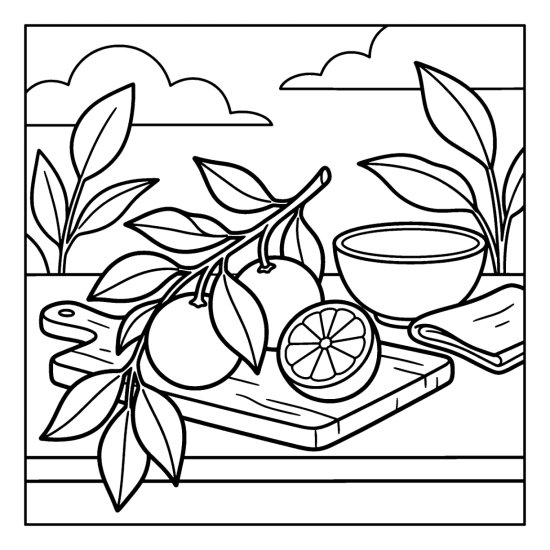
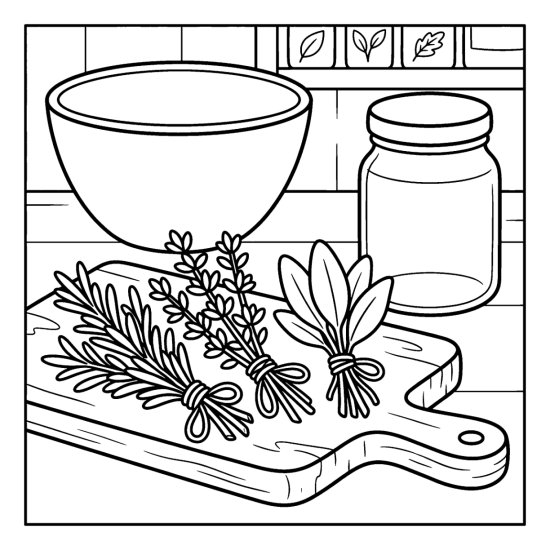
If you want plants without the fuss, these bold and easy botanical coloring pages give you big, friendly shapes and plenty of room to relax. You'll find a leafy fern on a sunny sill, a trailing hoya spilling from a wall shelf, a magnolia branch arching out of a tall vase, and a climbing plant trained up bamboo stakes by a window. There are kitchen scenes too, with rosemary and sage tied in little bundles on a cutting board next to a bowl and a glass jar. Every page keeps the lines thick and the detail low, so you can pick up a marker and just go.
The whole book sits at the beginner end on purpose. Pots are large and rounded, stems read clearly, and backgrounds stay calm with soft windows, shelves, and a sun peeking through clouds. That means no tiny gaps to fight with and no fussy textures to puzzle over. Whether you've colored for years or you're trying it for the first time, these printable pages are simple to start and satisfying to finish, often in one sitting.
Browse every page in the book
Click any bold and easy botanical coloring page below to preview, print or download.
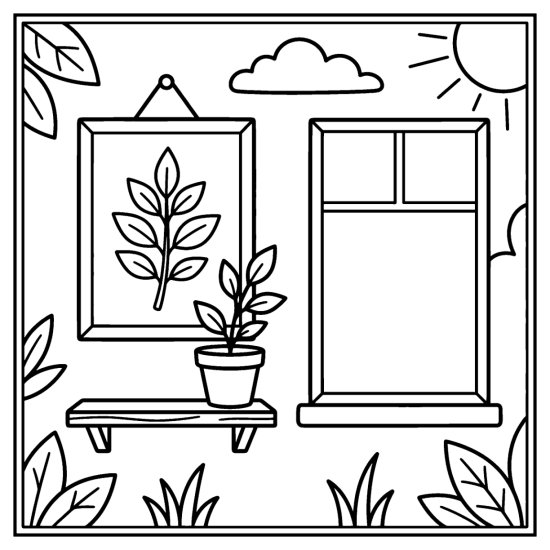
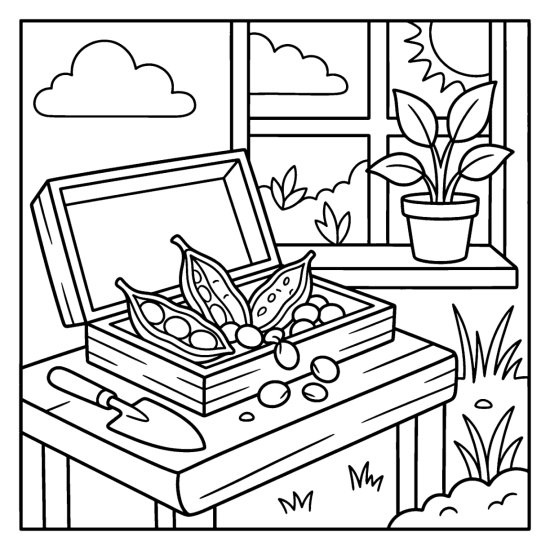
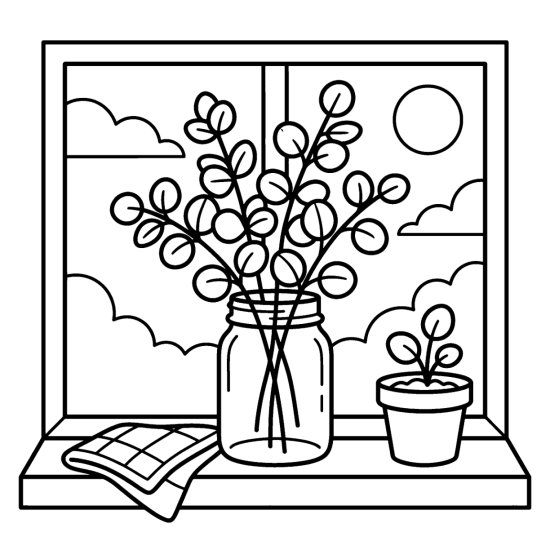
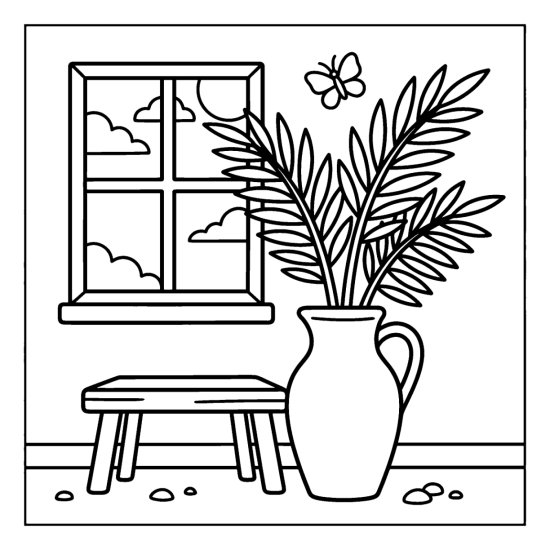
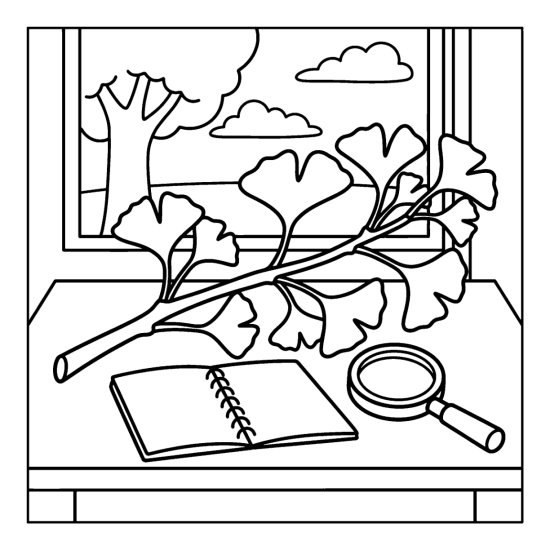
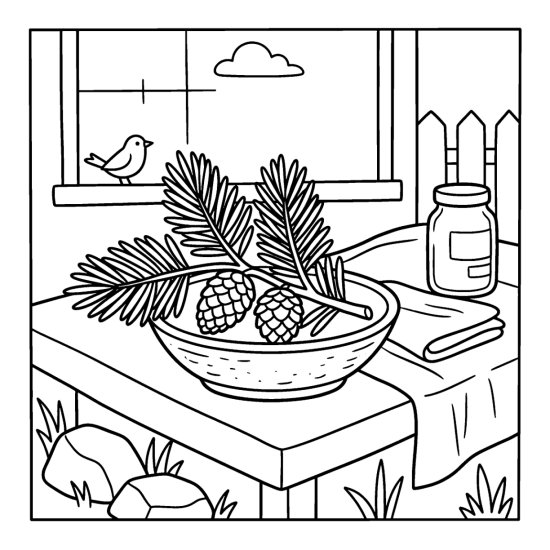
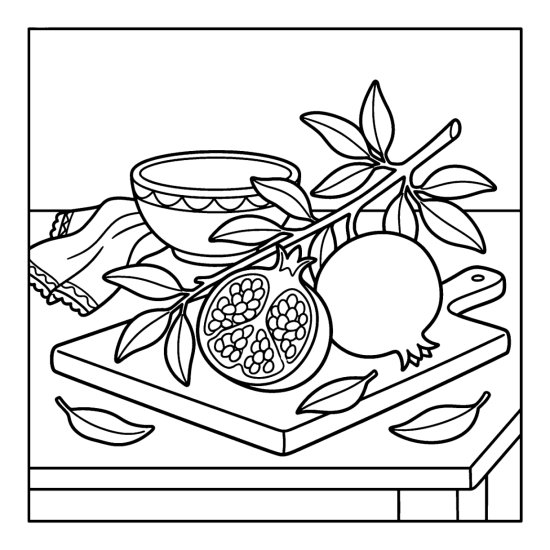
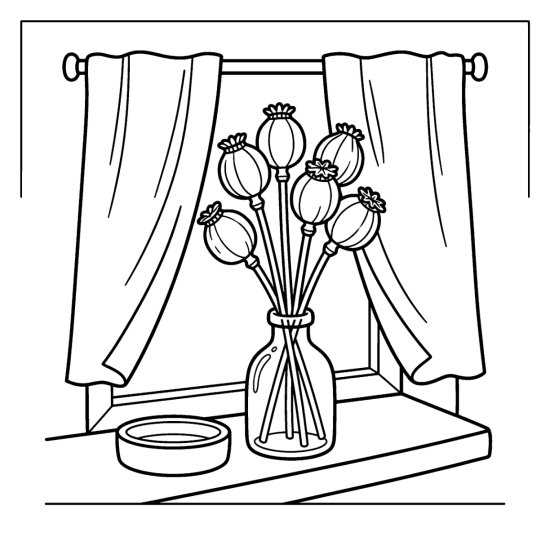
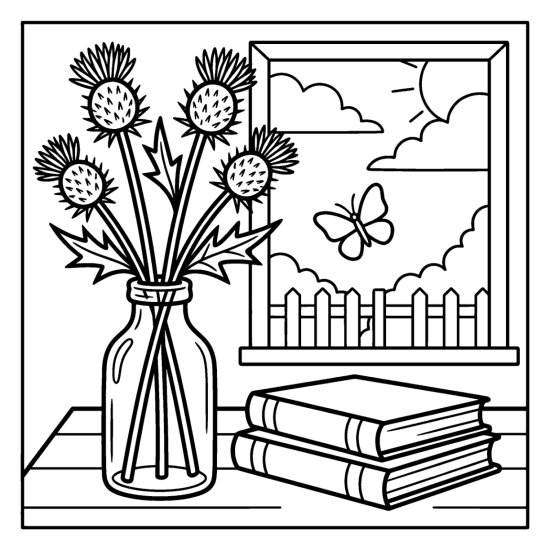
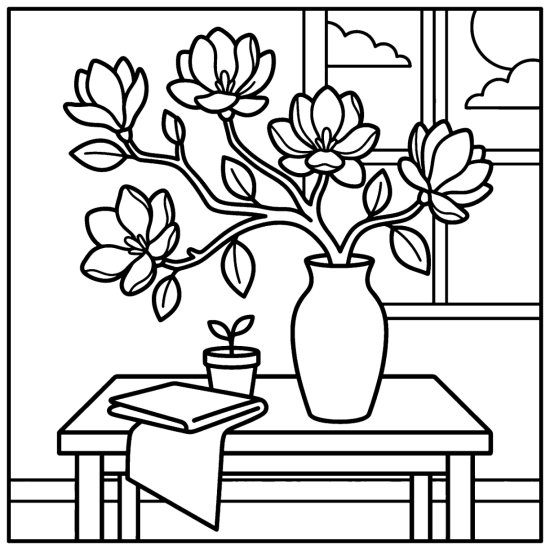
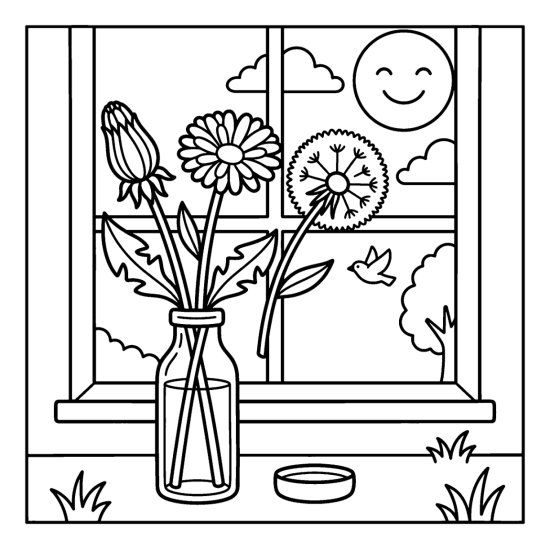
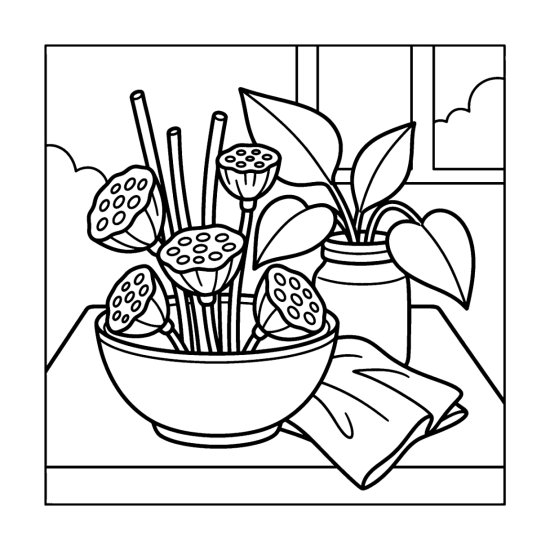
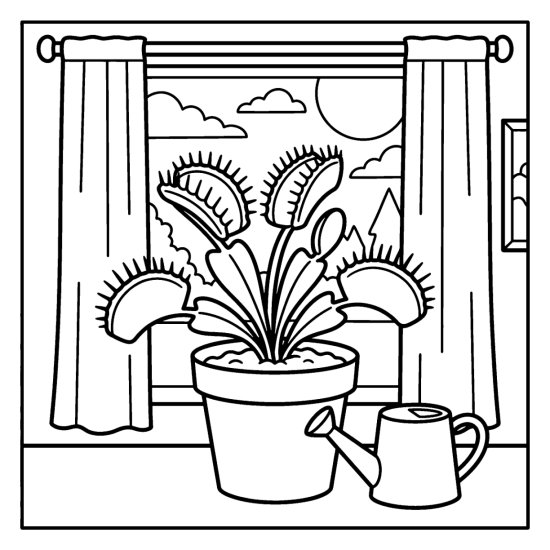
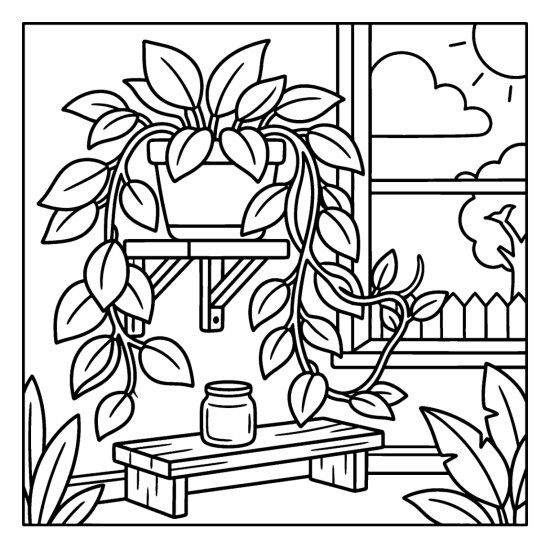
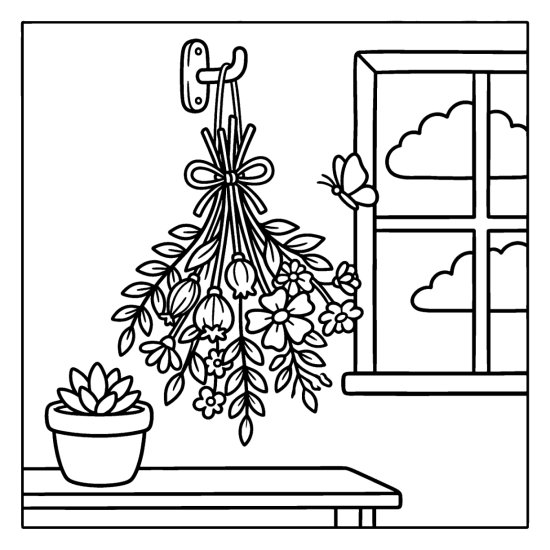
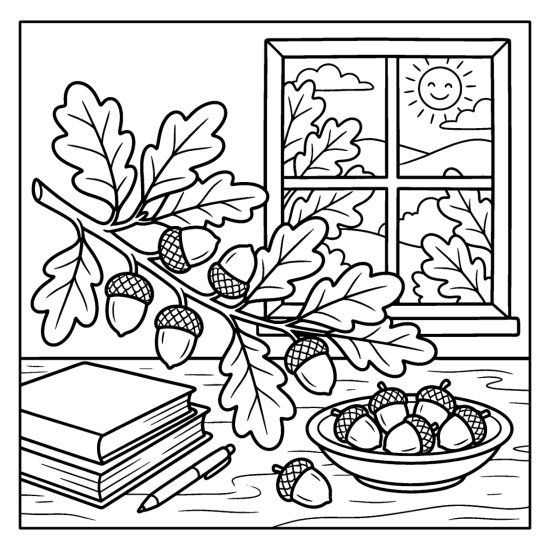
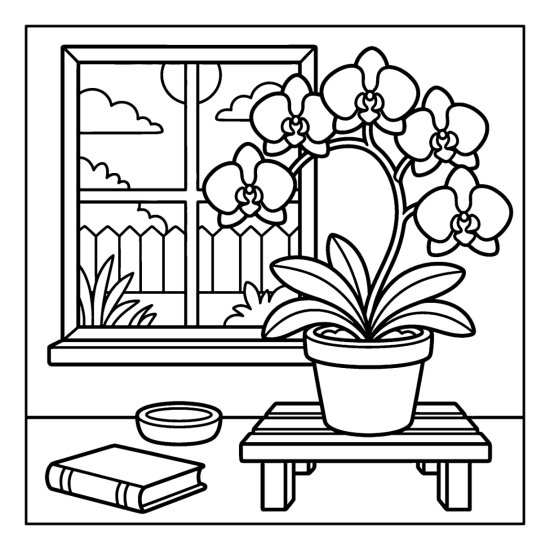
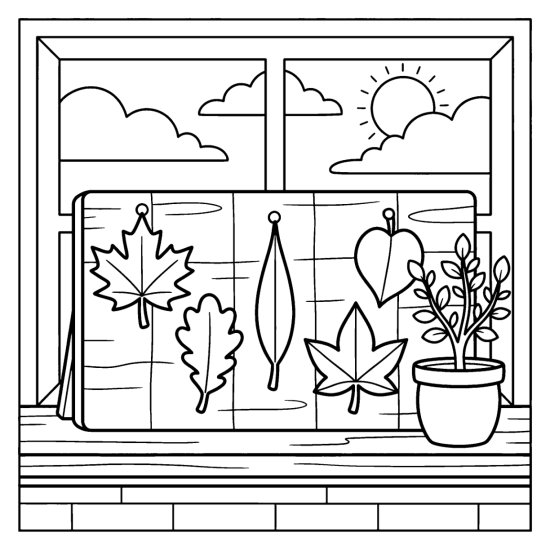
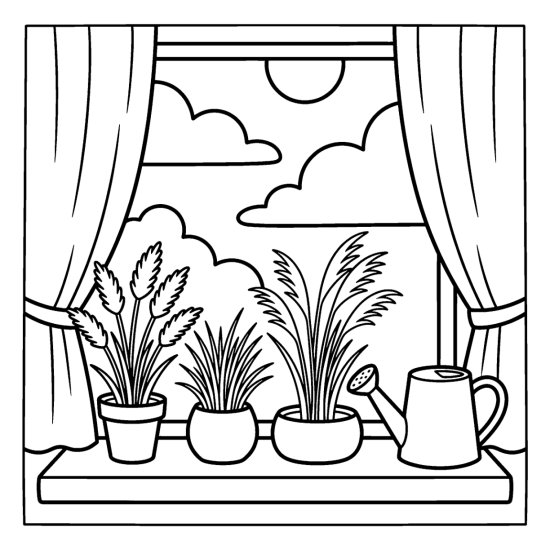
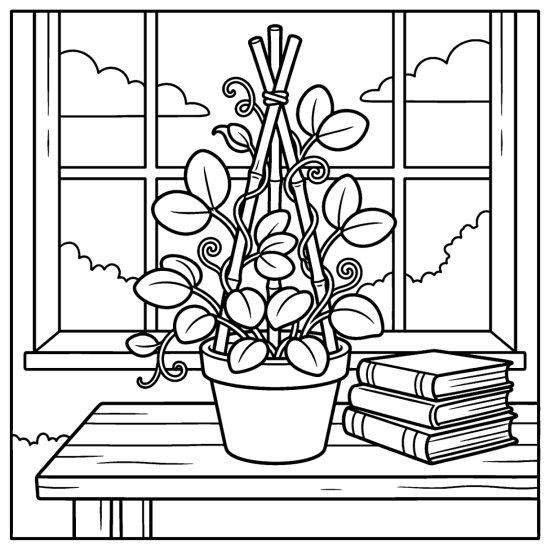
Potted plants and specimens, fruit and seed studies, vase and jar bouquets, and pressed botanical displays
The book moves through four loose botanical styles, so you can pick a page based on the kind of plant study you want to spend the next hour on.
Potted plants and specimens
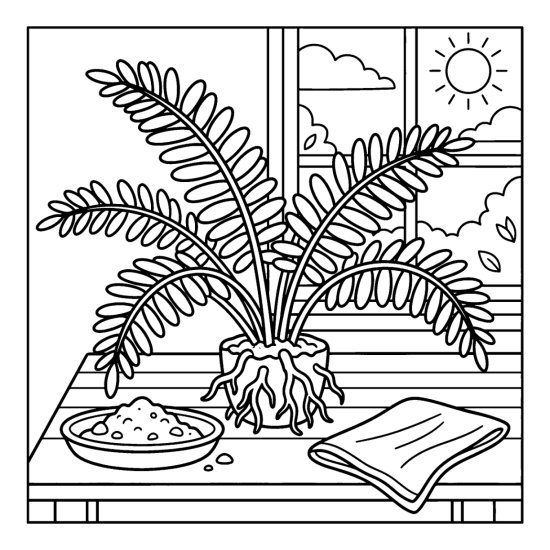
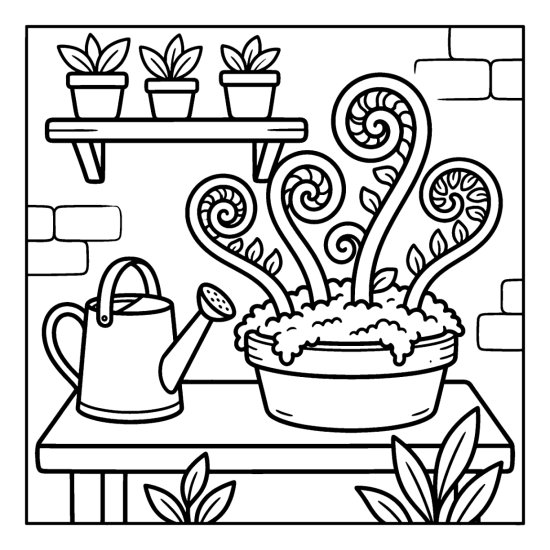
These pages center a single houseplant on a stand or sill, a leafy fern, a broad leaved palm, a trailing hoya, an orchid, even a venus flytrap. Large pots and simple foliage give you big open shapes, so they sit at the easy end of the book. Colored pencils or markers both work well, and most finish comfortably in one relaxed sitting.
Fruit and seed studies
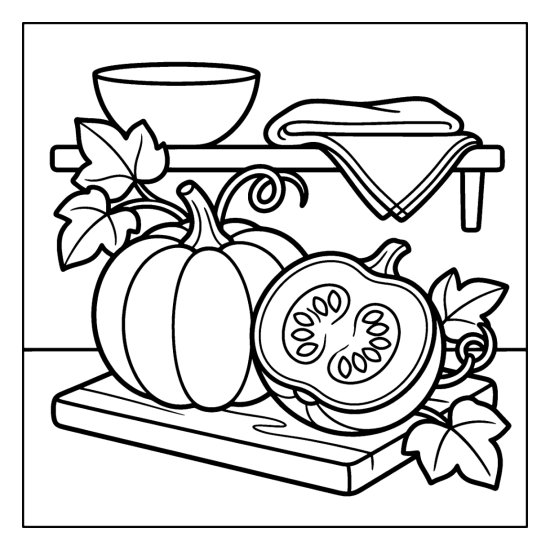
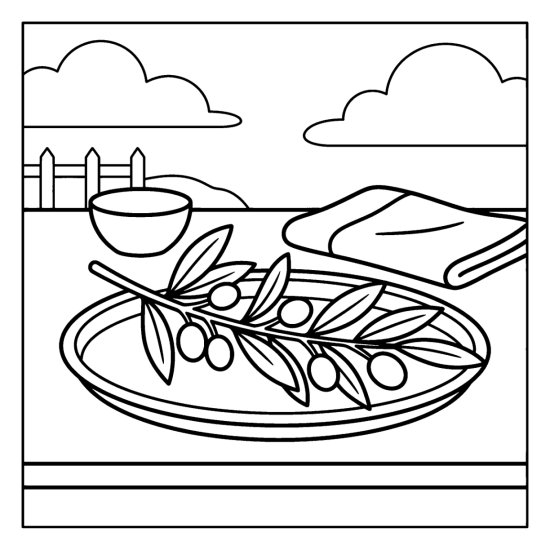
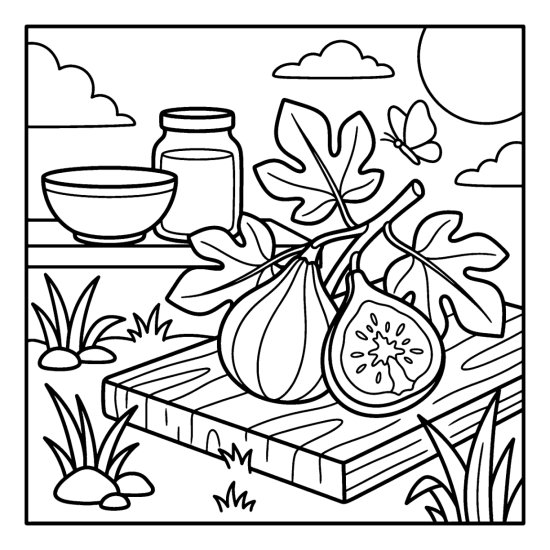
Here you get botanical cut studies, a halved squash and pomegranate showing their seeds, a sliced fig, an olive twig, plus seed pods, acorns, and pinecones gathered in trays and bowls. The shapes stay bold and rounded with a little inner detail in the seeds. Warm pencil blends suit the fruit, while the pods reward a soft, earthy palette.
Vase and jar bouquets
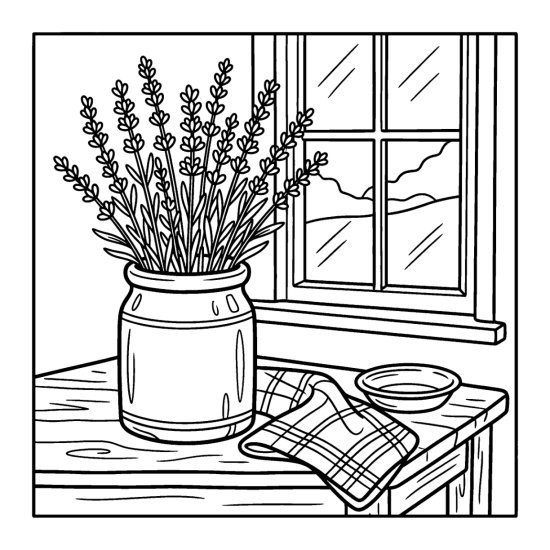
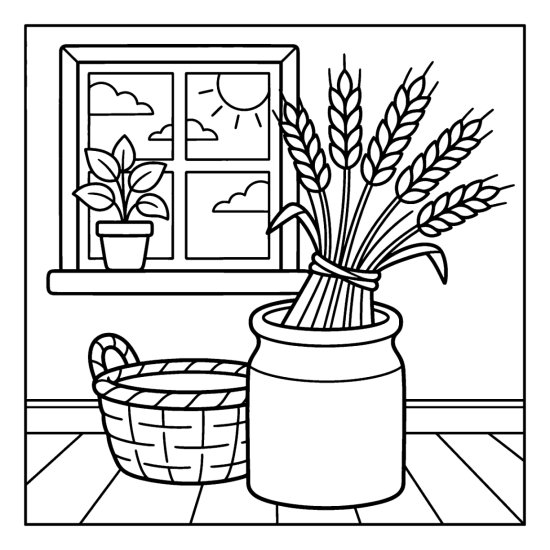
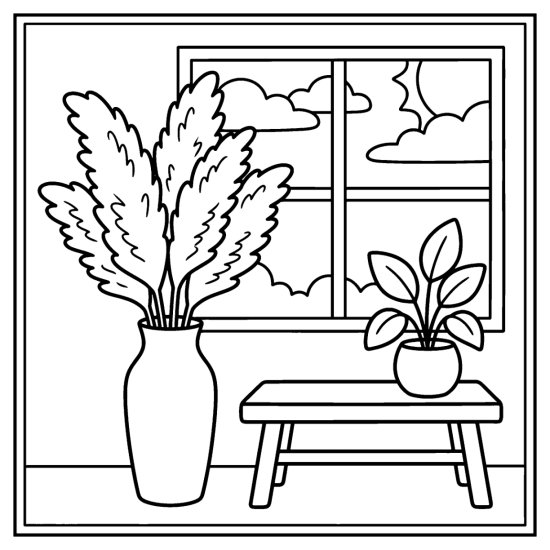
Tall stems fill these pages, lavender in a crock, eucalyptus in a jar, thistles, magnolia blooms, feathery pampas, a wheat sheaf, and a hanging dried bunch. The vessels stay simple and the stems read clearly, giving beginners long, satisfying strokes to fill. Markers move quickly across the open vases, and pencils add gentle shading to the petals and grasses.
Pressed and apothecary displays
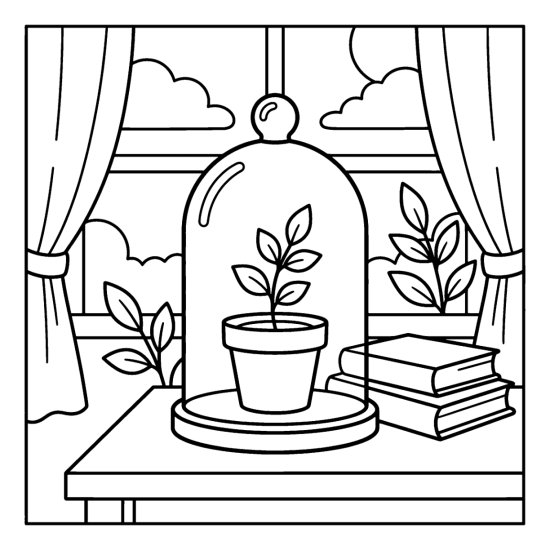
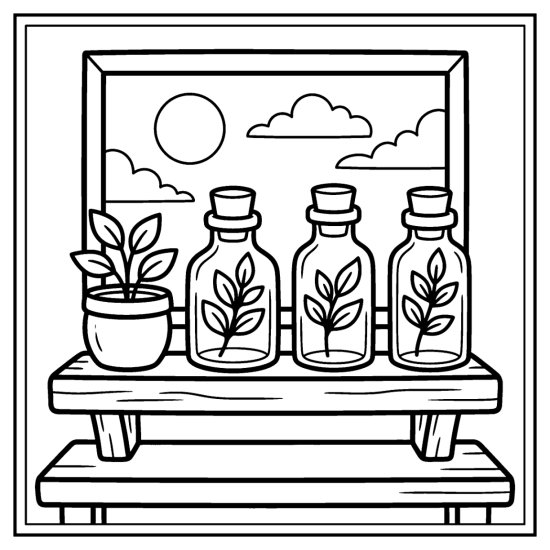
This group leans decorative, a pressed leaf in a hanging frame, a glass cloche over a sprig, a row of apothecary bottles, and a board of different leaf shapes. Backgrounds stay calm with windows, shelves, and soft clouds, so the plant stays the star. These thick line scenes are forgiving for shaky hands and look finished with just a few colors.
Whichever group you start with, the thick lines and open shapes keep every page beginner friendly and easy to finish.
What you get in these thick line botanical coloring pages
The pages split into a few clear groups, and each one has its own feel. The potted plants and specimens set centers a single houseplant, a broad fern with arching fronds, a palm, an orchid, even a venus flytrap, sitting on a stand or windowsill. Because the foliage is grouped into big open leaves, the shapes stay bold and the work goes fast. These are the most forgiving pages in the book if your hands shake a little or you just want an easy win.
From there you can branch into vase and jar bouquets, fruit and seed studies, and decorative displays. The thick lines hold up no matter which group you pick, so a beginner can jump in anywhere. You won't hit a page that suddenly turns dense or detailed. That consistency is the whole point of a bold and easy book, and it makes the set easy to share with a friend who has never colored before.
If you like variety in one sitting, color one plant from each group and lay them side by side. A fern, a magnolia in a vase, a halved pomegranate, and a pressed leaf in a frame already look like a small gallery.
Filling tall stems and simple vases
The bouquet pages are some of the most satisfying to color because the stems give you long, smooth strokes. You get lavender in a crock, eucalyptus in a jar, thistles, feathery pampas, a wheat sheaf, and that big magnolia branch reaching out of a tall vase. The vessels stay plain, so you can fill them fast with a single flat color and let the blooms be the star.
For palettes, the magnolia loves a soft blush or creamy white with pale green leaves, and the vase looks great in a calm slate blue or terracotta. Lavender wants gentle purples that fade lighter toward the tips. Eucalyptus is happy in dusty sage and silvery green. Wheat and pampas reward warm tans and golds. Markers move quickly across the open vases, and a pencil adds light shading to the petals if you want a bit of depth.
Kitchen herbs, cut fruit, and seed studies
This is where the book gets a little homey and grounded. One scene has rosemary and sage bundled with twine on a wooden cutting board, with a bowl and a glass jar behind them. It feels like a quiet corner of a kitchen, and it colors up beautifully in warm wood browns, deep herb greens, and a soft cream bowl. Tie the two herb bundles in slightly different greens so they read apart.
The fruit and seed studies bring bold, rounded shapes with just a little inner detail. Think a halved squash and pomegranate showing their seeds, a sliced fig, an olive twig, plus acorns and pinecones gathered in trays. Warm pencil blends suit the fruit, reds bleeding into deeper reds on the pomegranate, soft purple and green on the fig. The pods and cones like an earthy palette of browns and tans. A fun real detail, a single pomegranate can hold several hundred seeds, which is why that cut view has so many little shapes to fill.
Decorative displays for framing and gifting
The pressed and apothecary group leans decorative, and that makes it the easiest set to turn into a gift. You get a pressed leaf in a hanging frame, a glass cloche over a small sprig, a row of apothecary bottles, and a board showing different leaf shapes. Backgrounds stay simple with windows, shelves, and soft clouds, so the plant always stays the focus. With thick lines like these, even a few colors make the page look finished.
These pages frame up nicely above a desk or in a kitchen. Try coloring a matched pair, the cloche sprig and the pressed leaf frame, in the same two or three colors so they hang together as a set. A simple palette of olive green, soft brown, and a touch of mustard reads calm and modern. If you're making a card, the apothecary bottles colored in muted teal and amber glass look great trimmed down and tucked into an envelope.
Easy ways to start and stay relaxed
You don't need a fancy setup for these. A basic set of colored pencils or a handful of markers covers everything in the book, and the thick lines mean cheap supplies still look good. If you're brand new, start with a single potted plant page like the fern or the hoya on the shelf, since the big leaves are almost impossible to mess up. Color the pot first, then work outward through the foliage.
There's no rush and no right order. In our 2026 reader survey, 74% of readers said they color as a mental tool, a simple way to unwind at the end of the day, and these calm, low detail scenes are built for exactly that. Keep a few pages going at once if you like, one quick herb board for a short break and one big bouquet for a longer evening. Either way, you'll come away with a finished page and a clearer head.
How to print bold and easy botanical coloring pages at home
Printing from this book takes about a minute from start to finish. The full book is one PDF, so you can print every page in a single job or pick out only the bold and easy botanical designs you want.
- Open the book in the embedded viewer. Scroll to the embedded viewer at the bottom of this page, or click any thumbnail in the gallery to jump straight to that botanical scene inside the viewer.
- Choose Print or Download from the toolbar. Use the viewer's toolbar to print directly from your browser or download the full PDF to your computer for later use. Both options are free.
- Pick the right paper. For colored pencils, standard 24 lb (90 gsm) printer paper works fine. For markers or gel pens on this bold line work, step up to 70 to 90 lb cardstock to prevent bleed through and warping.
- Set print quality and scaling. Select your printer's highest quality setting and set scaling to None or Actual Size to keep the thick outlines crisp on 8.5x11 paper. On A4, enable Fit to page.
- Test print one sheet first. Before printing the full book, run a test on a single botanical page to check the line crispness and paper behavior with your chosen tool.
More adult coloring themes
If you liked these bold and easy botanical coloring pages, here are a few more themes you might enjoy.
Flower Coloring Pages
Detailed flowers, bouquets, and floral circles if you want something prettier and more delicate than leafy greens.
Browse flower coloring pages →Nature Coloring Pages
Forest scenes, plants, and wildlife mixed together for a fuller nature feel.
Browse nature coloring pages →Animal Coloring Pages
Detailed wildlife and pet pictures when you want creatures instead of just plants and ferns.
Browse animal coloring pages →Frequently asked questions
Which pages in this collection work best for someone picking up colored pencils for the very first time?
The fern fronds and the seed pod studies are the friendliest starting points because their shapes are large, rounded, and easy to stay inside. These bold and easy botanical coloring pages were built around thick lines and simple silhouettes, so there is no fiddly detail to stress over. A beginner can finish a fern page in one relaxed sitting and feel genuinely proud of the result.
Do the seed pods look interesting enough to color, or are they too plain?
They are surprisingly satisfying. Each pod is drawn with thick, clean outlines that give you a clear shape to fill, but the natural curves and chambers inside add just enough variety to keep it interesting. Try a warm palette of terracotta, ochre, and cream and the whole page feels like a little piece of autumn you can hang on the wall.
How do the fern pages hold up if I want to use watercolor washes instead of pencils?
Really well, actually. The thick line botanical coloring pages in this set have outlines bold enough to act as a barrier, so a light watercolor wash stays mostly where you put it even on standard printer paper. For best results, print on cardstock at around 65 lb or heavier and let each frond dry fully before moving to the next. The simple, open fern shapes make it easy to blend greens and teals without the page feeling muddy.
What palette ideas work well for the plant studies in this collection?
For the fern pages, a range of cool greens from sage to deep forest feels lush and calm. The seed pods love earthy neutrals, think dusty rose, warm tan, and muted gold. If you want something a little unexpected, try coloring the botanical specimens in a limited two-tone palette, like navy and cream, which gives the simple shapes a graphic, modern look that frames beautifully.
Can I pair a fern page and a seed pod page together as a matched set for framing?
Absolutely, and it is one of the nicest things about this collection. Because all the bold and easy botanical coloring pages share the same thick line style and similar scale, two finished pages side by side look intentional and cohesive. Use the same color palette across both sheets and they will look like they came from the same artist, which makes them a genuinely lovely handmade gift.
Are these plant studies accurate enough to use as a gentle introduction to real botany?
They are drawn with enough care that the ferns look like ferns and the seed pods have recognizable natural structure, even though the style is simplified for coloring. Ferns, for instance, reproduce through spores tucked under their fronds rather than seeds, and a few of these pages show that underside detail in a clear, beginner-friendly way. It is a nice conversation starter if you are coloring with a curious kid nearby, even though the collection is designed for adults.
Which pages from this set feel the most cozy for a slow weekend morning?
The single-stem plant studies and the close-up fern frond pages have a quiet, meditative quality that is perfect for a slow morning with coffee. They are simple enough that your hand moves at a relaxed pace, but the organic shapes keep your attention gently focused. Think of them as the coloring equivalent of a calm nature walk.
Do the thick lines in these pages make them easier to color on a tablet or light box as well as on paper?
Yes, the bold outlines translate really well to a tablet app or when you lay the printed sheet over a light box to trace onto watercolor paper. The thick lines stay crisp and readable at different scales, so you can even resize a page slightly when printing without losing the clean, simple look that makes these thick line botanical coloring pages so satisfying to fill in.